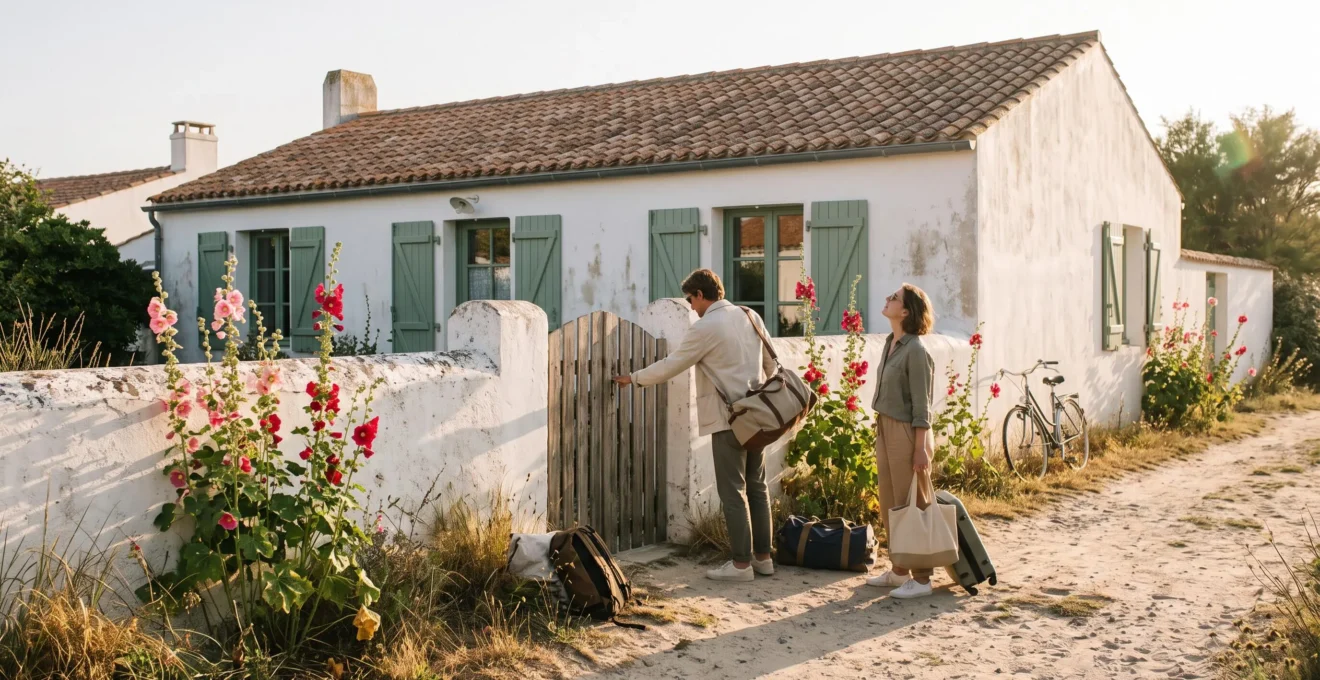
Renting a villa on Île de Ré can feel like a trap: gorgeous photos, premium prices, and listings that are hard to compare. The good news is that you can make the choice much simpler if you decide in this order: the zone (which village fits your daily rhythm), the season (what you’re really paying for), and the checks before paying (to avoid scams and arrival disappointments).
Direct answer: To rent a villa on Île de Ré at the right price and in the right location, pick the village based on your day-to-day needs (beach vs quiet lanes vs quick access from the bridge), target shoulder season if you want more value, and only pay once you’ve verified the contract, the identity of the owner/agency, and the payment method.
Your 3-decision plan for an Île de Ré villa rental
- Choose your area first: compare beach access, village amenities, noise levels and travel times rather than relying on broad labels such as “ocean-side” or “inland”.
- Choose your season second: summer and school holidays can bring stronger demand. If your dates are flexible, compare shoulder-season options, while checking opening hours and available services.
- Verify before paying: review the contract and inventory, confirm the identity of the owner or agency, and use a payment process that provides a clear record.
Why Rent a Villa on Île de Ré?
A villa rental makes sense on Île de Ré when you want space, privacy, and outdoor living—the three things that are hardest to “buy” in a standard hotel room or a small seaside apartment. On an island where days revolve around cycling, markets, beaches, and long lunches, a private garden, terrace, and proper living areas can change the whole rhythm of your stay.
Villa vs gîte vs holiday home: what is the practical difference?
Listings may use terms such as “villa”, “holiday home” and “gîte” differently, so the label alone is not a reliable guide to what you will get. A villa may offer a private garden, a terrace or separate living and sleeping areas, but these features depend on the individual property. Check the listing and rental terms rather than assuming that a particular type of accommodation guarantees specific amenities.
To compare properties fairly, focus on the details that matter for your stay: the number of bedrooms, outdoor privacy, distance to shops and beaches, parking, bicycle storage and the services included in the price.
The main trade-off: a villa may suit you if you plan to spend time relaxing and eating outdoors at the property. An apartment may be a better fit if you prioritise a convenient location and expect to spend most of your time exploring the island.
Choosing the Right Village: Rivedoux-Plage, Ars-en-Ré and Beyond
The “best village to stay on Île de Ré” doesn’t exist in absolute terms—your best choice depends on what you’ll do every day: morning bakery runs, cycling with kids, beach time, harbor dinners, or simply quiet evenings. Start by deciding if you want ocean-side energy or a more inland, calmer base, then narrow down to specific villages.
Rivedoux-Plage: easy access and two different beach vibes
If it’s your first visit and you want to keep logistics simple, Rivedoux-Plage is worth considering because it is the first village after the bridge, making arrivals and trips for groceries more convenient. According to the official tourism office, Destination Île de Ré, the village has two long sandy beaches with different orientations and attracts visitors during the summer season (see the official Rivedoux-Plage village guide).
For a premium villa rental, that “two sides” detail matters: you can prioritize the beach exposure that matches your wind tolerance and daily schedule, instead of just “near the sea”.
Ars-en-Ré and the west side: harbor atmosphere vs extra drive time
Villages on the western side (including Ars-en-Ré) are often chosen for their classic Île de Ré feel: harbors, salty lanes, and the sense of being “deep” on the island. The practical flip side is simple: the farther you are from the bridge, the more your arrival and departure days (and any day trip off the island) will involve extra driving.
If your priority is a calm, scenic base where you’ll mostly stay on the island, west-side villages can feel like the right match. If you plan frequent off-island outings, you may prefer a village closer to the bridge.
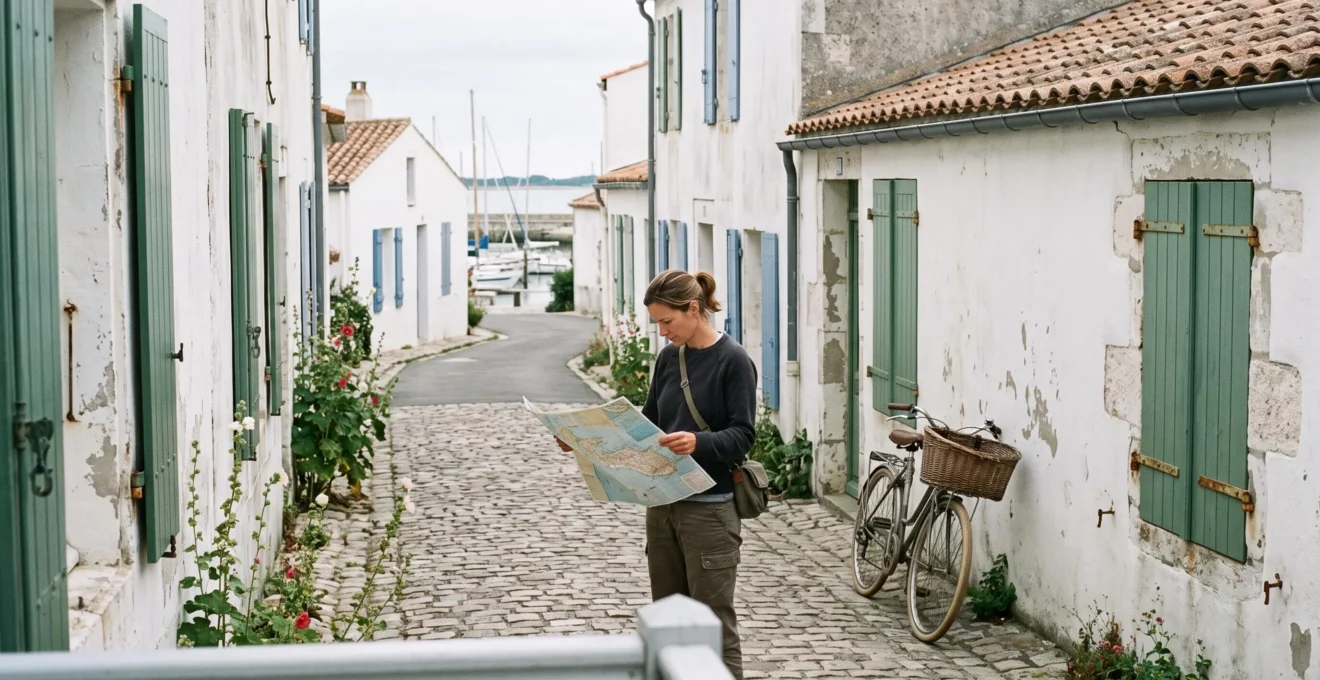
Ocean-side vs inland: a decision grid you can actually use
Here’s the simplest way to avoid endless browsing: decide what you want to step into when you leave your villa each morning—beach access and sea air, or quieter lanes and easier parking.
| What you want most | Ocean-side village focus | More inland / calmer focus |
|---|---|---|
| Walkable beach time | Prioritize direct access and how crowded the access points get in summer. | Expect more biking/driving to reach the beach, but calmer evenings. |
| Quiet nights | Check distance to bars/restaurants and event areas; noise can travel in summer. | Often easier to find a “sleep well” location, especially with kids. |
| Easy logistics on arrival | Still possible, but depends on where you are on the island. | Often simpler if you stay closer to the bridge (shorter drive). |
| Budget control | Sea-adjacent streets can be priced higher for the same surface. | More chances to trade “less sea view” for more space/comfort. |
- You want maximum beach access and you’ll spend mornings/late afternoons by the water:
Start with ocean-side villages and sort listings by walking distance to the beach.
- You want calm evenings, space, and a villa that feels like a refuge:
Start with more inland settings and prioritize outdoor privacy (garden/terrace not overlooked).
- It’s your first time and you want easier arrivals and flexibility:
Put “close to the bridge” villages at the top of your shortlist, then compare beach orientation and shops.
Clear trade-off: if your villa is mainly for beach-first days, pay for proximity to the shore; if your villa is your comfort “hub”, pay for privacy and space, and accept a short ride to the beach.
When to Book: Seasons, Rates and Availability
If your main fear is paying too much, seasonality is the lever you control the most. On Île de Ré, demand concentrates around school holidays and summer weeks. That’s when the “same villa” can feel overpriced—not because it suddenly improved, but because availability drops and choices narrow.
Do you always need to book very early for high season?
Booking early is sensible if you have strict requirements, such as a private pool, a specific village or walking distance to the beach, and you plan to travel during peak weeks. However, last-minute options can sometimes appear. In its 2025 summer report, Charentes Tourisme reported that 71% of surveyed tourism professionals across the Charentes had observed an increase in last-minute bookings. This regional finding does not guarantee that a suitable villa will be available on Île de Ré, particularly during the busiest weeks. See the 2025 summer tourism report for the Charentes.
If your dates and requirements are flexible, it may be worth monitoring new availability. If you need a particular property type or location, do not rely on a last-minute booking strategy.
What about rates by season?
Many travelers ask “how much does a villa cost in high season?” but the honest answer requires current, verified price data—and your budget depends on size, village, amenities, and exact week. In the sources available here, there are no recent platform rate ranges in EUR/week that we can quote without guessing.
Rate reality check: to compare prices fairly, always align listings on the same perimeter (same village zone, similar bedroom count, and similar outdoor privacy) before judging whether one is “overpriced”.
A concrete booking strategy that doesn’t rely on unsourced numbers
Instead of hunting for a “magic month”, build your plan around your non-negotiables and the season pressure you can accept:
- Lock your zone first
Decide “ocean-side vs calmer inland” and pick 2–3 villages, otherwise you’ll compare incomparable listings.
- Choose your season lever
If your budget is tight for peak summer, test shoulder season dates first; you’re often paying for availability pressure, not for better housing quality.
- Watch for last-minute openings
Keep a shortlist of acceptable villas and be ready to move when cancellations happen—especially if you’re flexible on exact arrival day.
Clear trade-off: if you want the widest choice, plan earlier and accept peak pricing; if you want better value, shift your dates (shoulder season) and keep your villa criteria realistic.
Booking Traps to Avoid and What to Check Before Paying
The biggest risks in a villa rental aren’t subtle: paying outside a secure process, skipping the contract details, or assuming photos guarantee the experience. Your goal is simple: make the listing verifiable before any deposit or full payment.
What rules apply to furnished tourist rentals in France?
Many short-term holiday properties fall under the French category of “meublés de tourisme”. Depending on the property and its location, owners may have to complete registration or declaration procedures and, in some cases, obtain prior authorisation for a change of use. Requirements can vary by commune, and the national framework has evolved, so owners should check the current rules rather than rely on an older form or a general description of the process. See the French government’s official guidance on furnished tourist rentals.
As a renter, you do not need to interpret every legal requirement yourself. However, you can ask the owner or agency to confirm in writing that the property can legally be offered as a holiday rental and that the booking terms are clear.
Red flags that should stop you before you pay
If a deal looks far below the market for the same week and village, don’t “celebrate” yet—verify. Scams often use urgency, emotion, and pressure to move the conversation off-platform.
Payment red flags you should treat as a stop sign: a request to pay by wire transfer to an unrelated name, refusal to provide a written contract, or insistence on moving the conversation away from the platform “to save fees”.
Your pre-payment verification checklist (owner, contract, reality)
Before any deposit, you want three things: a clear identity, clear terms, and a villa that matches the description beyond curated photos.
- Identity check: confirm who you’re dealing with (owner or agency), and make sure the name matches the contract and the payment request.
- Contract check: read cancellation, deposit conditions, check-in/out times, and what “included” really means (linen, end-of-stay cleaning, pool heating if relevant).
- Reality check: ask for confirmation of key points that photos can hide: street noise, bedroom sizes, parking, bike storage, and whether outdoor space is overlooked.

A hypothetical booking scenario
You find a villa listing in a popular village for a peak week at a price that seems unusually low. The host urges you to “secure it today” and asks for a bank transfer outside the booking platform. Before proceeding, request a written contract, check that the owner or agency details match the payment instructions, and review the cancellation and deposit terms. If the host refuses to provide clear documentation or continues to pressure you, do not proceed until you can verify the booking. The key issue is not whether the villa looks attractive, but whether the transaction is trustworthy.
Clear trade-off: if you want the “best price”, you still need the same verification level—saving money never justifies paying with fewer guarantees or fewer written terms.
Key Questions Before Finalizing Your Villa Rental
Once you’ve shortlisted two or three villas in the right zone and season, the final step is to eliminate “hidden mismatches”: costs you didn’t anticipate, logistics that will annoy you every day, or amenities you assumed were included.
What should the rental contract include before you commit?
You want a contract that makes the stay predictable, not a vague confirmation message. At a minimum, check that it clearly states: the exact address (or how it will be provided), rental dates and times, total price and what it covers, deposit/caution terms, cancellation conditions, and an inventory/“état des lieux” process for check-in and check-out.
Questions to ask about amenities (so the villa matches the photos)
To answer “How can we make sure the villa looks like the photos?”, ask questions that force concrete answers, not marketing language:
- Outdoor privacy: is the terrace overlooked by neighbors? Is there a direct view from the street?
- Pool specifics (if any): is it private or shared, and what safety equipment is provided?
- Linen and cleaning: are sheets/towels included, and is end-of-stay cleaning included or optional?
- Connectivity: what is the Wi‑Fi situation (especially if you may work remotely)?
- Access: parking, gate width, bike storage, and any stairs that could be an issue with young kids.
Total cost transparency: what might be added to the weekly price?
Premium villa rentals can look comparable until fees appear late in the process. Before you confirm, ask for the all-in total in writing, including any cleaning fee, linen package, and the local tourist tax if it applies. If the owner or agency can’t provide a clear breakdown, that’s a real signal: you may be buying uncertainty.
If you’re still hesitating between “pay more for a prime village” and “pay more for a bigger villa”, it helps to think in terms of experience value. If you want a deeper dive into what you’re paying for in a high-end seaside stay, see this internal guide on premium pricing.
Clear trade-off: if your days are built around the island (markets, beaches, cycling), pay for the right village; if your days are built around the villa (pool, long lunches, privacy), pay for outdoor space and layout—even if it’s slightly less central.
Which area of Île de Ré should I choose for a quiet family stay versus beach access?
How far in advance should I book a villa in high season on Île de Ré?
How can I verify a villa listing is trustworthy before paying a deposit?
What deposit and rental terms apply to seasonal villa rentals?
The right villa rental on Île de Ré is not necessarily the most expensive or the closest to the beach. It is the property that fits your preferred location, travel dates, budget and daily routine. Compare listings on the same criteria, confirm the total cost and rental terms in writing, and verify the booking process before paying. These checks will help you choose accommodation that suits your stay and avoid preventable surprises.