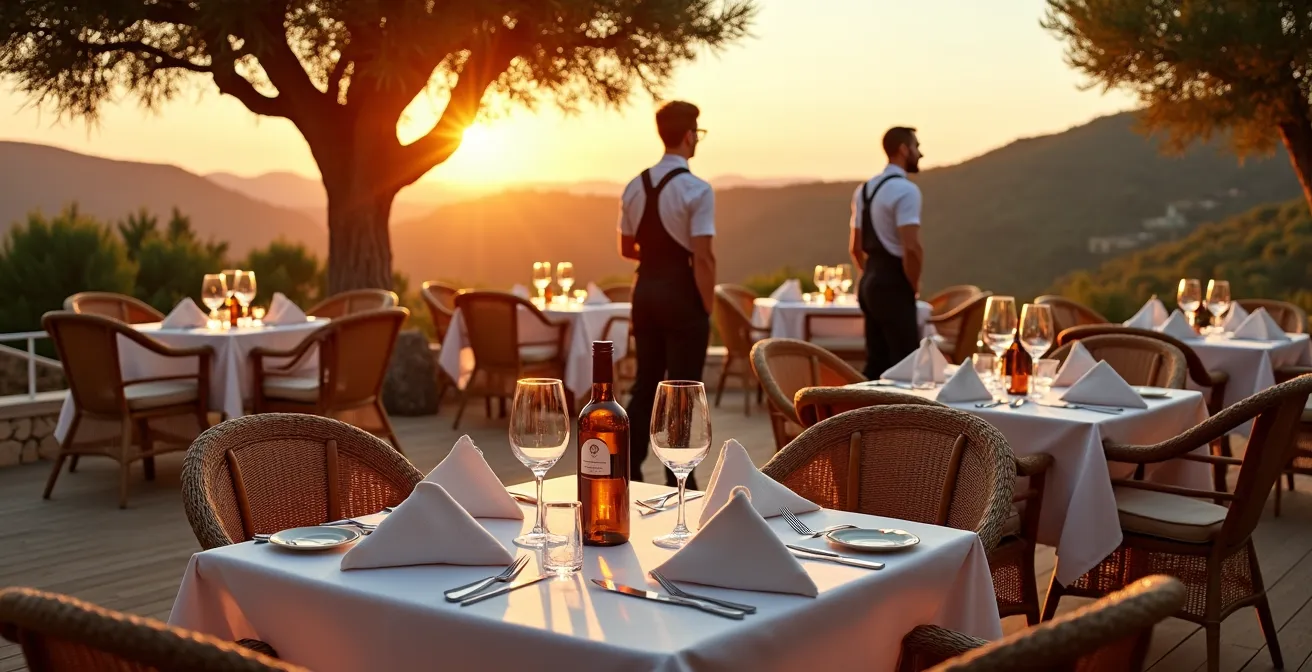
High-end gastronomy has infiltrated the campsite, but true value is found not in the price tag, but in a critic’s ability to decode the unique dynamics of the experience.
- Price premiums are driven by remote logistics and manufactured exclusivity (“Captive Gastronomy”), not just ingredient quality.
- The “Casual-Luxe Paradox” requires a smart-casual approach to attire and atmosphere, blending comfort with sophistication.
Recommendation: Balance one high-end campsite meal with authentic, low-cost local food (“Experience Arbitrage”) for the ultimate gastronomic journey.
The traditional soundtrack of campsite dining is the sizzle of a suspect sausage and the pop of a lukewarm can. The menu, written in the universal language of ketchup stains, rarely ventures beyond burgers and fries. For the discerning gastronome, the mere thought of “campsite food” conjures a culinary wasteland, a necessary evil to be endured between scenic hikes. But a quiet revolution is underway. Tucked away in forests and perched on mountainsides, a new breed of restaurant is emerging, trading paper plates for porcelain and campfire songs for curated playlists. These establishments promise gastronomic heights, with tasting menus, wine pairings, and chefs boasting impressive pedigrees.
This trend presents a tantalizing proposition, but also a complex puzzle. Is it truly possible to replicate the precision and artistry of a city’s fine dining institution in the wild? Or is this merely “glamping” in culinary form—a rustic experience given a superficial, and expensive, polish? The immediate challenge is one of perception and expectation. We are asked to reconcile the casual, democratic spirit of camping with the hierarchical, curated world of haute cuisine. This goes beyond the food itself, touching upon everything from cost and dress code to the very availability of a table.
But if the real answer lies not in simply finding these places, but in understanding how to judge them on their own unique terms? The key is to adopt a critic’s framework. This guide moves beyond simple recommendations to provide the tools for assessment. We will deconstruct the economics of “captive gastronomy,” decode the unspoken rules of the casual-luxe paradox, and reveal how to master the logistics of a dining experience where the setting is as important as the sustenance. This is not about finding a Michelin star in a haystack; it’s about learning to identify true culinary gold, wherever it may be found.
To navigate this new terrain, this guide provides a complete framework. From understanding the cost structure to mastering the art of the perfect sunset reservation, each section is designed to equip you with a critic’s perspective for your next adventure.
Summary: A Critic’s Guide to Campsite Gastronomy
- Bistro + Gastronomic: What Does This Trend Mean for Your Wallet?
- Flip-Flops or Loafers: What Is the Dress Code for Upscale Campsite Dining?
- The “Residents Only” Rule: Why You Need to Book Your Table Upon Arrival?
- Markup Madness: Are Campsite Restaurants Overcharging for Local Wine?
- West-Facing Terraces: How to Time Your Reservation for the Golden Hour?
- How to Eat Like a Local in Nice for Under 20 €?
- Pizza Hut or Wood-Fired: How to Judge the Quality of Campsite Takeaway?
- Pairing Local Cheeses with Your Vineyard Purchases: A Camper’s Guide
Bistro + Gastronomic: What Does This Trend Mean for Your Wallet?
The first shock for many campers exploring on-site fine dining is the price. With restaurant menus already seeing a general 4% increase in 2024, campsite establishments often add a significant premium. This isn’t simple price gouging; it’s a reflection of a unique economic model I call Captive Gastronomy. Unlike a city restaurant with a steady supply chain and diverse clientele, a remote campsite eatery faces higher costs for sourcing ingredients, retaining seasonal staff, and operating in a logistically challenging environment. The clientele is also limited to guests and a few savvy outsiders, meaning costs must be recouped from a smaller pool of diners.
Many of these venues cleverly mitigate sticker shock by offering a dual-track system: a high-end “gastronomic” tasting menu and a more accessible “bistro” or à la carte option. The secret is that both are often serviced by the same kitchen, chefs, and ingredient stock. The bistro menu becomes a savvy choice, offering a taste of the same quality and philosophy at a fraction of the cost. The critical diner must analyze the value proposition beyond the absolute price, factoring in the uniqueness of the setting and the lack of alternatives. A 25% premium might be justifiable for an unforgettable sunset view; a 50% premium for mediocre food is not.
This comparative table breaks down the underlying cost structures that explain the price difference between a standard city restaurant and its campsite counterpart. As the data on operational costs shows, remote sourcing and seasonal staffing create significant financial pressures.
| Factor | City Restaurant | Campsite Restaurant |
|---|---|---|
| Food Cost % | 28-35% | 35-45% |
| Wine Markup | 200-300% | 300-400% |
| Remote Sourcing Premium | N/A | +15-20% |
| Seasonal Staff Costs | Stable | +25% premium |
Your Value-for-Money Checklist: Assessing the Campsite Restaurant
- Compare the menu price to similar city restaurants, expecting a 20-30% premium for the remote location and captive audience.
- Evaluate the unique setting’s value; a stunning sunset view or exclusive atmosphere can be worth a 10-15% “experience premium.”
- Check if a bistro menu offers access to the same kitchen’s quality at a 30-40% lower price than the full gastronomic option.
- Factor in included elements that offset cost, such as complimentary appetizers, high-quality bread service, or free on-site parking.
- Calculate the total experience cost, including what you save by not traveling off-site for a comparable meal.
Flip-Flops or Loafers: What Is the Dress Code for Upscale Campsite Dining?
Perhaps the most perplexing issue for the camping gastronome is the Casual-Luxe Paradox: how does one dress for a high-end meal in an environment defined by informality? Arriving in hiking boots feels inappropriate, yet a suit and tie would be absurd. The fear of being over or underdressed can create genuine anxiety. The key is to forget formal dress codes and instead aim for “smart casual” or what designers call “resort chic.” This means focusing on high-quality, comfortable materials like linen, merino wool, and soft leather.
The best establishments signal their expectations not through explicit rules but through atmospheric cues. The weight of the cutlery, the feel of the linen napkin, and the professionalism of the staff all subtly communicate a standard of elegance. The goal is to mirror this—to be relaxed but polished. For men, a crisp linen shirt, chinos or dark jeans, and clean loafers are a failsafe combination. For women, a simple midi dress or elegant trousers with a silk top and smart sandals strike the perfect balance. The aim is to show respect for the occasion and the effort of the kitchen without sacrificing the relaxed spirit of a vacation.
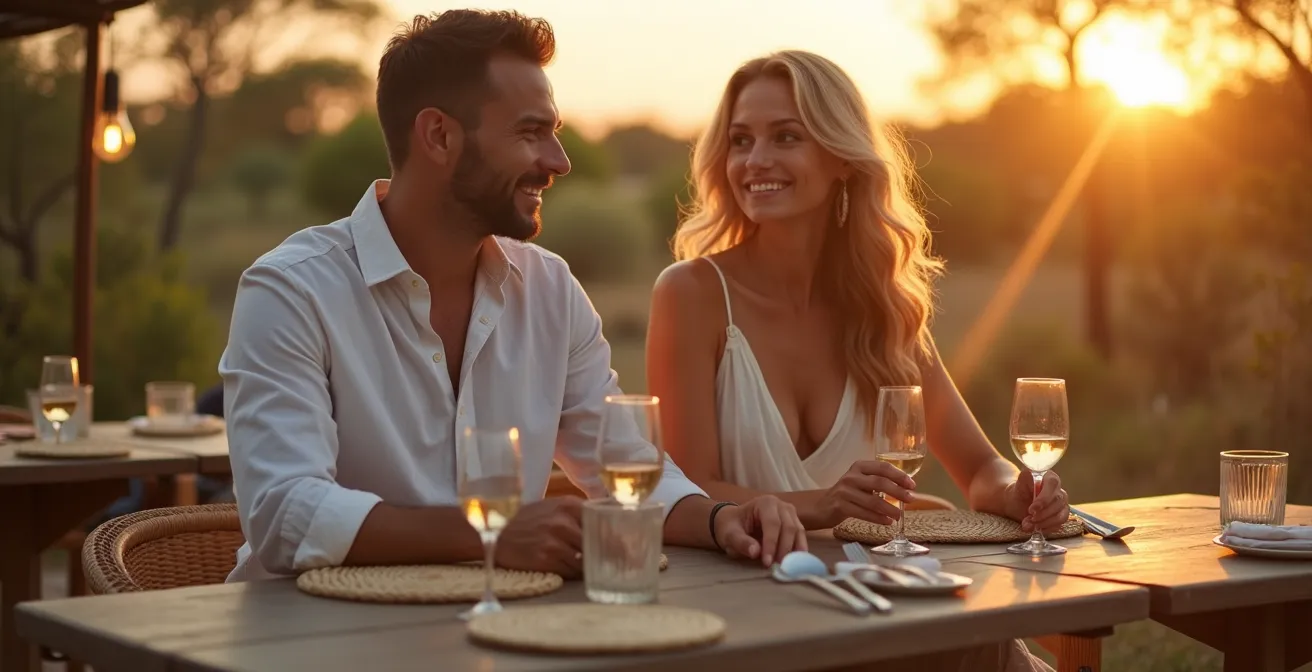
The solution often lies in versatile, packable items that can transition from a day of exploration to an evening of fine dining. A lightweight merino wool sweater or a packable blazer can instantly elevate a simple outfit. The case of Terra, a 2-Michelin-star restaurant in the Dolomites, is instructive. They eschew a formal dress code, instead creating an atmosphere with artisanal plates and a grand wine vault that naturally inspires guests to dress thoughtfully. It proves that when the experience feels special, diners rise to the occasion without being told.
- Wrinkle-Resistant Linen Shirt: A single, high-quality shirt can work for a morning walk and an evening meal.
- Convertible Trousers: Modern designs offer a stylish look that can be adapted for daytime activities.
- Leather Loafers: Choose a pair with a durable sole that can handle a short walk from your tent to the restaurant.
- Lightweight Merino Sweater: Adds a touch of elegance and warmth for cool evenings.
- Foldable Blazer: A neutral-colored, unstructured blazer is the ultimate tool for instant sophistication.
The “Residents Only” Rule: Why You Need to Book Your Table Upon Arrival?
You’ve found the perfect campsite with a celebrated restaurant, only to discover a crushing sign: “Reservations for Residents Only.” This exclusivity is a core tenet of Captive Gastronomy. It’s not just about creating a VIP feel; it’s a pragmatic response to severe operational constraints. These restaurants operate with a finite number of seats, a limited supply chain for fresh ingredients, and a small, highly-trained staff. To guarantee quality, they must precisely control the number of diners each night. The “residents only” rule is the simplest way to manage this demand.
For the traveling gastronome, this means a critical shift in planning. The reservation should not be an afterthought; it should be one of the very first actions you take upon arrival at the campsite. In peak season, tables at renowned spots can be fully booked by on-site guests for a week in advance. Some high-demand restaurants, like mountain chalets, operate with even tighter constraints. It is not uncommon for Michelin-starred mountain restaurants to maintain a strict capacity limit of 70% or less to ensure service quality, making every table precious. Waiting until the day you wish to dine is a recipe for disappointment.
The Grual restaurant at Lefay Resort & SPA Dolomiti provides a masterclass in this model. By guaranteeing tables for resort guests, they can maintain an exceptionally high standard of cuisine despite a remote location. This strategy transforms a logistical limitation into a powerful marketing tool, creating a private club atmosphere that enhances the premium experience and justifies the price. For the camper, the lesson is clear: securing your spot at the table is as crucial as pitching your tent. A quick call or visit to the restaurant’s host stand immediately after you check in should be part of your routine.
Markup Madness: Are Campsite Restaurants Overcharging for Local Wine?
After navigating the food menu, the wine list presents the next challenge. Markups of 300-400% are common, leading many to feel they are being exploited. While some of this is pure profit-taking, a significant portion is tied to the unique costs of oenology in the wilderness. Maintaining a proper wine cellar with temperature and humidity control is a major expense in a non-traditional building. Furthermore, curating a diverse list requires complex logistics, with some remote restaurants impressively managing over 1,000 different wine labels despite the challenges.
However, the savvy diner can find exceptional value by focusing on Terroir Symbiosis. This means looking for wines produced in the immediate vicinity of the campsite. These bottles have the lowest transport costs and are often sourced through direct partnerships between the restaurant and the vineyard. The restaurant has less justification for a massive markup, and you get to experience a perfect pairing of local food and local wine—the very essence of terroir. Ask the sommelier specifically for wines from the “home” valley or from producers you may have passed on the way to the campsite.
A critic’s eye can spot value where others see only cost. A simple framework can help you navigate the wine list like a professional:
- Look for Hyper-Local Producers: Wines from within a 20km radius should have the most reasonable markups.
- Ask About “Wine of the Month”: These are often great deals designed to move inventory or promote a partner vineyard.
- Focus on Regional Varietals: Lesser-known local grapes that don’t travel well are harder to overprice, as their exclusivity is naturally limited to the region.
- Check the Markup: A 200-250% markup is standard for the industry. Anything over 400% should be questioned, unless it is for a genuinely rare or aged bottle.
West-Facing Terraces: How to Time Your Reservation for the Golden Hour?
The single greatest advantage a campsite restaurant has over its urban counterpart is its connection to nature. The ultimate expression of this is the “golden hour” dinner: a meal timed perfectly to the setting sun. This is where the concept of Value-Per-View becomes tangible. The meal is elevated from mere sustenance to a multi-sensory event, and a high price tag can suddenly feel entirely justified. However, achieving this perfect moment requires more than just luck; it demands strategic planning.
The golden hour is the brief period just before sunset when the light is soft, warm, and cinematic. To capture the entire experience, you should book your table for 45 minutes before the officially listed sunset time for your location. This allows you to be seated, order a drink, and settle in as the light begins its magical transformation. When booking, specifically request a “terrace seat with a sunset view.” Mentioning an interest in photography can sometimes help secure the best possible spot. The experience at DV Chalet’s Gallo Cedrone in Madonna di Campiglio is a prime example, where Chef Sabino Fortunato deliberately times the presentation of his dishes to coincide with the changing mountain light, creating a synchronized journey for the eyes and the palate.
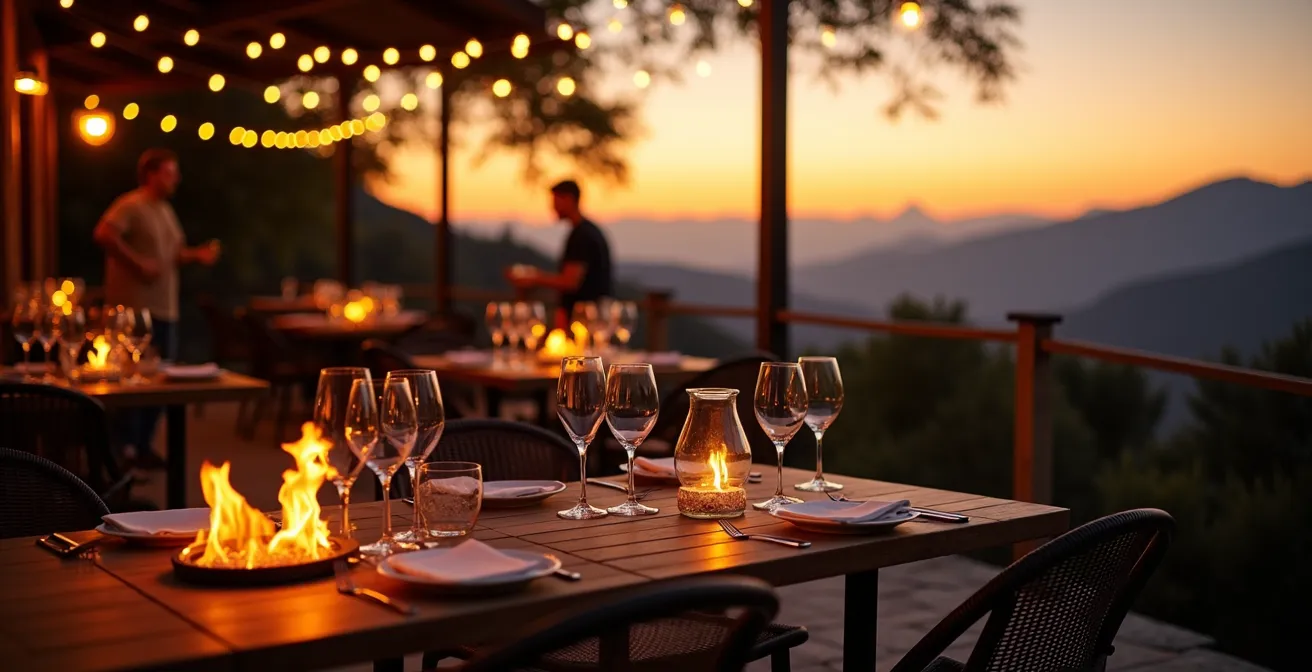
Modern technology has made this planning easier than ever. Apps like PhotoPills or The Photographer’s Ephemeris can provide hyper-accurate golden hour and sunset times for any location on earth. A quick check of the weather forecast for cloud cover is also essential. A perfect sunset dinner is the pinnacle of campsite gastronomy—a moment where the food, the wine, and the majesty of nature converge. It’s an experience worth planning for.
- Download a Photo App: Use an app like PhotoPills for precise golden hour calculations.
- Book 45 Minutes Early: Reserve your table for 45 minutes before the official sunset to enjoy the full transition.
- Be Specific With Your Request: When booking, explicitly ask for a terrace table for the sunset.
- Check the Weather: A forecast for clear skies is crucial. Check a few days ahead.
- Inquire About Sunset Menus: Some restaurants offer special pairings or menus designed for the golden hour.
How to Eat Like a Local in Nice for Under 20 €?
The ultimate strategy for the camping gastronome is Experience Arbitrage: balancing a high-cost, on-site splurge with low-cost, high-authenticity local meals. This approach maximizes both your budget and your culinary discovery. After indulging in a tasting menu at your campsite, the next day’s goal should be to eat like a local for a fraction of the price. The city of Nice, a gateway to many coastal campsites, is a perfect case study for this high-low strategy, especially as broader trends see restaurant prices continuing to climb.
Forget sit-down restaurants. The soul of Niçoise cuisine is found in its street food and its vibrant markets. A walking tour of the Old Town (Vieux Nice) reveals a world of flavor that is both delicious and incredibly affordable. You can start with a slice of Socca, a crispy chickpea pancake cooked on a giant steel plate, for about €3-4. Follow it with a Pan Bagnat, the city’s signature sandwich—essentially a salade niçoise in a bun—for €5-6. You have a complete, authentic, and satisfying meal for under €10.
An even more rewarding experience is to assemble a picnic from the famed Cours Saleya market. This is where you can engage in your own form of Terroir Symbiosis, buying directly from the people who grow and make the food. A perfect picnic can be built for two people for under €20, providing a meal whose ingredient quality rivals that of a Michelin-starred kitchen.
- Arrive Early: Visit the Cours Saleya market before 11 a.m. for the best selection and prices from local farmers.
- Buy Seasonal Fruit: A small basket of fresh figs or a punnet of fragrant strawberries will cost just €3-4.
- Select Local Cheese: A generous portion of fresh chèvre or a slice of Tomme de Provence from a fromagerie stall costs around €4-6.
- Get a Fresh Baguette: A warm, crusty baguette from a nearby boulangerie is the essential foundation (€1-2).
- Add Provençal Flavors: A small tub of local olives and tapenade from a specialist stall will round out the meal for €3-4.
Pizza Hut or Wood-Fired: How to Judge the Quality of Campsite Takeaway?
Even the most dedicated gastronome needs a relaxed evening. This is where campsite takeaway comes in. But the quality can range from glorious, wood-fired pizzas to something barely indistinguishable from a frozen dinner. The critic’s eye is needed here just as much as in the main restaurant. The key is to look for signs of investment and intention. A restaurant that cares about its takeaway service invests in the right tools and processes.
Forget the flashy menu with dozens of options. A long menu is a red flag, suggesting frozen ingredients and a microwave. The best takeaways have a short, focused menu of 8-10 items. This indicates that ingredients are fresh and dishes are prepared to order. The most telling sign of quality is often a visible wood-fired oven or other specialized equipment. This is a significant capital investment that signals a genuine commitment to quality, a trend where leading restaurants understand that premium equipment is vital for all service levels, including takeaway.
Another subtle clue is staffing. Observe if the same chefs who work in the main gastronomic restaurant are also overseeing the takeaway station. This suggests a unified quality standard across the entire operation. When in doubt, apply the margherita test: order the simplest pizza on the menu. With only dough, sauce, cheese, and basil, there is nowhere for poor quality to hide. If a kitchen can perfect this simple classic, you can trust them with the rest of the menu. A discerning diner can apply a quick checklist to assess quality in minutes:
- Check for a Limited Menu: 8-10 items or fewer suggests fresh, daily preparation.
- Look for Quality Equipment: A visible wood-fired oven is the gold standard for pizza.
- Ask Where the Dough is Made: On-site preparation is a powerful signal of commitment.
- Observe the Chefs: Do the same professionals work both the main restaurant and the takeaway?
- Apply the Margherita Test: Simplicity is the ultimate revealer of quality standards.
Key Takeaways
- The high price of campsite fine dining is a complex mix of logistics, manufactured exclusivity, and genuine quality.
- Success lies in navigating the “casual-luxe” balance, from a smart-casual dress code to a proactive booking strategy.
- The smartest gastronomic approach is “Experience Arbitrage”: pairing a single, well-chosen splurge with authentic, low-cost local finds.
Pairing Local Cheeses with Your Vineyard Purchases: A Camper’s Guide
The final frontier of campsite gastronomy is the one you create yourself. A classic scenario involves visiting a local vineyard, purchasing a few bottles, and then stopping at a fromagerie for some local cheese. This is Terroir Symbiosis in its purest form. However, the camper faces a unique challenge: storage. Without a proper cellar or refrigerator, how do you preserve the integrity of these fine products? The answer lies in creating an improvised cheese and wine cave using the resources at hand.
For wine, the enemy is heat and temperature fluctuation. The best place to store it is often horizontally in the trunk of your car, wrapped in damp towels. The evaporation will create a cooling effect, protecting the wine from the heat of the day. For cheese, the goal is to keep it cool and prevent it from drying out. Hard cheeses should be wrapped in parchment paper (not plastic wrap, which traps moisture and encourages mold) and stored in the coolest part of your cooler, ideally between 38-42°F (3-5°C). Soft, fragrant cheeses should be kept in their original packaging inside a sealed container, along with a lightly dampened paper towel to maintain humidity.
The case of Locanda Margon near Trento highlights the magic of micro-level terroir. They source cheeses and wines from producers within a few kilometers, proving that products from the same valley share a climatic and geological kinship. A camper can recreate this by purchasing a Lagrein wine and a Puzzone di Moena cheese from the same Dolomite valley, knowing they are destined to be paired. The final step is timing. Plan to enjoy your cheese and wine pairing around sunset, when the ambient temperature naturally drops, allowing the complex aromas and flavors of both to express themselves perfectly.
- Wrap Hard Cheeses: Use parchment paper and store in the coolest part of your cooler.
- Protect Soft Cheeses: Keep them in a sealed container with a damp paper towel to maintain humidity.
- Stabilize Wine Temperature: Store wine wrapped in wet towels in a shaded part of your vehicle.
- Create a Micro-Climate: A portable wine cooler sleeve with a small ice pack can create a temporary cellar.
- Time Your Tasting: Consume your pairing at sunset when temperatures are optimal.
Ultimately, the rise of campsite gastronomy is a welcome development, but it demands a new level of engagement from the diner. By moving beyond passive consumption and adopting a critic’s analytical framework, you can unlock a world of profound culinary experiences in the most unexpected of locations. For your next trip, the most essential piece of gear might not be a tent or a sleeping bag, but this very mindset.