Most campsite balneotherapy pools are marketed as luxury spas, but their therapeutic value is not guaranteed and often falls far short of a true thalasso experience.
- Genuine benefits depend on specific hydro-mechanics, including jet types precisely targeting muscle groups.
- Operational integrity, such as verifiable hygiene protocols and adult-only policies, is a critical indicator of quality.
- For true muscle recovery, contrast therapy (Nordic baths) is physiologically superior to simple hot water immersion.
Recommendation: Assess a facility’s hydrotherapy specifics, crowd control, and water testing data before considering it a genuine therapeutic tool rather than mere recreation.
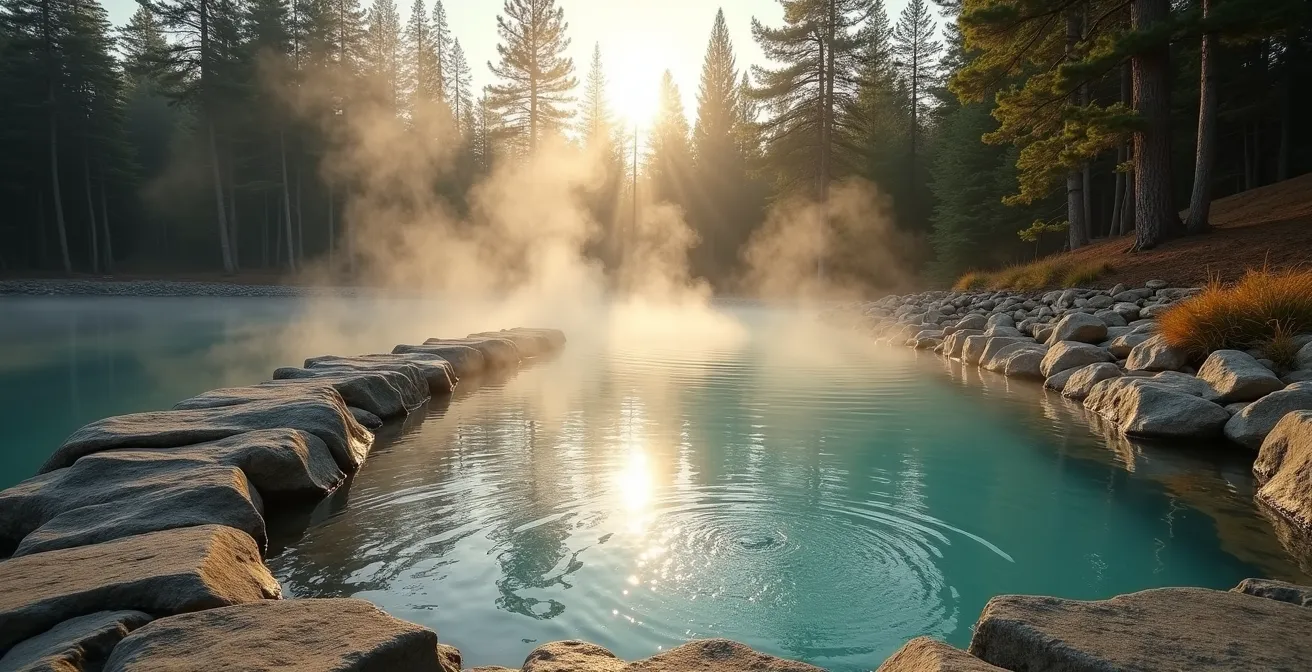
The brochure paints an idyllic picture: a sun-drenched, tranquil balneotherapy pool, its shimmering water promising sanctuary after a long day’s hike. For stressed adults seeking genuine rejuvenation, the allure of a campsite with spa facilities is powerful. We’re sold the idea of thalasso-level therapy just steps from our tent or mobile home. But the reality is often a crowded, boisterous hot tub that feels more like a recreational feature than a restorative one. The common advice is to simply enjoy the “relaxation,” but this overlooks the fundamental question for a discerning guest.
Is this a legitimate therapeutic tool or simply a glorified amenity? The difference between a true wellness experience and a lukewarm, noisy pool lies in a series of crucial, often invisible, details. It’s about moving beyond the promise of relaxation and developing a critic’s eye for what constitutes genuine hydrotherapy. The answer doesn’t lie in the size of the pool, but in the science of its water jets, the rigor of its hygiene, the strategy of its use, and the very atmosphere it cultivates. It requires an understanding of hydro-mechanics and operational integrity.
This guide provides a framework for that critical assessment. Instead of taking the marketing at face value, we will deconstruct the campsite balneotherapy experience. We will explore the specific functions of different water jets, establish a non-negotiable checklist for hygiene, and analyze the optimal timing for true physiological benefits. By the end, you will be able to distinguish a facility that offers genuine therapeutic efficacy from one that is merely a pleasant diversion, ensuring your wellness investment—of time and money—is a sound one.
This article provides a complete framework for evaluating the true worth of a campsite’s wellness offerings. Below, you’ll find a detailed breakdown of each critical component, from the mechanics of hydrotherapy to the benefits of complementary practices.
Summary: A Discerning Guide to Campsite Balneotherapy
- Why Excluding Kids from Balneo Areas Is Crucial for Your Relaxation?
- Swan Necks and Geysers: Which Water Jet Target Which Muscle Pain?
- Hot Water Hygiene: How to Tell if a Jacuzzi Is Clean Before Getting In?
- Free Access vs Paid Spa: Is the Extra Cost Worth the Privacy?
- Pre-Dinner or Post-Hike: When Is the Best Time for Balneotherapy?
- Forest Bathing: How to Practice Shinrin-Yoku on Your Pitch?
- Nordic Bath vs Jacuzzi: Which Is Better for Muscle Recovery After Hiking?
- Why a Private Nordic Bath Is the Ultimate Winter Camping Amenity?
Why Excluding Kids from Balneo Areas Is Crucial for Your Relaxation?
The primary function of a therapeutic space is to reduce sensory overload and induce a state of calm, a process fundamentally incompatible with the joyful chaos of children’s play. For an adult seeking genuine stress reduction, the presence of splashing, shouting, and high energy creates a state of hyper-vigilance, directly opposing the goals of balneotherapy. A serene environment isn’t a luxury; it is a clinical prerequisite for allowing the nervous system to shift from a “fight or flight” response to “rest and digest.” The exclusion of minors from these dedicated zones is the first and most telling sign that a campsite operator understands the difference between recreation and restoration.
This principle of environmental control is a cornerstone of professional spa management. Top-tier facilities create a deliberate “zen atmosphere” to maximize the physiological benefits of their treatments. They recognize that the therapeutic process begins with psychological safety and tranquility. A facility that fails to enforce this separation is, from a critic’s perspective, prioritizing mass appeal over therapeutic efficacy. It signals that the balneotherapy area is conceived as an extension of the main swimming pool, not as a dedicated wellness sanctuary.
Case Study: Les Tournels 5-Star Campsite Spa Experience
The ‘Entre Mer & Vignes’ spa at Les Tournels campsite exemplifies this best practice by strictly reserving access for guests over 18 years old. This policy is essential to preserving the tranquil environment required for their sauna (toxin elimination), whirlpool (muscle relaxation), and hammam to be fully effective. By guaranteeing a calm, adult-focused space, they elevate their offering from a simple amenity to a credible wellness destination, demonstrating a clear commitment to the therapeutic integrity of the experience.
Ultimately, an adult-only policy is the clearest indicator of a campsite’s intent. If the goal is a quiet escape and measurable stress reduction, seeking out a facility with this rule is non-negotiable. It is the first filter in determining whether you are paying for a real spa experience or just access to a warm, crowded pool.
Swan Necks and Geysers: Which Water Jet Target Which Muscle Pain?
Not all bubbles are created equal. The core of effective hydrotherapy lies in its hydro-mechanics: the precise application of water pressure, temperature, and flow to achieve a physiological response. A generic Jacuzzi with gentle, bubbling aeration offers pleasant sensory stimulation, but its therapeutic value is minimal. A true balneotherapy pool functions more like a physical therapy tool, equipped with a variety of specialized jets designed to target specific muscle groups and ailments. The discerning guest must learn to identify these tools and understand their purpose.
A recent network meta-analysis of 57 studies confirms the power of this targeted approach, finding a 40-60% enhancement in muscle recovery when hydrotherapy with specific jets is used. This is achieved through jets that deliver focused, percussive massage to tight muscles, stimulating blood flow and aiding the removal of metabolic waste. Identifying the available jet types is therefore crucial in assessing a pool’s potential to do more than simply feel nice. High-pressure linear jets for the lumbar spine are fundamentally different from low-pressure bubbling beds for general circulation.
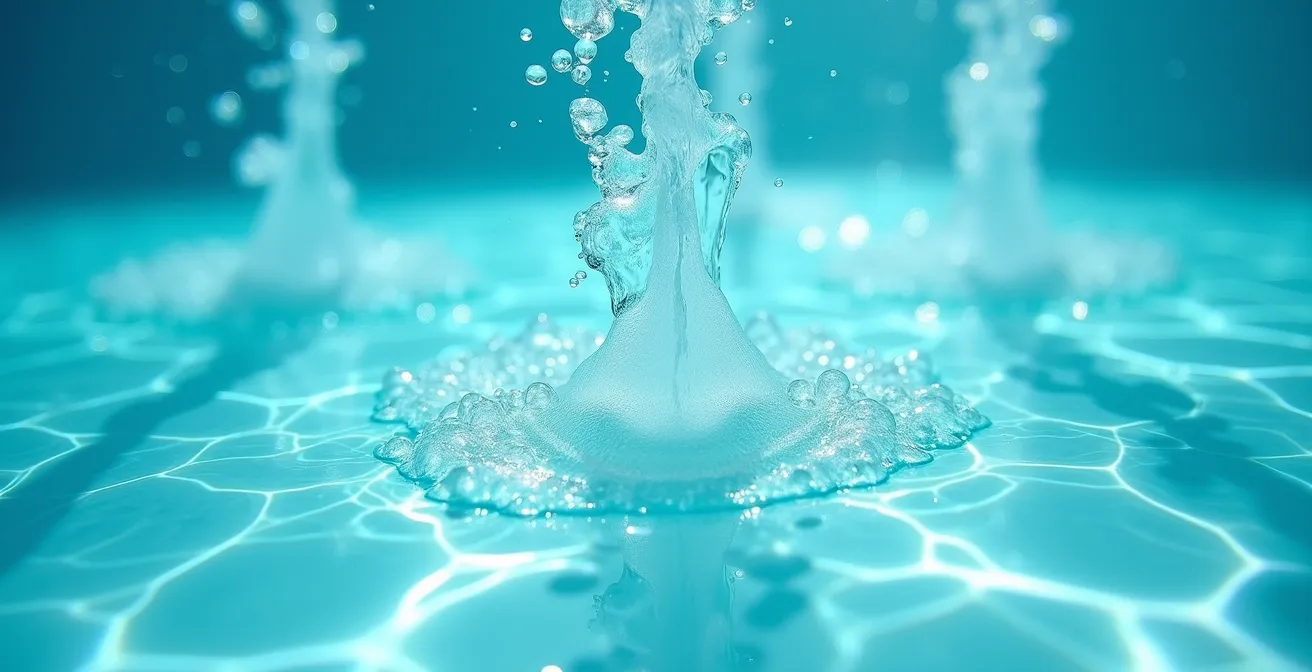
The visual variety of water streams is your first clue. Look for powerful, concentrated flows from swan neck fountains, rotating nozzles in the walls, and upward-pushing geysers from the floor. Each has a distinct function. As the table below illustrates, matching the right jet to your specific pain point transforms the experience from passive soaking to active, targeted self-treatment.
| Jet Type | Pressure Level | Target Area | Best For |
|---|---|---|---|
| Swan Neck Jets | Medium-High | Neck & Trapezius | Tension from carrying backpacks |
| Bubbling Bed | Low-Medium | Full Body | General circulation & tired legs |
| Linear Jets | High | Back Muscles | Lower back pain from hiking |
| Rotating Jets | Variable | Shoulders & Arms | Upper body muscle knots |
Hot Water Hygiene: How to Tell if a Jacuzzi Is Clean Before Getting In?
In the warm, agitated environment of a Jacuzzi, bacteria can thrive. For a spa critic, hygiene is not a trivial detail; it is the absolute bedrock of a safe and therapeutic experience. Excellent water quality is a non-negotiable standard, and visual clarity alone is an insufficient measure. Potent sanitizers and effective filtration are essential, and thankfully, there are several sensory clues that reveal a facility’s commitment to operational integrity. Before even dipping a toe in, a quick inspection can tell you almost everything you need to know.
Professionally managed hot tubs are subject to rigorous testing. For reference, the CDC recommends maintaining pH levels of 7.0-7.8 and free chlorine levels of at least 3 parts per million (ppm) to ensure pathogens are effectively neutralized. While you can’t measure this yourself, you can look for signs of the processes that maintain these levels. A posted log of recent water testing times is a stellar sign of a professional operation. Conversely, a strong, pungent “chlorine” smell is a major red flag. This odor doesn’t come from chlorine itself, but from chloramines—chemical byproducts formed when chlorine reacts with sweat and oils, indicating the sanitizer is depleted and the water is dirty.
To empower your assessment, use this systematic checklist to perform a quick but thorough inspection. It engages all senses to build a complete picture of the Jacuzzi’s health before you enter.
Your 30-Second Jacuzzi Hygiene Checklist
- Smell the Air: A clean spa should have almost no odor. A heavy chemical or musty smell indicates poor water chemistry and the presence of chloramines.
- Inspect the Water: Look for crystal-clear water. Any cloudiness, foam, or an oily sheen on the surface is a sign of contaminants and an overworked filtration system.
- Check the Surfaces: Observe the waterline. A dark, greasy “scum line” indicates an accumulation of body oils and dirt that hasn’t been properly cleaned.
- Feel the Walls: Run your hand along the interior wall below the water level. It should feel perfectly smooth. Any slimy or gritty texture points to biofilm buildup.
- Listen for the Pump: A well-maintained Jacuzzi should have a constant, low hum from the filtration pump. Silence might mean the system isn’t running, and the water isn’t being cleaned.
Free Access vs Paid Spa: Is the Extra Cost Worth the Privacy?
Many campsites offer a “balneotherapy area” with free access to all guests, positioning it as a key feature. However, a discerning guest must question what this “free” access truly provides. Often, it means high crowd levels, significant wait times for desirable features like swan neck jets, and a general recreational atmosphere that undermines any therapeutic intent. In contrast, a growing number of high-end campsites are introducing a two-tier system: a basic pool for everyone and a premium, paid-access spa for adults seeking genuine tranquility and a higher standard of care.
The surcharge for a private spa is not just a fee for entry; it is an investment in a controlled environment. As premium operators like Yelloh! Village have demonstrated, reserving spa areas for adults or guests in specific accommodations creates “unparalleled calm and exclusivity.” This paid model allows the facility to guarantee a superior experience by managing capacity, eliminating queues, and maintaining a serene ambiance. It also often funds a higher level of operational integrity, including more frequent water testing, premium filtration systems, and added amenities that complete the wellness ritual, such as herbal teas, plush robes, and dedicated relaxation lounges.
The decision to pay the extra cost hinges on your objective. If your goal is a quick, social dip in a hot tub, the free area may suffice. But if you are seeking measurable therapeutic benefits—stress reduction, muscle recovery, and mental quietude—the value proposition of a paid spa becomes clear. The table below breaks down the typical differences, framing the choice not as a cost, but as an investment in the quality of your experience.
| Aspect | Free Access | Paid Access |
|---|---|---|
| Crowd Levels | Variable, often crowded | Controlled capacity |
| Wait Times | 10-30 min for jets | Immediate access |
| Water Quality | Standard maintenance | Premium filtration |
| Amenities | Basic facilities | Herbal tea, towels, robes |
| Time Limits | Often restricted | Extended sessions |
Pre-Dinner or Post-Hike: When Is the Best Time for Balneotherapy?
Viewing a balneotherapy session as a tool rather than a simple activity requires strategic timing. Just as you wouldn’t eat a heavy meal before running a marathon, the moment you choose to use a spa pool can dramatically alter its physiological effects. The benefits of hydrotherapy are not static; they are dependent on your body’s state and your wellness goals for that specific moment. A spa critic understands that “when” is just as important as “what.” Optimizing your session timing, or “regimen optimization,” is key to unlocking the full therapeutic potential.
The most common and effective use is for post-activity recovery. Immersing your body in warm, jet-propelled water after a strenuous hike can significantly accelerate recovery. The heat increases circulation, helping to flush out metabolic byproducts like lactic acid, while the targeted jet massage works on muscle knots and reduces soreness. However, a session can also be a powerful tool for mental transition. A shorter, less intense session in the late afternoon can act as a psychological “reset,” helping the mind shift from the active, alert state of the day to a relaxed, receptive mode for the evening.
Conversely, poor timing can be counterproductive. Using a hot tub immediately after a large meal can interfere with digestion by diverting blood flow from the digestive system to the skin. To maximize benefits, consider your goals and schedule your sessions accordingly. Here is a strategic guide:
- Post-Hike Recovery (within 2 hours): A 20-minute session is ideal. This helps reduce inflammation, ease muscle stiffness, and flush lactic acid before it fully sets in.
- Pre-Dinner Relaxation (approx. 5-6 PM): A gentle 15-minute session can help you transition from an active day to a restful evening, calming the nervous system before your meal.
- Evening Wind-Down (90 minutes before sleep): A short 10-15 minute soak can trigger a slight drop in core body temperature upon exiting, which signals the brain to produce melatonin and prepare for sleep.
- Morning Activation: For some, a quick 5-10 minute warm water session can help increase circulation and gently awaken muscles before the day’s activities, though it is less common.
- Avoid Immediately After Meals: Always wait at least 60-90 minutes after eating to avoid digestive discomfort and get the full benefits of your session.
Forest Bathing: How to Practice Shinrin-Yoku on Your Pitch?
While the focus is often on built amenities, one of the most potent wellness therapies available at a campsite costs nothing and requires no equipment: Shinrin-Yoku, or “forest bathing.” This Japanese practice is not about exercise but about mindful immersion in a natural environment. From a wellness critic’s perspective, it represents a powerful, complementary therapy to hydrotherapy. Where a Jacuzzi targets the physical body, Shinrin-Yoku targets the nervous system directly through sensory engagement, and its benefits are scientifically documented to include reduced stress, lower blood pressure, and improved mood.
The magic of Shinrin-Yoku lies in its simplicity and the chemical compounds, called phytoncides, released by trees. Inhaling these natural aromatic compounds has been linked to reduced anxiety and a boost in immune function. You don’t need a vast, ancient forest to practice it; the cluster of trees around your own camping pitch can be a perfectly effective micro-sanctuary. The goal is to slow down completely and deliberately engage each of your senses, creating a space for mental healing and profound relaxation. It is the ultimate antidote to the overstimulation of modern life.

Practicing it requires a conscious shift from “doing” to “being.” Instead of walking through nature, you allow nature to wash over you. The following 15-minute ritual can be performed right on your campsite, turning a simple patch of green into a powerful wellness tool.
- Minutes 1-3 (Grounding): Stand or sit comfortably, ideally barefoot on grass or earth. Close your eyes and take several deep breaths. Focus solely on the sensation of your body connecting with the ground.
- Minutes 4-6 (Touch): Open your eyes and slowly touch three different natural textures. Notice the roughness of tree bark, the smoothness of a leaf, or the coolness of a stone.
- Minutes 7-9 (Hearing): Close your eyes again. Try to identify five distinct, separate sounds: the rustle of leaves, a distant bird call, the hum of an insect, the whisper of the wind.
- Minutes 10-12 (Smell): Breathe in deeply through your nose. Try to isolate the scents of the forest—the sharp tang of pine, the rich smell of damp earth, the fragrance of nearby flowers.
- Minutes 13-15 (Sight): Sit quietly and simply observe. Watch the way sunlight filters through the leaves, creating shifting patterns on the ground. Observe without judgment or analysis.
Nordic Bath vs Jacuzzi: Which Is Better for Muscle Recovery After Hiking?
For the serious hiker or active camper, muscle recovery is not a luxury—it’s essential for preventing injury and enjoying the next day’s adventure. While a hot Jacuzzi feels soothing, from a physiological standpoint, its ability to promote recovery is limited. A far more potent tool, when available, is a Nordic bath, which facilitates contrast therapy: the practice of alternating between extreme heat (like a sauna) and cold (like a cold plunge or shower). This method is fundamentally different from the passive heat of a Jacuzzi and offers superior results for acute muscle soreness.
The Jacuzzi’s primary mechanism is vasodilation—the widening of blood vessels. This increases blood flow, which is good for general stiffness and relaxation. However, contrast therapy creates a “pump” effect. The heat causes vasodilation, and the subsequent cold plunge causes rapid vasoconstriction (narrowing of blood vessels). This powerful cycle of expanding and contracting vessels actively flushes metabolic waste and inflammatory markers from the muscles, far more effectively than heat alone. In fact, compelling research indicates that contrast therapy reduces muscle soreness by 40% more than simple hot water immersion.
The choice between the two depends on the nature of your fatigue. For mild, general soreness and mental relaxation, a Jacuzzi is a pleasant and effective option. Its gentle heat can ease tension and prepare the body for rest. However, for sharp pain, swelling, and the intense fatigue that follows a challenging hike, the Nordic cycle is clinically superior. The cold element is crucial for aggressively reducing inflammation, while the alternating temperatures provide a significant endorphin release, boosting mood and alertness. A Nordic bath is an active recovery tool, whereas a Jacuzzi is a passive relaxation aid. For an athlete or serious outdoor enthusiast, there is no contest in terms of pure recovery efficacy.
Key Takeaways
- A pool’s therapeutic value lies in specific jet design and pressure for targeted massage, not just warm, bubbling water.
- True wellness spaces are defined by operational integrity: verifiable hygiene (clear water, no chemical smell) and adult-only zones for tranquility.
- For active muscle recovery after hiking, the physiological “pump” effect of contrast therapy (Nordic bath) is demonstrably superior to a Jacuzzi alone.
Why a Private Nordic Bath Is the Ultimate Winter Camping Amenity?
While a Jacuzzi is a welcome feature any time of year, the private Nordic bath ascends to an entirely different level of desirability in winter. It becomes more than an amenity; it is a powerful, restorative experience amplified by the very environment it inhabits. The practice of contrast therapy—alternating between the intense heat of a sauna and a cold plunge—is a centuries-old ritual, but its effectiveness is uniquely potent when the ambient air is crisp and cold. This natural temperature differential enhances the physiological benefits, making a private Nordic bath the definitive ultimate winter camping luxury.
The core mechanism is the dramatic swing between vasodilation in the sauna and vasoconstriction in the cold. In winter, the cold element is colder, and the thermal shock is greater. This intensifies the “pump” effect that flushes inflammation and lactic acid from tired muscles. The experience is invigorating, triggering a massive endorphin release that creates a feeling of euphoria and profound well-being, perfectly offsetting the quiet stillness of a winter landscape. The privacy element is crucial, as it allows for the uninhibited, meditative focus required to complete several cycles without interruption.
The effectiveness of contrast therapy is amplified when the ambient air is cold, making the hot/cold differential greater and the physiological benefits more potent than in summer.
– River Birch Nordic Sauna Research Team, 11 Benefits of Contrast Therapy for Athlete Recovery
From a critic’s standpoint, a campsite offering a private Nordic bath in winter is making a definitive statement. It shows a deep understanding of wellness that transcends basic amenities. It offers not just comfort, but a genuine, powerful therapeutic tool that works in harmony with the season. It provides an unparalleled experience of vitality, resilience, and connection to the elements—the very essence of what restorative outdoor living should be.
Therefore, when planning a winter camping trip with a focus on rejuvenation, actively seek out facilities that offer this premium experience. It is the single greatest investment you can make in your physical and mental recovery, transforming a simple getaway into a truly restorative retreat.