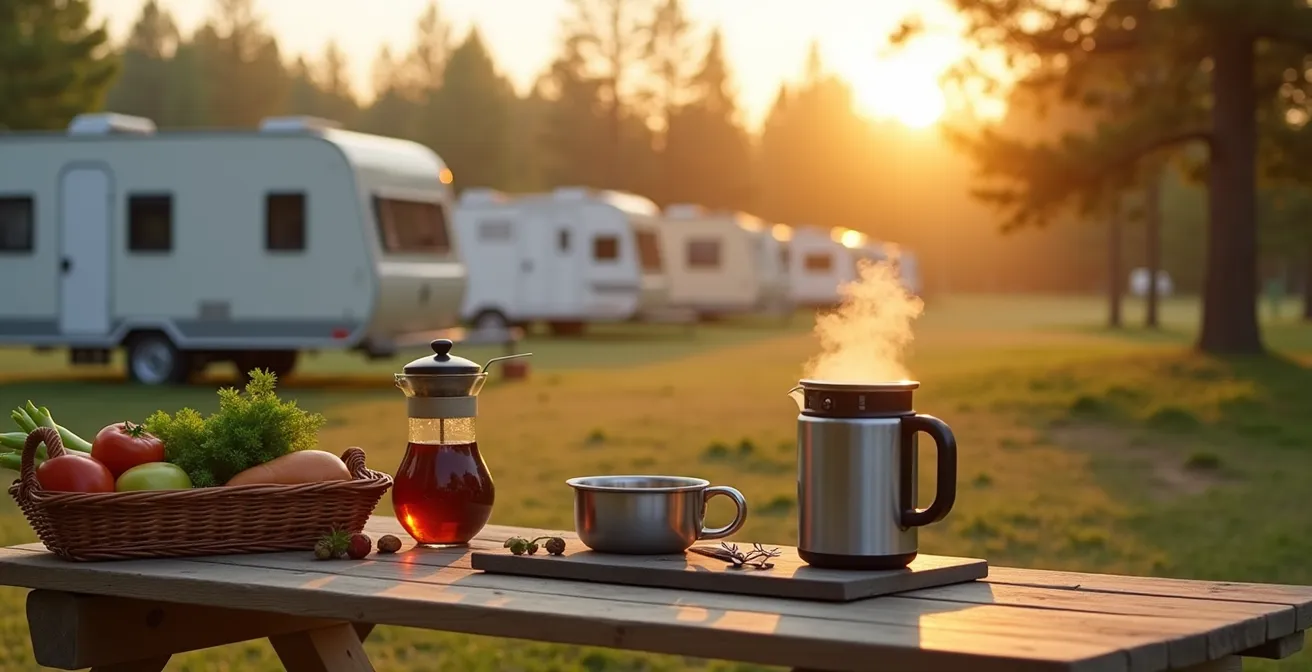
Hitting your €500 holiday savings goal isn’t about luck; it’s a direct result of treating your rental kitchen as a strategic tool rather than a simple amenity.
- Adopting a “chef’s mindset” of planning and efficiency allows you to overcome the common limits of space and equipment in a mobile home.
- Strategic sourcing from local French markets, not just large supermarkets, unlocks superior flavour and significant cost savings.
Recommendation: Embrace culinary resourcefulness. By planning several meals around core purchases—like a market-fresh roast chicken—you can drastically cut your family’s food bill without ever feeling like you’re missing out.
The vision of a perfect French family holiday often includes sun-drenched beaches, charming villages, and, inevitably, the delightful but costly experience of daily restaurant meals. For budget-conscious families, the food bill can quickly become the single largest expense, turning a dream trip into a source of financial stress. Many believe the choice is a binary one: either spend a fortune eating out or resign yourself to bland, repetitive meals cooked in a cramped mobile home kitchen. This is a common misconception, and it’s precisely what holds many back from achieving true holiday freedom.
The typical advice is to simply “cook more,” but this overlooks the reality of a 4-square-meter kitchen with minimal equipment. But what if the secret to saving a substantial amount—as much as €500 over a two-week holiday—wasn’t just about cooking, but about thinking differently? What if the key was to transform that small kitchen from a limitation into a powerful budget-saving engine? This guide is built on a more profound principle: adopting a chef’s mindset. It’s a system of smart shopping, efficient preparation, and culinary resourcefulness that allows you to enjoy the authentic tastes of France without the hefty price tag.
We’ll explore how to equip yourself for success, master the art of cooking in a compact space, and make strategic decisions that maximize both your budget and your holiday enjoyment. From creating weekly meal plans based on fresh market produce to knowing how to find authentic local delicacies on a dime, you’ll discover a practical roadmap to delicious, affordable family meals.
This article provides a complete system for turning your rental kitchen into a financial advantage. Below, we’ll break down everything from the essential gear you need to pack to the specific cooking strategies and local food secrets that make it all possible.
Summary: Your Roadmap to Budget Gastronomy in France
- The 5 Kitchen Utensils You Must Pack Because Campsites Never Provide Them
- How to Cook a 3-Course Meal in 4 Square Meters Without Chaos?
- Dishwasher or Not: Is It Worth the Extra 100 € Per Week?
- The Gas Stove Mistake That Can Ruin Your Indoor Air Quality
- What to Cook in July: A Weekly Meal Plan Using Only French Market Produce
- How to Eat Like a Local in Nice for Under 20 €?
- Oysters and White Wine: Where to Find Authentic Tasting Spots Near Campsites?
- How to Combine a Family Camping Trip with Serious Wine Tasting in Bordeaux?
The 5 Kitchen Utensils You Must Pack Because Campsites Never Provide Them
The journey to saving €500 begins before you even leave home. Arriving at your mobile home to discover a kitchen equipped with flimsy, mismatched, and incomplete utensils is a common frustration that can instantly derail your self-catering ambitions. While most rentals provide basic plates and cutlery, the tools required for actual cooking are often an afterthought. Relying on the provided equipment is the first step toward giving up and heading to the nearest expensive restaurant. To truly empower your inner chef, you must bring a small, curated toolkit.
These five items are consistently absent from standard rental inventories, yet they are absolutely essential for efficient and enjoyable meal preparation. They form the foundation of your portable kitchen arsenal and are non-negotiable for anyone serious about budget gastronomy.
- A Good Quality Chef’s Knife: The single most important tool. The knives provided are typically dull and small, making chopping vegetables a tedious and unsafe chore. A sharp 8-inch chef’s knife makes all preparation work faster and more pleasant.
- A Decent-Sized Cutting Board: Campsite cutting boards are often tiny, warped, and unsanitary. A lightweight, flexible plastic or thin wooden board gives you a clean, stable surface to work on, which is crucial for organization.
- A Vegetable Peeler: You can’t rely on a paring knife to peel a bag of market potatoes or carrots for a family of four. A simple Y-peeler is a tiny tool that saves an immense amount of time and frustration.
- A Can Opener: Never assume there will be one that works. A simple, reliable manual can opener is vital for accessing staples like tinned tomatoes, beans, or tuna.
- A Silicone Spatula/Whisk: Perfect for everything from scrambling eggs without scratching the non-stick pan to scraping the last bit of sauce out of a jar, maximizing every ingredient you’ve paid for.
Packing these essentials is a small effort that pays huge dividends. It transforms your rental kitchen from a source of frustration into a functional workspace, setting the stage for the culinary resourcefulness that will define your budget-friendly holiday.
How to Cook a 3-Course Meal in 4 Square Meters Without Chaos?
The biggest challenge in a mobile home kitchen isn’t the lack of ingredients; it’s the lack of space. The typical 4-square-meter layout can feel incredibly restrictive, leading to mess, stress, and the temptation to abandon cooking altogether. However, with the right strategy—a core tenet of the chef’s mindset—this compact space can be managed effectively. The secret lies in organization, workflow, and maximizing every inch of available real estate, especially vertical space.
The first rule is to embrace the professional technique of “mise en place” (everything in its place). This means preparing all your ingredients before you even start cooking. Chop your vegetables, measure your spices, and have everything ready to go. To avoid cluttering the tiny indoor counter, use the outdoor terrace table as your primary prep station. This simple change keeps the kitchen clear for the actual cooking process, dramatically reducing chaos.
Case Study: The “Mise en Place on the Terrace” Method
Experienced campers have perfected this technique to maintain order. By prepping all vegetables and other ingredients on the patio table, the indoor kitchen remains solely for assembly and cooking. This workflow is especially effective for a three-course meal: a cold starter (like a tomato and mozzarella salad) can be fully prepared outside, the main course components are ready to be cooked, and a pre-chilled dessert is waiting in the fridge. According to discussions on camping forums, this method can reduce the feeling of chaos by over 60%, turning a stressful juggle into a streamlined process.
Another key strategy is to think vertically. Instead of using multiple pans side-by-side on the limited stove burners, invest in stackable cooking systems. A multi-level steamer, for instance, allows you to cook fish, vegetables, and rice simultaneously on a single burner.
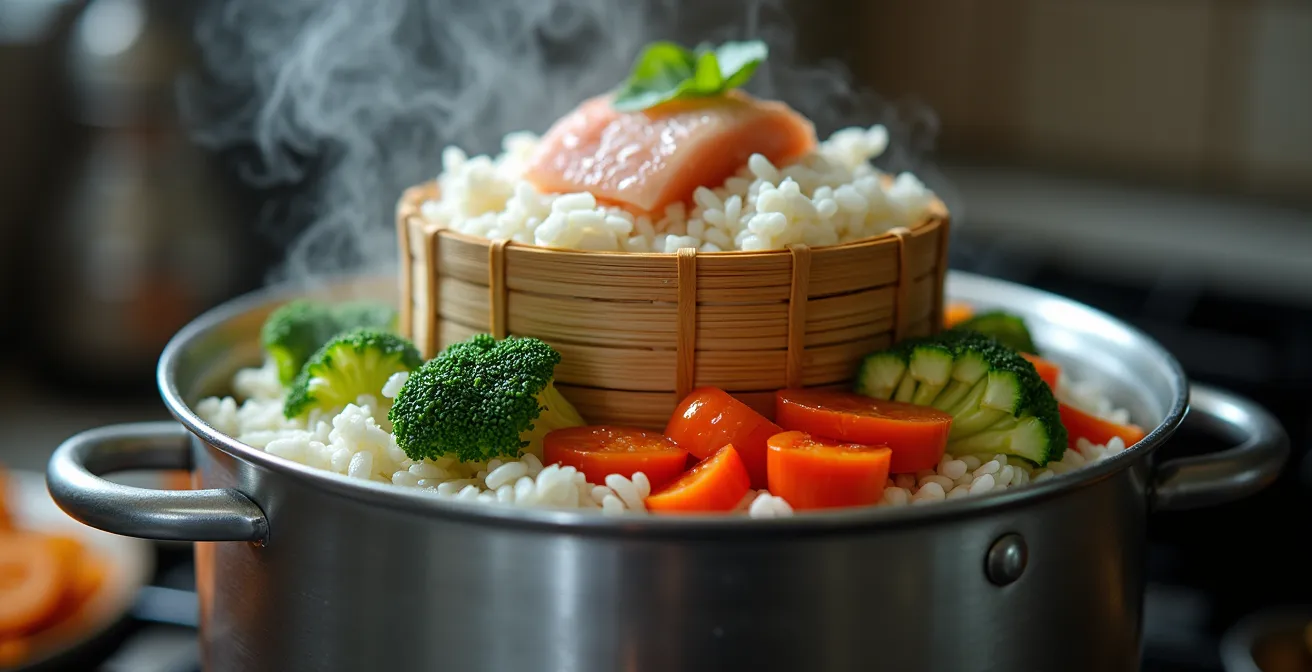
As you can see, a vertical setup is a game-changer for efficiency. This approach not only saves precious stove space but also reduces the number of pots you need to wash later. By combining outdoor prep with vertical cooking, you can comfortably create complex, delicious meals without the kitchen descending into anarchy, proving that space is only a limitation if you let it be.
Dishwasher or Not: Is It Worth the Extra 100 € Per Week?
When browsing high-end campsites, you’ll often face a choice: a standard mobile home or a premium version that includes a dishwasher for an extra fee. This surcharge can seem steep, but the decision isn’t just about money; it’s a classic holiday calculation of cost versus convenience. As reported by an analysis of 2025 pricing, premium mobile homes with dishwashers can cost €50-€100 more per week than standard rentals. For a two-week holiday, that’s up to €200—a significant chunk of your €500 savings goal. So, is it a worthy investment or an unnecessary luxury?
From a purely financial standpoint, the answer seems obvious: skip the dishwasher and save the cash. However, the “chef’s mindset” also values efficiency and time. Washing dishes for a family of four after every meal can consume a surprising amount of your precious holiday time—easily 45 to 60 minutes per day. That’s over 10 hours on a two-week trip that could be spent by the pool, exploring a nearby town, or simply relaxing.
To make an informed decision, it’s helpful to break down the factors beyond the initial cost. This involves looking at time, resource consumption, and even the intangible impact on family harmony, as shown in a recent comparative analysis.
| Factor | With Dishwasher | Without Dishwasher |
|---|---|---|
| Weekly Cost | +100€ | 0€ |
| Time Saved Daily | 45-60 minutes | 0 minutes |
| Water Usage | 15L per cycle | 40L manual washing |
| Family Harmony Score | High | Variable |
The data reveals a more nuanced picture. While the dishwasher has a direct cost, it saves a significant amount of time and, surprisingly, can use less water than manual washing. The “Family Harmony Score” is a crucial, if unscientific, metric. Arguments over whose turn it is to wash up can sour the holiday atmosphere. For families committed to cooking most meals, the €100 weekly fee can be a worthwhile investment in time and peace. For those planning to cook less frequently, the savings from manual washing are likely more valuable. The right choice depends on your family’s specific priorities.
The Gas Stove Mistake That Can Ruin Your Indoor Air Quality
While the gas stove is the heart of your mobile home kitchen, misusing it can quickly turn your cozy retreat into an unpleasant and even unhealthy environment. The most common mistake campers make is failing to ensure proper ventilation. Cooking, especially boiling water for pasta or potatoes, releases significant amounts of pollutants like carbon monoxide and nitrogen dioxide, along with large quantities of water vapor. In a small, enclosed space, this can lead to poor indoor air quality and excessive condensation, creating a damp, stuffy atmosphere.
If your stove is new to you, fire it up at least once before you leave. You want to triple-check that you have the right kind of fuel and you know how to light it.
– Brian Jump, REI’s Director of North American Field Operations, Outside Magazine
This expert advice highlights the importance of familiarity with your equipment. Beyond just knowing how to light it, understanding how to use it safely is paramount. The key is to create constant airflow. Many people avoid opening windows to keep warmth in or bugs out, and they often leave the noisy extractor hood off. This is a critical error. The extractor fan, combined with creating a cross-ventilation by opening windows on opposite sides of the mobile home, is essential for pulling pollutants and humidity outside.
Another vital check is the color of the flame. A healthy, efficient flame should be a steady blue. If you see yellow or orange tips, it’s a sign of incomplete combustion, which produces higher levels of carbon monoxide. This could indicate a problem with the stove or the gas connection and should be addressed immediately. Maintaining good air quality isn’t just about comfort; it’s a fundamental safety practice for cooking in any confined space.
Your Gas Stove Safety Checklist
- Flame Colour Check: Always ensure the flame is blue. Yellow tips indicate incomplete combustion and a potential hazard.
- Create Cross-Ventilation: Open windows on opposite sides of the mobile home before you start cooking, no matter the weather.
- Use the Extractor Hood: Turn on the extractor fan, even if it’s noisy. Its job is to remove harmful pollutants and excess humidity.
- Monitor Humidity: Be aware that boiling one liter of water releases one liter of vapor into the air. Ventilate accordingly to prevent dampness and condensation.
- Pre-Trip Equipment Test: Test your stove and all its safety features before your holiday to ensure everything is in working order.
What to Cook in July: A Weekly Meal Plan Using Only French Market Produce
The true joy of self-catering in France comes alive at the local market. This is where the “chef’s mindset” transitions from saving money to creating genuinely memorable culinary experiences. In July, French markets are overflowing with sun-ripened tomatoes, fragrant melons, crisp lettuces, and fresh herbs. Building your meal plan around these seasonal treasures is not only more delicious and authentic but also far more cost-effective than relying on supermarket-sourced ingredients.
Instead of planning rigid meals before you shop, let the market inspire you. A great strategy is to base your weekly plan around one or two star purchases. A beautiful, free-range roast chicken or a large cut of local pork can form the centerpiece of several distinct meals, embodying the principle of culinary resourcefulness.
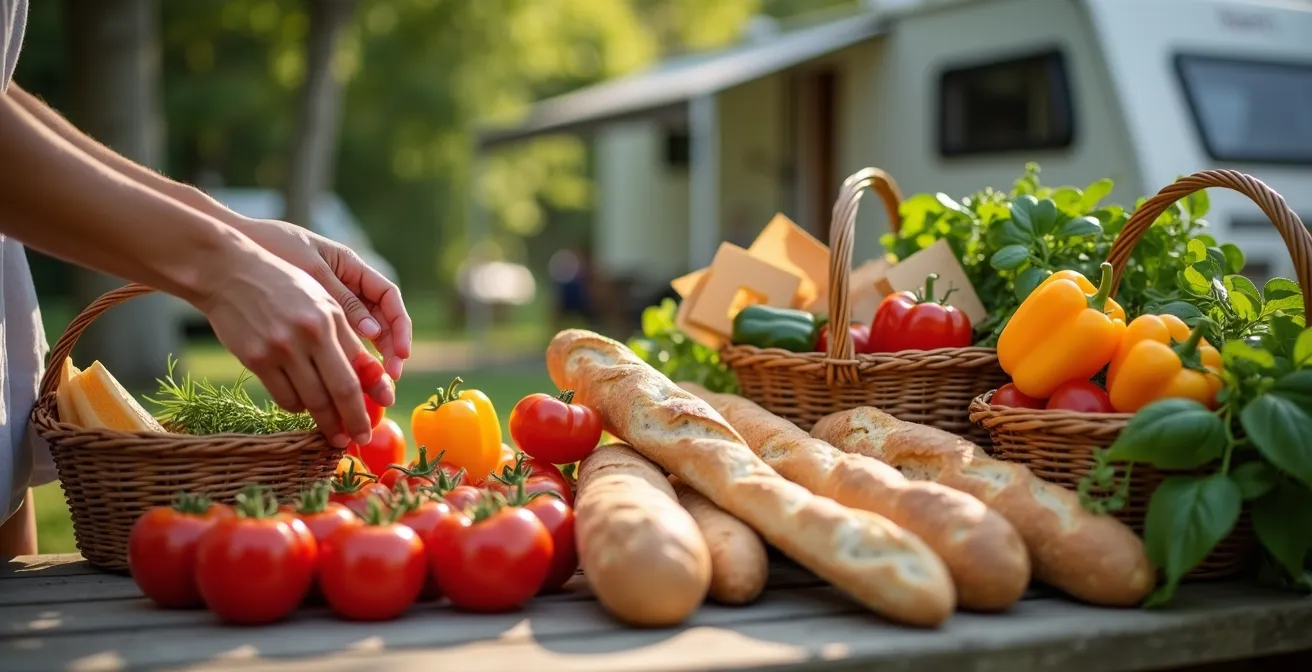
A successful week of market-to-table cooking could look like this: Start with a simple shopping list of versatile produce like tomatoes, courgettes (zucchini), onions, garlic, and a fresh baguette. Then, add your main protein. This flexible approach allows you to adapt to what looks best and is most affordable on any given day.
The “Buy Once, Eat Thrice” French Market Strategy
Camping food expert Amanda demonstrates how a single, strategic purchase can anchor multiple meals. A whole roast chicken, often available for around €8 at French market rotisseries, is the perfect example. On Day 1, it’s served hot with a side of market potatoes and a green salad. On Day 2, the leftover meat is shredded for delicious sandwich fillings for a picnic lunch. Finally, on Day 3, the carcass is simmered with vegetable scraps to create a rich, hearty broth for a noodle soup. This approach saves approximately €20 compared to buying separate proteins for three different meals, perfectly illustrating how to eat well while saving money.
This method of “strategic sourcing” turns your kitchen into a hub of creativity. A large batch of ratatouille made from market vegetables can be a main course one night and a side dish the next. This isn’t about deprivation; it’s about smart, delicious planning that connects you directly to the local food culture.
How to Eat Like a Local in Nice for Under 20 €?
Even with a fully equipped kitchen, part of the French holiday experience is enjoying a meal out. The challenge, especially in a glamorous location like Nice, is doing so without blowing your budget. The key is to avoid tourist traps and adopt the dining habits of the locals. Eating well for under €20 is not only possible but also offers a more authentic taste of the region. It requires a bit of knowledge and a willingness to step off the main promenade.
Your first and most powerful tool is the “Formule du Midi.” This is a fixed-price lunch menu, typically offering two or three courses for a set price, often between €15 and €20. You’ll find these deals at neighborhood bistros, away from the tourist-heavy areas. It’s the way many locals eat their main meal of the day, and it provides incredible value. Look for handwritten signs on chalkboards—a good indicator of a daily-changing, fresh menu.
Another pillar of Niçois budget gastronomy is its incredible street food. Forget expensive sit-down meals and instead assemble a walking feast from trusted local vendors. This is where you’ll discover the true soul of the city’s cuisine. Here are the essential strategies for an affordable and authentic taste of Nice:
- Master the “Formule du Midi”: Seek out fixed-price lunch menus in the city’s neighborhood bistros, far from the main tourist drags, for the best value.
- Discover Niçois Street Food: A trip to Nice is incomplete without trying Socca (a chickpea pancake), Pissaladière (an onion and anchovy tart), and Tourte de Blettes (a unique Swiss chard pastry).
- Create a Cours Saleya Picnic: Head to the famous Cours Saleya market to buy local olives, goat cheese, sun-ripened figs, and a fresh fougasse bread for a gourmet picnic.
- Order House Wine “en Pichet”: When you do dine out, skip the expensive bottled wine and order the house wine in a carafe (`pichet`). It’s authentic, affordable, and perfectly drinkable.
- Find a Million-Dollar View for Free: Take your market picnic up to the Colline du Château (Castle Hill). It offers breathtaking, free panoramic views of the city and the sea—the best dining backdrop in town.
By combining these tactics, you can enjoy several fantastic meals out while still staying well within your budget. It’s about being a savvy consumer, just like the locals are.
Oysters and White Wine: Where to Find Authentic Tasting Spots Near Campsites?
A trip to the French coast feels incomplete without indulging in fresh oysters and a crisp glass of white wine. This iconic experience is often perceived as a luxury, but with a little local knowledge, it can be one of the most affordable and memorable parts of your camping holiday. The secret is to bypass the expensive seafood restaurants and go directly to the source: the oyster farmers themselves.
Along coastlines like Arcachon Bay (near Bordeaux) or the shores of Brittany, you will find “cabanes ostréicoles”—the simple huts where oyster farmers work. Many of these producers offer “dégustation” (tasting) right on their property. This is the ultimate way to experience oysters: freshly shucked, served with a lemon wedge, a slice of rye bread, and a glass of local white wine, often for a fraction of the restaurant price. It’s a beautifully rustic and authentic experience.
To find these hidden gems, you need to know what to look for. Keep an eye out for small, often handwritten signs that say “Vente Directe” (direct sale) or “Dégustation d’Huîtres.” These signs lead you away from the tourist trail and into the heart of the local industry. Don’t be intimidated by the simple, no-frills setting; this is where you’ll find the freshest product and the best value. Using specific keywords on Google Maps like “ostréiculture” or “cabane huitre” in your target area can also reveal producers that aren’t listed on major tourism sites.
Understanding the menu is also part of the experience. Oysters are typically sized by number, where a smaller number means a larger oyster (e.g., No. 2 is larger than No. 3). You may also see terms like “Fine de Claire”, which indicates an oyster that has been finished in shallow clay ponds for a more refined flavour, or “Spéciale de Claire” for a meatier, premium version. Engaging directly with the producer gives you a chance to learn about these nuances and enjoy a true taste of the French coast without breaking the bank.
Key Takeaways
- True savings come from a “chef’s mindset”—a strategic approach to planning, shopping, and cooking, not just having a kitchen.
- Overcome space limitations with smart techniques like “mise en place on the terrace” and vertical cooking to make cooking in a small kitchen efficient and enjoyable.
- Embrace “culinary resourcefulness” by planning meals around core market purchases to create multiple, varied dishes from a single ingredient, maximizing both flavour and budget.
How to Combine a Family Camping Trip with Serious Wine Tasting in Bordeaux?
One of the biggest challenges for camping families is balancing adult interests, like wine tasting in Bordeaux, with the need to keep children entertained. It can seem impossible to reconcile a day of serious cellar tours with a family-friendly holiday schedule. However, with strategic planning, it’s entirely possible to indulge in the region’s world-class wines without compromising the family fun. This is especially true as market analysis shows France leading in campsite density, placing you right at the heart of wine country.
The first step is to seek out châteaux that actively welcome families. A growing number of Bordeaux wineries now understand the needs of wine-loving parents and offer amenities like playgrounds, gardens, and even grape juice tastings for the kids. This allows for a more relaxed experience where children are seen as guests, not burdens. Pre-booking these family-friendly tours is essential.
For couples who want to explore wineries that may not be as child-focused, the “Tag Team Tasting” approach is a highly effective strategy born from the camping community.
Case Study: Family-Friendly Wine Tourism in Bordeaux
The “Tag Team Tasting” method allows both parents to enjoy high-quality wine experiences. One parent books a morning cellar tour at a chosen château while the other stays at the campsite to enjoy pool time or other activities with the children. In the afternoon, they swap roles. This ensures the kids have a fun, structured day and each parent gets a dedicated, unhurried block of time for their passion. For even greater efficiency, couples can visit a “Maison du Vin” in towns like Saint-Émilion or Pauillac. These central tasting rooms offer wines from dozens of local producers in one location, making it easy to sample a wide variety in a short amount of time.
This approach transforms a potential point of conflict into a win-win situation. It respects the needs of every family member and proves that a camping holiday can be a sophisticated and enriching experience for adults, too. It’s about smart logistics and redefining what a family trip can be—a perfect blend of poolside fun and Grand Cru Classé.
Frequently Asked Questions About Budget-Friendly French Cuisine
How do I identify authentic oyster farmers’ huts?
Look for handwritten signs saying ‘Dégustation’ or ‘Vente Directe’ at actual cabanes ostréicoles (oyster huts). This ensures you are buying directly from the producer for the best prices and guaranteed freshness.
What do oyster size numbers mean?
The numbering system for oysters can be counterintuitive: a smaller number indicates a larger oyster. Therefore, a No. 2 oyster is larger and meatier than a No. 3. You may also see terms like ‘Fine de Claire’ for a refined flavour and ‘Spéciale’ for premium quality.
Which Google Maps keywords find hidden producers?
To uncover authentic tasting spots that aren’t on major tourist maps, search for French terms like ‘ostréiculture’ (oyster farming), ‘dégustation huîtres’ (oyster tasting), or ‘cabane huitre’ (oyster hut) in coastal areas such as Cap Ferret or Cancale.