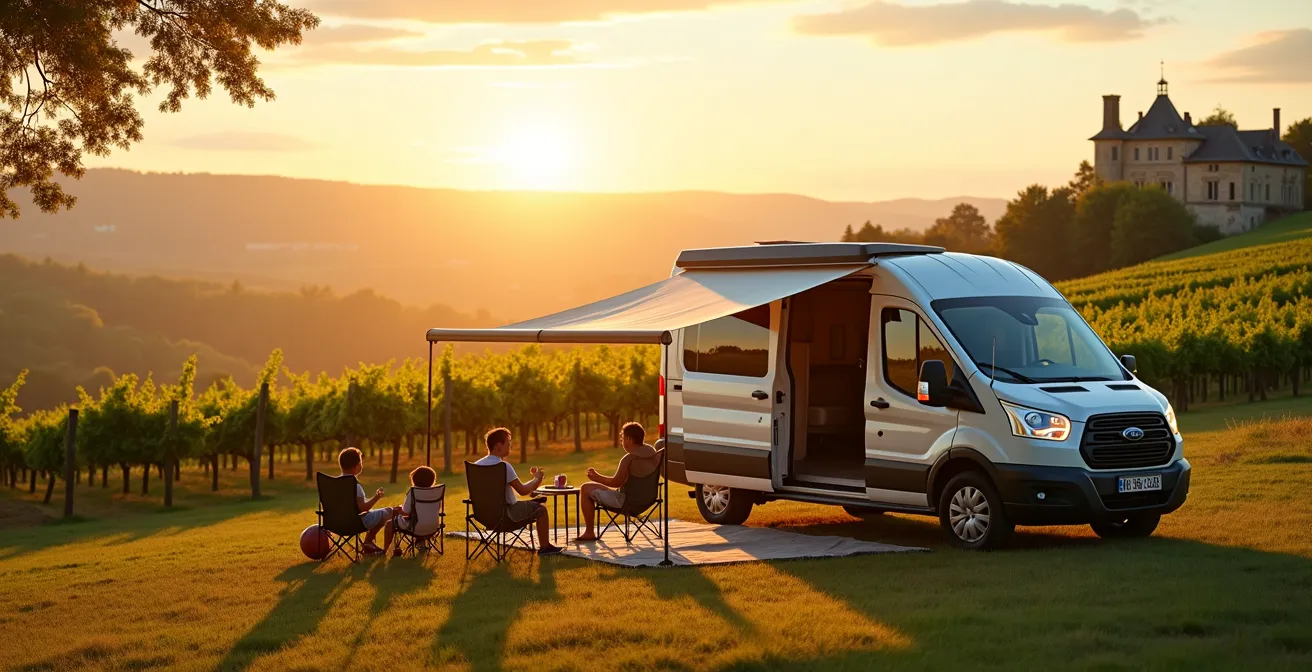
A successful family wine-camping trip isn’t a matter of compromise, but of strategic integration that elevates the experience for both parents and children.
- Focus on vineyard-based campsites for an immersive experience rather than just proximity.
- Treat wine transport as a logistical challenge with sophisticated solutions for temperature and shock protection.
- Curate your itinerary by weaving together history, gastronomy, and wine into a single family adventure.
Recommendation: Shift your mindset from “keeping kids busy” to “shared discovery,” where the entire family learns about the region’s terroir through age-appropriate activities.
For discerning parents, the dream of a campervan trip through French wine country often collides with a practical reality: children. The vision of serene afternoons spent sampling Grands Crus can quickly be shattered by the needs of bored, restless kids. Conventional wisdom suggests a compromise: find a campsite with a pool near a vineyard, sedate the children with screen time, and rush through a tasting, feeling guilty and unsatisfied. This approach treats the two halves of the trip—family fun and serious oenotourism—as mutually exclusive forces to be managed, rather than a single, cohesive experience to be enjoyed.
Most guides focus on listing “family-friendly” châteaux, a term that often just means there’s a patch of grass to run on. They offer simplistic advice like “pack carefully” or “visit historical sites,” but fail to provide a genuine framework for merging the rustic freedom of camping with the sophisticated pleasures of wine tasting. But what if the key wasn’t to separate and pacify, but to integrate and educate? What if the very elements of a camping trip could enhance the wine journey, and the principles of oenology could enrich the family adventure?
This guide presents a new methodology. It reframes the challenge from a parental compromise to a planner’s puzzle. We will explore the logistical and experiential strategies that turn potential conflicts into shared discoveries. From mastering the art of transporting wine in a moving vehicle to turning a history lesson into a treasure hunt that ends with a wine tasting, you will learn how to curate an itinerary where every member of the family is not just accommodated, but genuinely engaged. This is about transforming your family camping trip into a sophisticated, multi-layered exploration of France’s terroir.
To guide you through this strategic approach, this article is structured to address the key challenges and opportunities you’ll face. The following summary outlines the path from choosing the right base of operations to creating an unforgettable, integrated family experience.
Summary: A Planner’s Guide to Wine-Camping with Family
- Why Camping at a Vineyard Estate Offers More Than Just a Place to Sleep?
- How to Transport 12 Bottles of Wine in a Campervan Without Breakage?
- Alsace or Burgundy: Which Wine Route Has the Best Cycle-Friendly Campsites?
- The “Free Tasting” Scam: How to Spot Genuine Winemakers vs Tourist Shops?
- Pairing Local Cheeses with Your Vineyard Purchases: A Camper’s Guide
- Duck Confit in July: How to Enjoy Perigord Food Without Overheating?
- Budgeting for the South: Is the Mediterranean Really 30% More Expensive?
- Why the Dordogne Is the Ultimate Playground for History-Loving Families?
Why Camping at a Vineyard Estate Offers More Than Just a Place to Sleep?
The conventional approach is to find a campsite *near* a wine region. The strategic approach is to find one *within* it. Choosing to camp directly at a wine-producing château or a dedicated “camping à la ferme” is the single most effective way to achieve experiential integration. It’s the difference between being a tourist who visits and a guest who participates in the rhythm of the land. You wake up to the sight of vines, not just other campervans, providing a constant and authentic backdrop to your family’s adventure.
This immersive setting transforms the trip. As detailed in the experience at Camping Du Vieux Château in Rauzan, staying on-site provides unparalleled access. The owners are not just hosts; they are your guides to the region, offering insider knowledge that bypasses tourist-heavy routes. Children see the vineyard as their backyard, making the abstract concept of wine-making tangible. They can witness the work in the fields at dawn, ask questions, and connect the landscape to the bottle on the table. This proximity also facilitates deeper connections with winemakers, who are more inclined to share their time and stories with guests staying on their property.
Participating in the life of the vineyard, even passively, creates a powerful shared experience. Joining an informal evening gathering where a winemaker shares last year’s vintage, or taking a walk through the vines at dawn, are moments that are simply inaccessible from a traditional campsite. It shifts the dynamic from parents “dragging” kids to a winery to the entire family living within one. These estates offer more than a pitch for your tent; they offer an authentic slice of French viticultural life, creating memories rooted in a sense of place.
How to Transport 12 Bottles of Wine in a Campervan Without Breakage?
Securing your precious vineyard purchases is a matter of logistical sophistication, not just stuffing towels between bottles. A campervan presents two mortal enemies to wine: vibration and temperature fluctuation. Constant road vibration can cause “bottle shock,” temporarily muting a wine’s flavors, while heat is a far more permanent danger. As research on Australian wine shipments found, internal temperatures can soar past 60°C (140°F) inside a vehicle on a hot day, effectively cooking the wine and destroying its complex aromatic compounds.
Therefore, your strategy must address both issues. Forget flimsy cardboard boxes. Your primary storage area should be low to the ground and central in the campervan to minimize movement and stay cooler. Many vans have under-seat or floor-level compartments that are ideal. For protection, investing in specialized equipment is wise. Insulated bottle protectors, often made of neoprene or inflatable plastic, are excellent for preventing clanking and providing a basic thermal barrier for short trips. For longer journeys or truly premium wines, a 12V travel wine fridge is the ultimate solution, maintaining a perfect cellar temperature regardless of the weather outside.
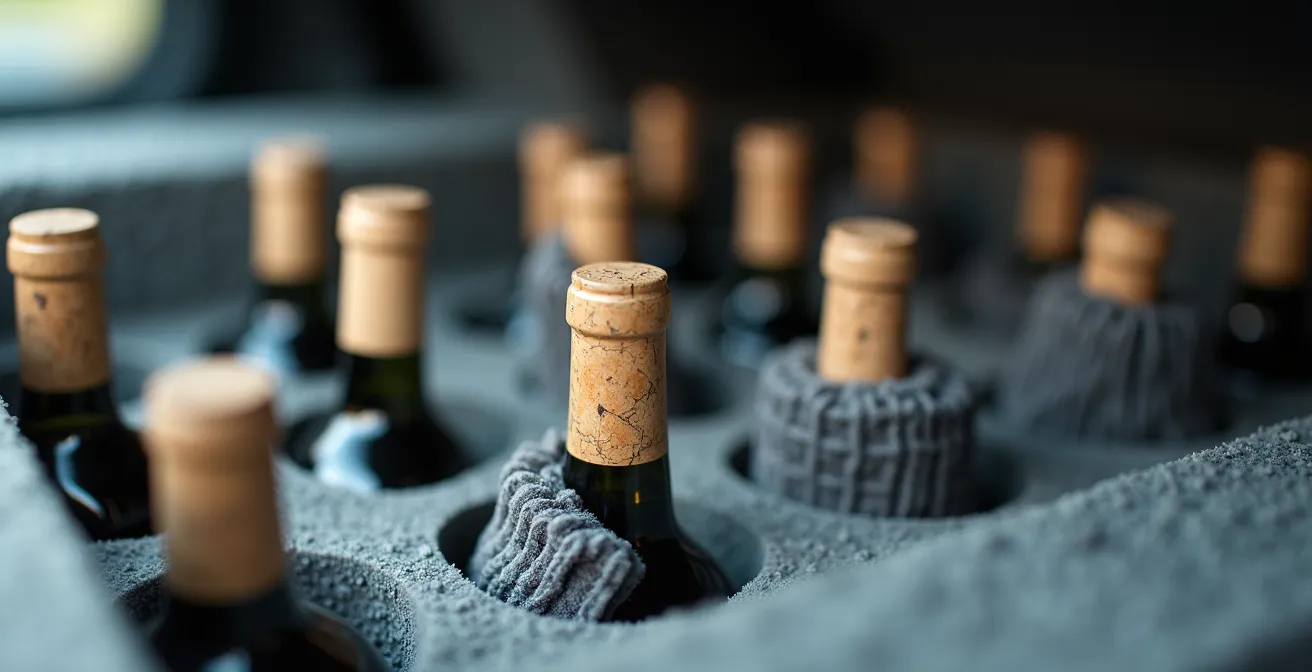
The following table outlines a tiered approach to wine transport, allowing you to match the solution to your budget and the value of your wine. For many, a hybrid approach works best: using thermal blankets for everyday bottles and dedicated insulated protectors for special purchases. And for a truly hands-off solution, never underestimate the château’s own shipping service. It may seem like an extra cost, but it eliminates all worry about weight, space, and damage.
| Solution | Cost Range | Temperature Protection | Best For |
|---|---|---|---|
| 12V Wine Fridge | $200-500 | Maintains 10-20°C | Long-term storage, premium wines |
| Insulated Bottle Protectors | $50-150 | Reduces fluctuation by 15°C | Rugged roads, short trips |
| Château Shipping Service | €15-30 per case | Professional handling | Avoiding weight/space issues entirely |
| Thermal Blankets | $30-80 | Passive cooling | Budget solution, day trips |
Alsace or Burgundy: Which Wine Route Has the Best Cycle-Friendly Campsites?
While Bordeaux is iconic, a curated itinerary should consider the unique strengths of other regions, especially when adding another family activity like cycling. Alsace and Burgundy both offer world-class wine routes that are famously cycle-friendly, but they provide distinctly different experiences for a camping family. Your choice depends on your family’s cycling ability and your priorities: charming villages or serene canals.
The Alsace Wine Route (Véloroute du Vignoble, part of EuroVelo 5) is a journey through a storybook. It winds through a constant succession of impossibly picturesque, half-timbered villages like Ribeauvillé and Riquewihr. The terrain consists of rolling hills, offering stunning vineyard vistas but requiring more effort—or an e-bike, especially for families with younger children. Campsites are plentiful and often situated with beautiful views. The experience is about frequent stops, exploring medieval alleys, and tasting crisp Rieslings and Gewurztraminers.
Burgundy’s Voie des Vignes and its connecting greenways (Voies Vertes) offer a different kind of tranquility. Built on former railway lines and along canals, the paths are predominantly flat and car-free, making them exceptionally safe and easy for all ages. The scenery is more pastoral and serene, with long, peaceful stretches punctuated by canal locks, grand abbeys like Cluny, and the wine capital of Beaune. This route is ideal for families who want to cover more distance with less strain, focusing on the prestigious Pinot Noir and Chardonnay of the Côte d’Or.
As the Cave de Ribeauvillé demonstrates in Alsace, some wineries have mastered terroir education for all ages, using maps to show children how different soils affect grape juice taste while parents sample the wine. This kind of integrated experience might tip the scales for families looking for more than just a bike ride.
| Feature | Alsace (Véloroute du Vignoble) | Burgundy (Voie Verte) |
|---|---|---|
| Total Distance | 130km (EuroVelo 5) | Givry to Cluny greenway since 1997 |
| Terrain | Rolling hills, some climbs | Flat canal paths |
| Surface Quality | Mix of cycle paths, restricted lanes, roads | Dedicated greenways along canals |
| Family Suitability | E-bike recommended for hills | Easier for young children |
| Non-wine Stops | Medieval villages, castles (Haut-Kœnigsbourg) | Abbeys, canal locks, Beaune |
The “Free Tasting” Scam: How to Spot Genuine Winemakers vs Tourist Shops?
In any famous wine region, you’ll see signs for “Dégustation Gratuite” (Free Tasting). While inviting, these can often lead to tourist shops selling generic, overpriced wine rather than to an authentic producer. Developing a strategy for authenticity filtering is key to finding memorable wines and experiences. The goal is to connect with the *vigneron*—the person who grew the grapes and made the wine—not a salesperson.
A genuine small producer’s tasting room is an extension of their work, not a polished retail storefront. A key insight comes from the experts at a Bergerac campsite. As they explain, it’s about access to the winemaker themselves:
Most small wine firms don’t have appointed staff for tastings – you’ll meet the winemaker him/herself. That’s why we recommend to always call in advance, maybe the vigneron is working in the vineyards.
– Camping Moulin Brûlé, Guide to Vineyard Visits in Bergerac-Duras Region
This simple act of calling ahead is a powerful filter. Tourist shops are always open and staffed for walk-ins; a real winemaker is busy and appreciates the courtesy of an appointment. Other signs of authenticity include visible, working vineyards on the property, reasonable pricing (typically €5-€30 for most bottles at a small estate), and a willingness to show you the cellar or discuss the harvest. A tourist trap sells a product; a genuine winemaker shares a passion. They don’t waste wine, often using opened bottles for their own dinner, and they are proud of the land they work.
Action Plan: Your 5-Step Authenticity Verification Process
- Direct Contact: When booking, verify if you’ll meet the winemaker directly. Personal tastings are a hallmark of small, authentic producers.
- Vineyard Visibility: Look for active, working vineyards on the property. A tasting room without adjacent vines is often just a retail outlet.
- Price Check: Assess the pricing. Genuine small estates offer a range of wines, often starting from €5-€30, not exclusively high-priced “tourist” bottles.
- The “Waste Not” Test: Notice if opened tasting bottles are carefully preserved for the next visitors or even for the family’s dinner. Real winemakers value their product.
- Behind-the-Scenes Access: Ask about visiting the cellar or seeing the equipment. Authentic estates are proud to show their process, whereas tourist traps have nothing to show but the shop.
Pairing Local Cheeses with Your Vineyard Purchases: A Camper’s Guide
The perfect bottle of wine, discovered through careful searching, deserves an equally perfect partner. A camper’s guide to cheese pairing requires more than just taste considerations; it demands logistical sophistication. Your campervan is not a climate-controlled cheese cave, so selecting cheeses that are delicious, complementary, and resilient is paramount. Soft, pungent cheeses like Epoisses or a runny Camembert are a risky choice for a warm vehicle, both for their stability and their pervasive aroma.
The solution is to focus on hard, aged cheeses. Varieties like Comté, with its nutty and savory notes, or a firm Tomme de Savoie are incredibly stable and can withstand temperature fluctuations without suffering. Semi-hard sheep’s milk cheeses such as Ossau-Iraty from the Pyrenees are also excellent choices, remaining delicious even after a day or two out of the fridge. When at the fromagerie, don’t be afraid to ask for advice tailored to your situation. Simple French phrases like “Un fromage pour manger ce soir?” (A cheese to eat tonight?) will get you a perfectly ripe recommendation for immediate consumption, while “Quelque chose qui ne sent pas trop fort pour la voiture?” (Something that doesn’t smell too strong for the car?) will be met with an understanding nod and a less aromatic but equally delicious suggestion.
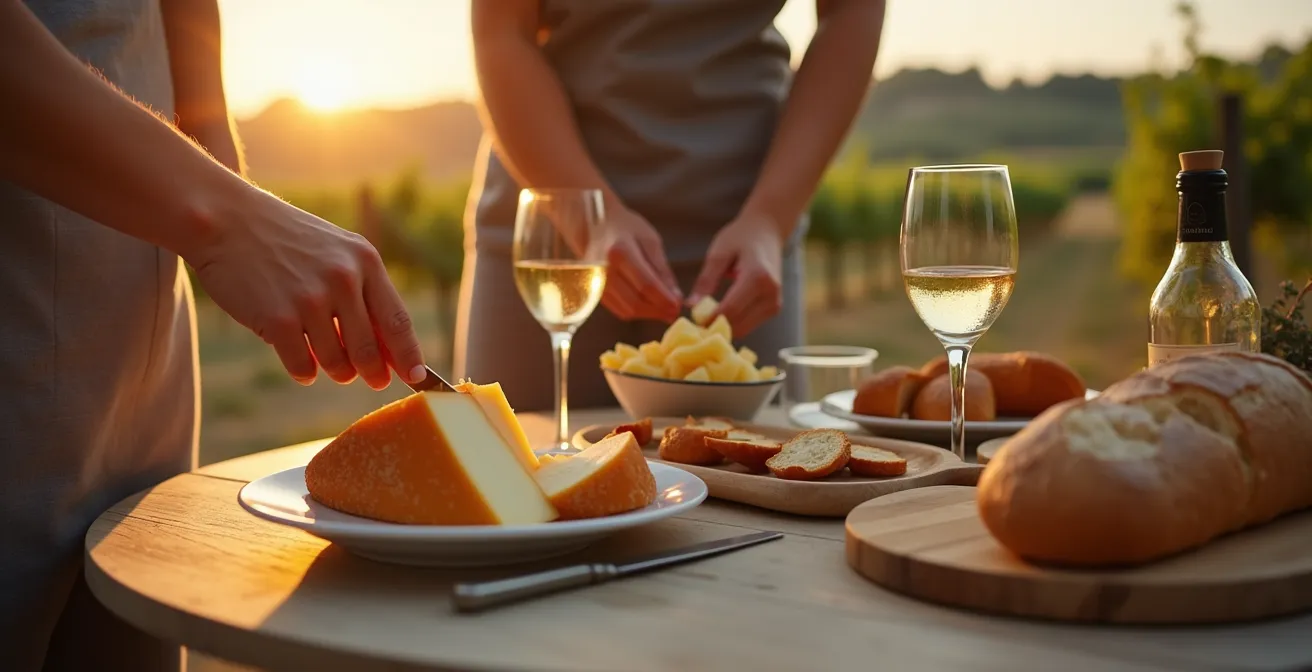
To complete your campsite “planche,” think beyond cheese. French markets are treasure troves of shelf-stable delicacies that elevate a simple meal. A dry-cured saucisson sec, a jar of duck rillettes, and some local walnuts or a small bottle of walnut oil to drizzle on bread require no refrigeration but add immense regional character. This curated selection transforms your evening apéritif from a simple snack into a true tasting experience, a moment of shared pleasure that captures the essence of your travels.
Duck Confit in July: How to Enjoy Perigord Food Without Overheating?
The Dordogne, or Périgord, is a heartland of French gastronomy, famous for rich, hearty dishes like duck confit, cassoulet, and foie gras. While delicious, these classics can feel heavy and overwhelming during a hot July camping trip. The key to enjoying this robust cuisine in summer is not to avoid it, but to seek out its clever, lighter adaptations. Local producers and restaurateurs have mastered the art of delivering authentic Périgord flavors without the heat and heaviness of traditional preparations.
Instead of a hot, slow-cooked duck confit, look for magret séché—thinly sliced, dry-cured duck breast that is magnificent in a fresh salad with walnuts and a light vinaigrette. It delivers that deep, savory duck flavor in a refreshing format. Similarly, instead of pan-seared foie gras, opt for mi-cuit (semi-cooked) foie gras, served chilled. It spreads like butter on fresh toast and provides all the luxurious richness without the need to fire up a stove. A classic bistro dish, the “salade de gésiers,” features preserved duck gizzards gently warmed and served over greens, providing another way to enjoy preserved poultry lightly.
Your campsite BBQ or “plancha” is your best friend for summer Périgord cooking. Grilling fresh duck breasts (magret de canard) until the skin is crispy and the meat is pink is a quick, simple, and lighter way to enjoy the region’s star product. Pair these dishes with a chilled Bergerac rosé or a sweet, cold Monbazillac as an apéritif, rather than a heavy Cahors red. It’s a perfect example of adapting your consumption to the season, allowing you to fully indulge in the local terroir without feeling sluggish in the summer heat.
Budgeting for the South: Is the Mediterranean Really 30% More Expensive?
While the allure of the lavender fields of Provence or the glamour of the Côte d’Azur is strong, it comes with a significantly higher price tag. A campervan trip along the Mediterranean can indeed be 20-30% more expensive than one in the Dordogne or Alsace, especially during the peak months of July and August. Campsite fees are the most obvious difference, with coastal sites often averaging €25-€40 per night compared to €15-€25 for a comparable site inland. But the costs add up elsewhere, too: fuel, groceries, and restaurant meals are all noticeably pricier in the more tourist-dense southern regions.
However, a smart planner can mitigate these costs with a few key strategies. The most impactful is to travel during the shoulder seasons of June or September. The weather is still beautiful, the crowds are thinner, and campsite rates are substantially lower. Another crucial tip is to avoid the temptation of “wild camping” to save money. France has strict regulations, and fines can reach up to €1,500 for unauthorized camping in protected or regulated areas. The risk far outweighs the potential savings.
To optimize your running costs, embrace digital tools. The government website prix-carburants.gouv.fr is an indispensable resource for finding the cheapest fuel stations along your route, often saving you 15-20 cents per liter. For groceries, use the “Drive” services of major supermarkets like Carrefour or Super U to compare prices online before you even park. Finally, always try to book campsites directly with the owner. Booking platforms often add service fees, whereas a direct phone call or email can sometimes even yield a better rate, especially for longer stays. A well-managed budget ensures your focus remains on the experience, not on financial stress.
Key Takeaways
- True vineyard camping is about immersion in the estate’s rhythm, not just proximity.
- Protecting wine in a camper requires a dual strategy against both vibration and heat, using solutions from thermal blankets to 12V fridges.
- The best family experiences integrate activities, like using educational wine tastings and creating a “history passport” to connect wine, land, and culture for all ages.
Why the Dordogne Is the Ultimate Playground for History-Loving Families?
If there is one region that perfectly embodies the principle of the curated itinerary, it is the Dordogne. This valley is a seamless tapestry of prehistoric art, medieval castles, and rolling vineyards, offering a unique opportunity to teach the concept of terroir education in its broadest sense. Here, you can show your children how millennia of history have shaped the land and, by extension, the food and wine they are experiencing. It’s the ultimate playground for a history-loving family, where every activity connects to another.
The journey can start 17,000 years in the past in the cool darkness of a prehistoric cave like Grotte de Rouffignac, with its hundreds of mammoth engravings. This intimate experience connects your family to the region’s earliest inhabitants. From there, you can leap forward to the Middle Ages by visiting a fortified “bastide” town or a castle like Beynac, explaining how people defended this fertile land. The final layer is the vineyard. Innovative estates like Château Saint Ahon and Château Troplong Mondot have revolutionized family wine tourism. They offer children’s discovery paths, treasure hunts, and even mini Land Rovers to explore the property, making the vineyard a place of adventure, not boredom. At Château Fleur de Lisse, interactive cellar visits use sensory stories to explain the grape’s journey, bringing the process to life for kids.
The masterstroke is to tie all these elements together with a creative project. Create a “Dordogne History Passport” for your kids before you leave. Design pages for different eras—Prehistoric, Roman, Medieval, Viticultural—and have them collect a stamp, a drawing, or a leaf at each site. You can include riddles that connect one era to the next, such as “Find where the first people drew the animals you now see on the hills,” or “Find where knights protected the river that waters the vines.” This simple game transforms sightseeing into a mission. The trip is no longer a series of disconnected stops but a single, epic story that the whole family is uncovering together.
By adopting this strategic mindset—viewing your family trip as a single, integrated experience to be curated—you move beyond the compromises that plague so many holidays. You can create a journey that is intellectually stimulating for you, endlessly fun for your children, and creates a rich tapestry of shared memories rooted in the taste, sight, and history of France’s beautiful wine country. Begin planning your own sophisticated family expedition today.