In summary:
- Confidence comes from understanding the “chef’s logic,” not just memorizing rules.
- Always check oysters for a tightly closed shell, a clean sea smell, and a plump appearance.
- Use high-acidity white wine like Muscadet to cleanse your palate between bites.
- The price of a platter is determined by its tiers; lobster is the most significant cost factor.
- Modern farming makes the “R” month rule for oysters obsolete; they are safe year-round if handled correctly.
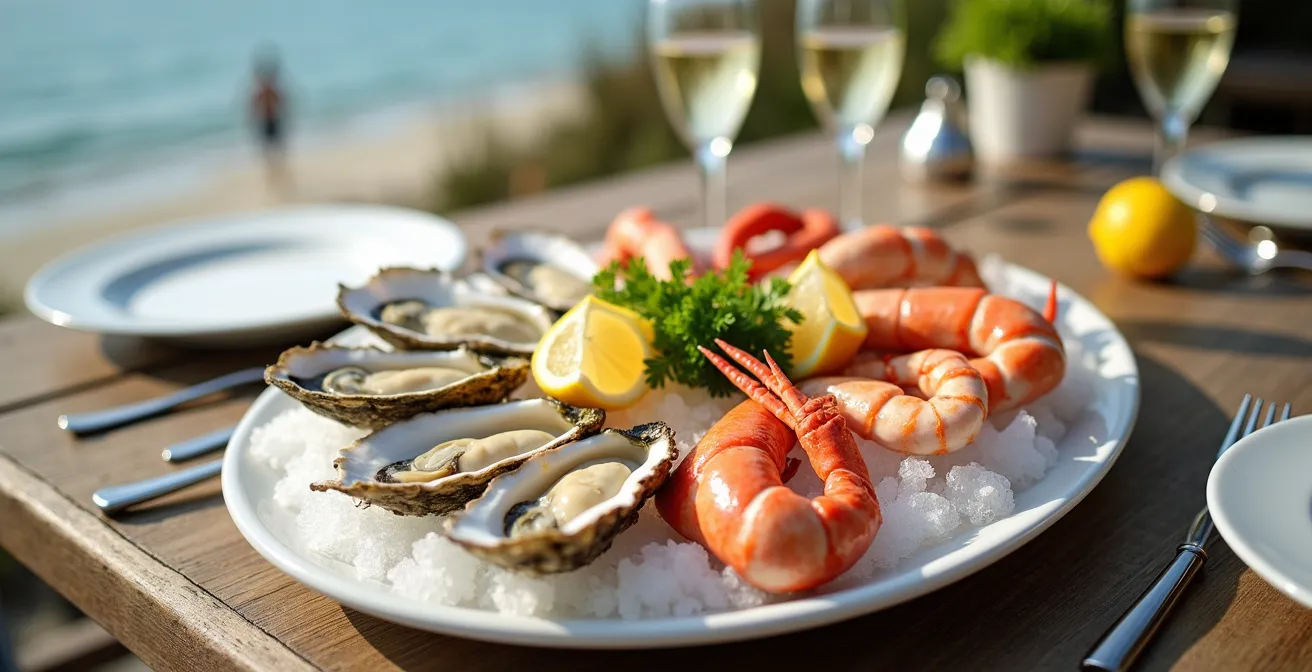
That towering platter of ice, glistening shells, and alien-looking tools arrives at your table. It’s a moment of coastal holiday perfection, quickly followed by a wave of anxiety. Which fork is for what? How do you crack this claw without sending it flying? Is this oyster even good to eat? For many travelers, the joy of ordering a fresh seafood platter is overshadowed by the fear of looking like a fumbling tourist.
Most guides will give you the basic, sterile instructions: use the cracker for this, the pick for that. They might mention common pairings or how to dispose of shells. But this approach misses the point. True confidence doesn’t come from following a script; it comes from understanding the fundamental principles—the chef’s logic—that govern everything from freshness and flavor to price and sourcing.
Forget the rigid rules. This guide is built on a different philosophy. We’re going to look at a seafood platter through the eyes of a chef. You will learn not just what to do, but *why* you’re doing it. By the end, you won’t be a tourist trying to remember instructions; you’ll be a coastal connoisseur, able to navigate any platter with ease and appreciation, whether you’re at a fine dining restaurant or a simple campsite by the sea.
This article will guide you through the essential knowledge you need. We’ll cover how to assess freshness on sight, demystify wine pairings, handle waste responsibly, understand pricing, and even find the most authentic local spots. Let’s dive in.
Summary: How to Eat a Seafood Platter Like a Local, Not a Tourist
- Smell and Shine: How to Tell if the Oysters Are Fresh on the Buffet?
- Muscadet or Chablis: Which White Wine Cut Through the Saltiness Best?
- Shells in the Bin: How to Dispose of Seafood Waste in a Campsite?
- Market Price: How to Estimate the Cost of a Platter Before Ordering?
- Why You Should Eat Oysters in Months With an “R” (and is it still true)?
- Where to Buy Fresh Lobsters Direct from the Boat in Perros-Guirec?
- Oysters and White Wine: Where to Find Authentic Tasting Spots Near Campsites?
- Markup Madness: Are Campsite Restaurants Overcharging for Local Wine?
Smell and Shine: How to Tell if the Oysters Are Fresh on the Buffet?
Before you even think about tools or toppings, the first and most important skill is judging freshness, especially with raw oysters. A bad oyster can ruin more than just your meal. A chef doesn’t hope an oyster is fresh; they look for clear signals. You can learn to spot these, too, even at a buffet.
The number one rule is that a live, fresh oyster works hard to protect itself. Its shell should be tightly clamped shut. If you see an oyster that is gaping open, it’s a major red flag. You can give it a gentle tap; a live oyster will react and close up. If it stays open, leave it. This is its most obvious sign of life (or lack thereof).
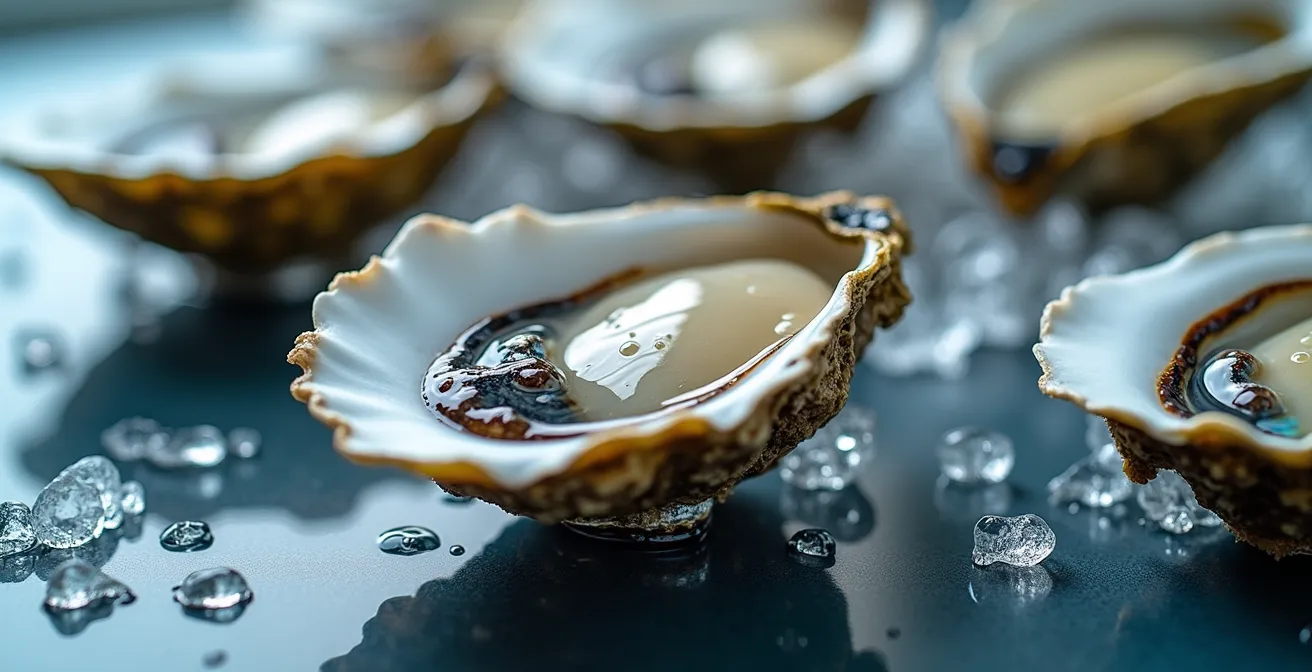
Next, use your nose. A fresh oyster should smell clean, crisp, and faintly of the ocean—like a sea breeze. It should not smell “fishy,” sour, or unpleasant in any way. That strong, off-putting odor is a clear sign of decay. Finally, look at the oyster meat itself. It should be plump, glossy, and sitting in a pool of clear liquid known as oyster liquor. If the meat looks dry, shrunken, or milky, it’s past its prime.
Your 3-Step Freshness Check
- Check the shell: Live oysters should have tightly closed shells. If one is open, tap it gently. If it closes, it’s alive and safe. If it remains open, discard it.
- Perform a smell test: Fresh oysters should have a clean, briny, sea-like scent. A strong, fishy, or unpleasant odor means the oyster is bad. Do not eat it.
- Visually inspect the meat: The oyster meat should appear plump, moist, and glossy, resting in its clear liquor. Avoid any that look dry, shriveled, or discolored.
Trust your senses. They are your best defense against a bad experience. If anything seems off, it’s always better to be cautious and skip that particular oyster. A good restaurant will appreciate your diligence.
Muscadet or Chablis: Which White Wine Cut Through the Saltiness Best?
Choosing a wine for your seafood platter isn’t just about picking any white wine. It’s about “palate navigation.” You’re dealing with strong flavors—salt, brine, sweetness—and the right wine acts as a tool to cleanse and reset your palate between bites, allowing you to appreciate each element of the platter.
The key principle is acidity. A wine with high acidity acts like a squeeze of lemon, cutting through the richness and saltiness of the seafood. This is why wines like Muscadet from the Loire Valley are a classic choice. It’s crisp, dry, and has a saline or stony quality that beautifully complements oysters without overpowering them. It’s the ultimate palate cleanser.
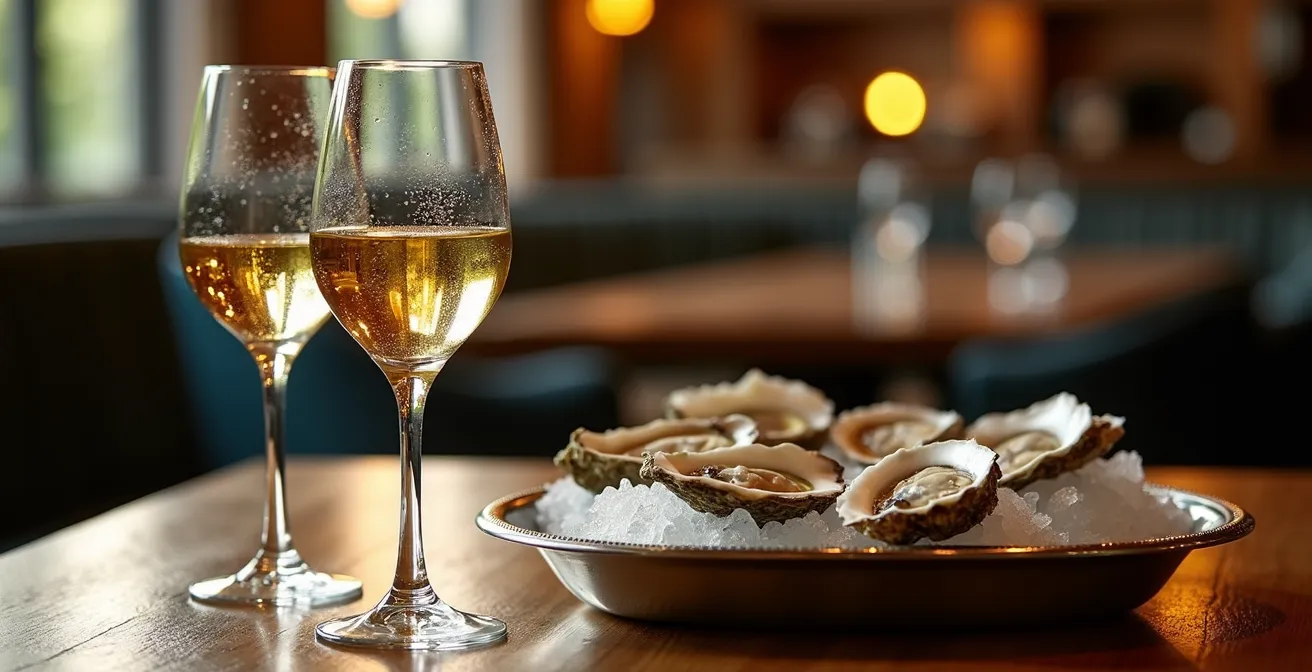
On the other hand, you have wines prized for their minerality, like a Chablis from Burgundy. Made from Chardonnay grapes grown in fossil-rich soil, Chablis often has a flinty, chalky characteristic. This doesn’t just cut through the salt; it complements it, enhancing the oyster’s “goût de terroir” or taste of place. The choice between them is a matter of preference. Do you want to cleanse or complement?
High acidity (like in Muscadet) cleanses the palate, while high minerality (like in Chablis) complements the oyster’s brininess.
– Sommelier principle, Oyster Bar Etiquette Guide
For a mixed platter with richer items like lobster or crab, a slightly fuller-bodied wine might work, but the high-acid, mineral-driven profile of a Muscadet or Chablis remains the gold standard for a reason. They keep your palate fresh and ready for the next delicious bite.
Shells in the Bin: How to Dispose of Seafood Waste in a Campsite?
The romance of enjoying a seafood platter at your campsite can quickly fade when you’re left with a pile of sharp, smelly shells. Proper disposal isn’t just about tidiness; it’s about respecting the environment, preventing pests, and being a good neighbor to fellow campers. The “chef’s logic” here extends beyond the meal to the cleanup.
The primary enemies are odor and leakage. Seafood shells, especially with bits of meat left on them, will start to smell quickly, attracting insects and wildlife. The first step is to rinse the shells if possible. A quick rinse removes most of the organic matter that causes the smell. This simple action makes a huge difference.
Next, containment is key. Use a double-bag method. Place all the shells and waste into one sturdy plastic bag, seal it tightly, and then place that bag inside a second one. This provides an extra barrier against punctures from sharp shells and helps to lock in any odors. Never leave this bag inside your tent or camper van. Store it in a designated waste area or inside a secure cooler until you can dispose of it properly.
Finally, know the rules. Before you arrive, check the campsite’s waste disposal policies. Some environmentally-focused sites may have specific instructions or even composting facilities that accept shells. When disposing of the bag, use the designated, animal-proof bins. To protect local ecosystems, all waste should be disposed of far from any natural water source—a common guideline is to be at least 200 feet away from water. Responsible waste management is part of the outdoor experience.
Market Price: How to Estimate the Cost of a Platter Before Ordering?
Seeing “Market Price” on a menu can be intimidating. It feels like signing a blank check. But the cost of a seafood platter isn’t a complete mystery. By understanding how they are constructed and priced, you can estimate the cost and order with confidence. This is about applying some economic transparency to your menu choice.
Seafood platters are typically priced in tiers. The base price is for a “simple” platter, which might include oysters, mussels, and prawns. The price increases as more premium items are added. A “standard” platter might add crab claws, while a “royal” or “deluxe” platter will include the most expensive item: lobster. The presence and size of a lobster is the single biggest factor affecting the price.
The following table, based on common restaurant structures, gives a general idea of how these tiers work. Use the “simple” platter as a baseline (1x) and see how the price multiplies.
This tiered structure is a common industry practice, as outlined in this helpful guide to seafood platters.
| Platter Type | Typical Contents | Price Range Factor |
|---|---|---|
| Simple | Oysters, prawns, mussels | 1x base price |
| Standard | Simple + crab claws | 1.5-2x base price |
| Royal | Standard + lobster | 2.5-3x base price |
To get a rough estimate, look at the price of a half-dozen oysters on the menu. A simple platter for two is often priced at 3-4 times that amount. If you see a “Royal” platter, expect it to be significantly more. Understanding this structure empowers you to choose a platter that fits your appetite and your budget.
Why You Should Eat Oysters in Months With an “R” (and is it still true)?
You’ve probably heard the old adage: only eat oysters in months with the letter “R” in their name—September through April. This was once sound advice, rooted in two pre-refrigeration problems: food safety and quality. In the warmer months (May through August), bacteria like Vibrio vulnificus could multiply rapidly, and oysters would spawn, making their meat thin and milky.
However, modern technology has made this rule largely obsolete. The combination of refrigerated transport and advanced aquaculture has changed the game entirely. Oysters can now be harvested and shipped around the world while being kept at safe temperatures, significantly reducing the risk of bacterial growth. When properly handled and stored, fresh oysters can have a shelf life of up to 30 days, regardless of the month.
The bigger revolution is in the oysters themselves. Many oyster farms now cultivate “triploid” oysters. These oysters are sterile and do not spawn in the summer. As a result, they remain plump, firm, and flavorful all year round. They offer a consistent, high-quality experience even in July or August.
Case Study: The Triploid Oyster Revolution
The widespread adoption of triploid oyster cultivation has effectively erased seasonality concerns for consumers. These sterile oysters don’t expend energy on reproduction during summer months. This means they don’t become thin and watery like their wild counterparts used to. As long as they are harvested from clean waters and kept properly refrigerated below 45°F (7°C), they are perfectly safe and delicious to eat year-round, making the “R” month rule a fascinating relic of the past.
So, is the rule still true? For wild oysters in unrefrigerated conditions, yes. But for the vast majority of oysters you’ll find in restaurants today, especially from reputable sources, you can enjoy them with confidence any day of the year.
Where to Buy Fresh Lobsters Direct from the Boat in Perros-Guirec?
There’s nothing better than seafood so fresh it was in the ocean just hours ago. Bypassing the restaurant or fishmonger and buying directly from the fishing boats is the ultimate power move for a seafood lover. While this section’s title mentions Perros-Guirec, a beautiful port in Brittany, France, the principles for buying dockside are universal.
First, timing is everything. Fishing boats typically return to port in the late afternoon, often between 4 PM and 5 PM. This is your window of opportunity. Arrive at the harbor and look for boats that are unloading their catch. In France, you might see a sign that says “vente directe,” but the practice is common in coastal towns worldwide. Look for fishermen selling directly from their boat or a small stall on the quay.
Come prepared. Many small-scale fishermen operate on a cash-only basis, so have local currency on hand. More importantly, bring your own cooler with ice. You are responsible for keeping your purchase fresh from the moment you buy it. Transporting a live lobster or fresh fish in a chilled cooler is essential for maintaining its quality and safety.
Don’t be afraid to engage with the fishermen. Ask them what’s best from their catch that day. They can tell you what’s freshest and might even offer you “bycatch”—other species caught alongside their main target—for a great price. This is how you discover local specialties and get the best value. This direct interaction is the heart of the coastal experience.
Oysters and White Wine: Where to Find Authentic Tasting Spots Near Campsites?
While a restaurant seafood platter is a treat, the most memorable oyster experiences often happen at much simpler, more authentic spots. These are the places where the oysters are grown just meters away and served without fuss. For travelers, especially those camping near the coast, finding these local gems is the key to an unforgettable tasting.
The secret is to change what you’re searching for. Instead of looking for a “seafood restaurant,” which will often be in a tourist-heavy area with higher prices, you need to look for the producers themselves. These are often called oyster shacks, farms, or “cabanes à huîtres” in French. They are typically rustic, no-frills establishments run by the oyster farmers, offering unbeatable freshness and value.
Here’s a practical tip that locals use, which you can adapt anywhere:
French locals recommend searching for ‘dégustation huîtres producteur’ (oyster tasting producer) on Google Maps instead of ‘seafood restaurant’ to find authentic oyster shacks run by producers themselves, offering the freshest oysters at better prices away from tourist centers.
– French Seafood Blog
You can apply this logic in any language. Try searching for terms like “oyster farm tasting,” “oyster shack,” or “buy direct from oyster farmer” in your destination’s local language. These searches will lead you away from the polished tourist traps and toward the heart of the local industry. The reward is an authentic experience: a platter of freshly shucked oysters, a simple glass of white wine, and a view of the water where they were grown.
Key takeaways
- True confidence with seafood comes from understanding the ‘why’—the logic behind freshness, pairing, and price—not just memorizing rules.
- Your senses are your best tools: trust what you see (plump meat, closed shells) and smell (clean ocean scent) to judge oyster freshness.
- Modern aquaculture and refrigeration have made the old ‘R’ month rule obsolete; quality oysters are now a year-round pleasure.
Markup Madness: Are Campsite Restaurants Overcharging for Local Wine?
You’ve found a great local wine at the supermarket and later see it on the menu at the campsite restaurant for three times the price. It’s a common experience that can leave you feeling ripped off. Understanding the standard industry markup for wine can help you determine if a price is fair or exploitative, empowering you to make smarter choices.
The standard restaurant markup on a bottle of wine is a well-established industry norm. As explained by Baltimore’s iconic Costas Inn, restaurants factor in service, storage, and glassware when pricing their wine list. Generally, a restaurant will charge 2.5 to 3 times the retail price of a bottle. So, if a bottle of local white wine costs €8 in the shop, you can expect to see it on a menu for €20 to €24. If the price is significantly higher than this, it may be a sign of excessive markup.
This doesn’t mean you should always avoid ordering wine. There are often value-driven options. The house wine, or “vin de la maison,” is usually a reliable and affordable choice. Often served “en pichet” (by the pitcher), it’s selected by the restaurant for its quality and value, and typically has a much lower markup than branded bottles.
In some cases, particularly in more casual or rural establishments, you might be able to bring your own bottle. Ask if they allow a “droit de bouchon” or corkage fee. This is a small service charge for opening and serving a wine you brought yourself. It can be a great way to enjoy a special bottle you purchased directly from a local vineyard while still supporting the restaurant.
Frequently Asked Questions on How to Eat a Seafood Platter Without looking like a Tourist?
How can I check if wine prices are fair?
The best way is to apply the standard markup rule. If you know the local retail price of a bottle, multiply it by 2.5 or 3. If the restaurant’s price is in that range, it’s generally considered fair. Prices far exceeding this may be excessive.
What’s the best value wine option at campsite restaurants?
The house wine, often served by the pitcher (‘en pichet’ in France), almost always offers the best quality-to-price ratio. It’s chosen by the establishment for its crowd-pleasing profile and is marked up less aggressively than bottled wines.
Can I bring my own wine to campsite restaurants?
It depends on the establishment’s policy. You should always ask if they permit a ‘droit de bouchon’ or corkage fee. This is a service charge that allows you to bring your own bottle, and many restaurants, especially casual ones, are open to it.