
In summary:
- Terroir is a “sense of place” you can learn to taste by deconstructing environmental factors like soil, flora, and climate.
- Sensory training involves connecting physical elements (like slate soil) to specific flavor profiles (like minerality in wine).
- Context, such as the time of day or a producer’s story, is a crucial ingredient that shapes your perception of flavor.
- The village market is the ultimate training ground, where you can directly engage with producers and the products of their specific terroir.
For many foodies, the term “terroir” remains a poetic but frustratingly vague concept. We hear it used to describe a wine’s “minerality” or the unique taste of a regional cheese, but the ability to truly perceive this “sense of place” feels like a secret skill reserved for sommeliers and chefs. The common advice—to simply “pay attention” or “taste more”—offers little practical guidance, leaving us wondering if we are missing a fundamental piece of the sensory puzzle.
The truth is, recognizing terroir is not an innate gift but a trainable discipline. It requires moving beyond the simple question of “Is this tasty?” to the more analytical “What does this taste *of*?” This involves a process of sensory deconstruction: breaking down a flavor profile into its component parts and tracing them back to their origins in the environment. It’s about understanding that the taste of wild boar is not just meat, but a reflection of the acorns and herbs it foraged.
But what if the key was not just about what is on the plate, but the entire context surrounding it? This guide proposes a different approach. We will treat terroir not as an abstract quality, but as a collection of tangible, testable environmental signatures. The secret isn’t in a classroom; it’s in transforming everyday experiences—sipping a glass of rosé, walking through a vineyard, or even choosing a melon at the market—into deliberate acts of sensory analysis.
This article will guide you through a series of specific, real-world case studies to build your palate. We will explore how soil fundamentally alters wine, how seasonality impacts herbs, and why the time of day can change your perception of flavor. By the end, you will have a framework for actively engaging with terroir and unlocking a much deeper connection to the food and drink you love.
Summary: Recognizing Genuine Terroir Flavors
- Slate vs Clay: How Soil Changes the Taste of Your Rosé Wine?
- Herbes de Provence: How to Use Them Fresh vs Dried?
- Wild Boar and Game: How to Introduce Strong Meats to Picky Eaters?
- Sun and Sugar: Why Melons from Cavaillon Taste Sweetest in July?
- Why Pastis Tastes Better at 6 PM in the South of France?
- Why 11 AM Is the Biological Peak for Wine Tasting?
- Right to Roam: Can You Walk Between the Vines in France?
- Why the Village Market Is More Expensive Than the Supermarket but Worth It?
Slate vs Clay: How Soil Changes the Taste of Your Rosé Wine?
The most fundamental component of terroir begins literally under our feet. While it seems improbable that one can “taste the soil,” the composition of the earth directly and measurably alters the chemical makeup of a wine. The first step in training your palate is to understand this direct link between geology and gastronomy. Two common soil types in rosé-producing regions like Provence, slate and clay, offer a perfect lesson in sensory deconstruction.
Slate soils are poor in nutrients and retain heat, but allow for excellent drainage. This forces the vines to dig deep for water, resulting in lower yields of more concentrated grapes. The resulting wines often exhibit high acidity, a lean body, and a distinct “wet stone” or “flinty” minerality. In contrast, clay soils are richer, denser, and retain more water. This produces wines that are generally fuller-bodied, rounder in texture, and express more overt fruit flavors. This is not just poetic description; research from Oregon State University demonstrates how infertile soils can lead to lower pH wines, creating a more rounded taste compared to the higher pH from more fertile soils.
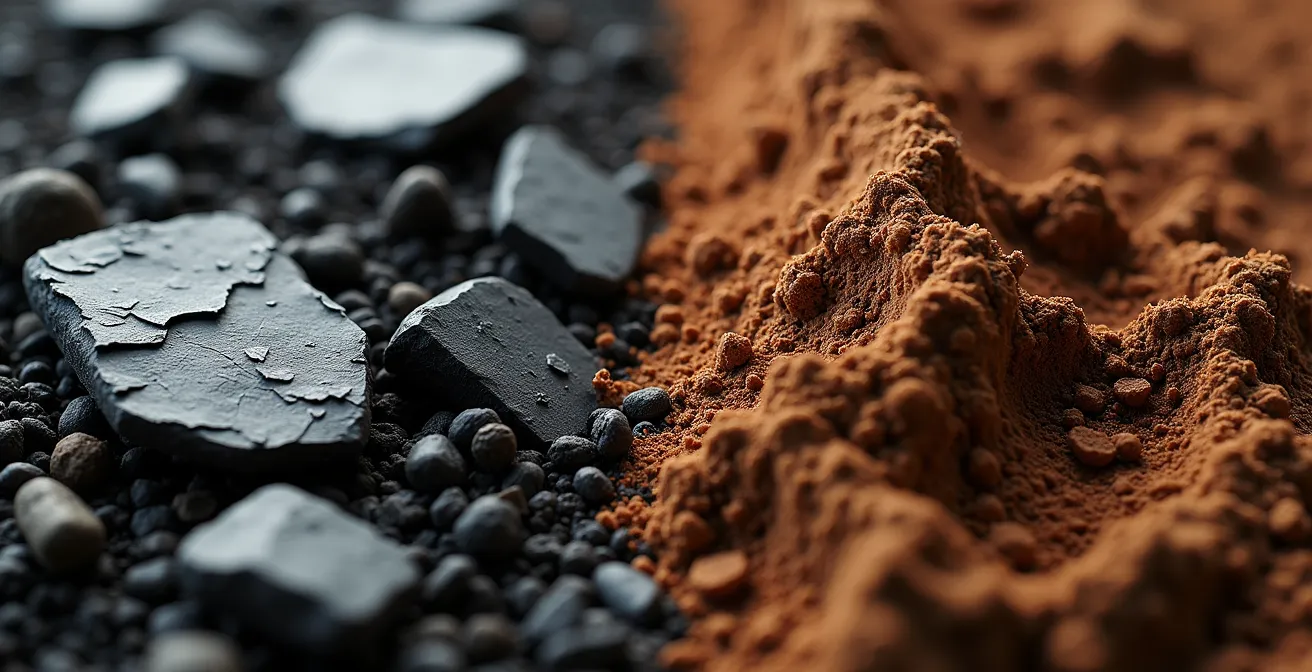
As the image above illustrates, the physical difference is stark. Slate is fragmented and sharp, while clay is dense and earthy. To connect this visually to your palate, try this experiment: find two rosés from the same region, one explicitly from “schist” (slate) and one from “argile” (clay). Taste them side-by-side. The slate-based wine will likely feel zippier and more linear, with a finish that reminds you of rain on pavement. The clay-based wine will feel broader on the palate, with a lusher fruit character. This exercise creates a powerful sensory memory, turning an abstract concept into a concrete, recognizable taste.
Herbes de Provence: How to Use Them Fresh vs Dried?
Moving from the soil to the flora that grows upon it, herbs offer our next lesson in terroir. “Herbes de Provence” is not just a pre-mixed jar; it’s a living reflection of the Provençal landscape, typically including thyme, rosemary, savory, and oregano. The way these herbs are used—fresh or dried—dramatically changes their flavor profile and, consequently, their role in a dish. Understanding this difference is key to mastering the taste of the region.
Fresh herbs, often foraged on a trail or bought at a market, possess a bright, volatile, and immediate aroma. Their essential oils are delicate and quickly dissipate with heat. Therefore, they are best used at the end of the cooking process or in raw preparations, like a sprinkle of fresh rosemary on grilled lamb just before serving. Their flavor is sharp, green, and vibrant, capturing the living essence of the plant.
Dried herbs, on the other hand, offer a concentrated, deeper, and more complex flavor. The drying process fundamentally alters their chemical structure, creating new aromatic compounds. These herbs need heat and moisture to re-activate and release their flavor, making them ideal for adding at the beginning of cooking, such as in stews, marinades, or slow-cooked sauces. Their aroma is less floral and more earthy, woody, and resinous. The following table breaks down these differences for practical application, especially when traveling or camping.
This comparative table highlights the distinct characteristics and ideal uses of fresh versus dried Herbes de Provence.
| Characteristic | Fresh Herbs | Dried Herbs |
|---|---|---|
| Flavor Intensity | Bright, vibrant, immediate | Concentrated, deep, complex |
| Best Cooking Method | Added at end of cooking | Added at beginning for infusion |
| Ideal for Camping | Foraged on trail, immediate use | Pre-packed, weather-resistant |
| Aroma Release | Crushing releases essential oils instantly | Heat/moisture needed to activate |
| Storage While Traveling | Use within hours | Stable for months |
By consciously choosing between fresh and dried herbs and noting the resulting flavor difference, you are training your palate to recognize not just the herb itself, but the impact of time and processing on its environmental signature.
Wild Boar and Game: How to Introduce Strong Meats to Picky Eaters?
The concept of terroir extends beyond plants to the animals that inhabit the landscape. Wild game, particularly wild boar (sanglier), is a cornerstone of cuisine in many parts of France, yet its strong, “gamy” flavor can be challenging for the uninitiated. This flavor is the purest expression of animal terroir: a direct reflection of the creature’s diet and environment. Learning to appreciate it is learning to taste the forest itself.
The key to introducing strong meats is reframing the flavor. Instead of an off-putting taste, “gaminess” should be presented as a complex and desirable environmental signature. It’s the taste of a life lived wild. As the renowned Cavaillon-based chef Jean-Jacques Prévôt explains, this unique flavor is a map of the animal’s life:
The ‘gamy’ flavor reflects the animal’s diet of acorns, herbs, and roots from the local forest.
– Chef Jean-Jacques Prévôt, Restaurant Prévôt, Cavaillon
This context is everything. To make game appealing, start with this story. Explain that the nutty undertones come from a diet of acorns, the herbal notes from wild rosemary. This transforms a strange flavor into an intriguing one. Then, use cooking methods that complement, rather than mask, this terroir. Smoking the meat with local grapevine cuttings or rosemary branches adds a synergistic layer of flavor. Finally, pair the game with familiar sides that share the same terroir, such as roasted root vegetables or a mushroom sauce. This creates a bridge of familiarity, allowing a picky eater to approach the new flavor from a position of comfort.
Sun and Sugar: Why Melons from Cavaillon Taste Sweetest in July?
Terroir is not just soil and diet; it is also climate and, crucially, timing. Nowhere is this more apparent than with the famed Charentais melons of Cavaillon. While melons are available for several months, those harvested at the peak of the season, in July, possess a legendary sweetness and aromatic complexity. This peak flavor is a direct result of a specific environmental condition: the intense Provençal summer sun.
Sunlight drives photosynthesis, the process by which plants create sugar. The long, hot days of July, combined with the region’s abundant sunshine (with official agricultural data confirming over 2,800 hours annually), allow the melons to achieve maximum sugar concentration. This is not just a matter of opinion; it is a regulated standard. To be sold under the prestigious “Melon de Cavaillon” PGI (Protected Geographical Indication), the fruit must meet a minimum sugar level. This is measured in degrees Brix, and a Cavaillon melon must have a reading of at least 12° Brix to qualify. This quantitative measure of sweetness is the environmental signature of a perfect July.
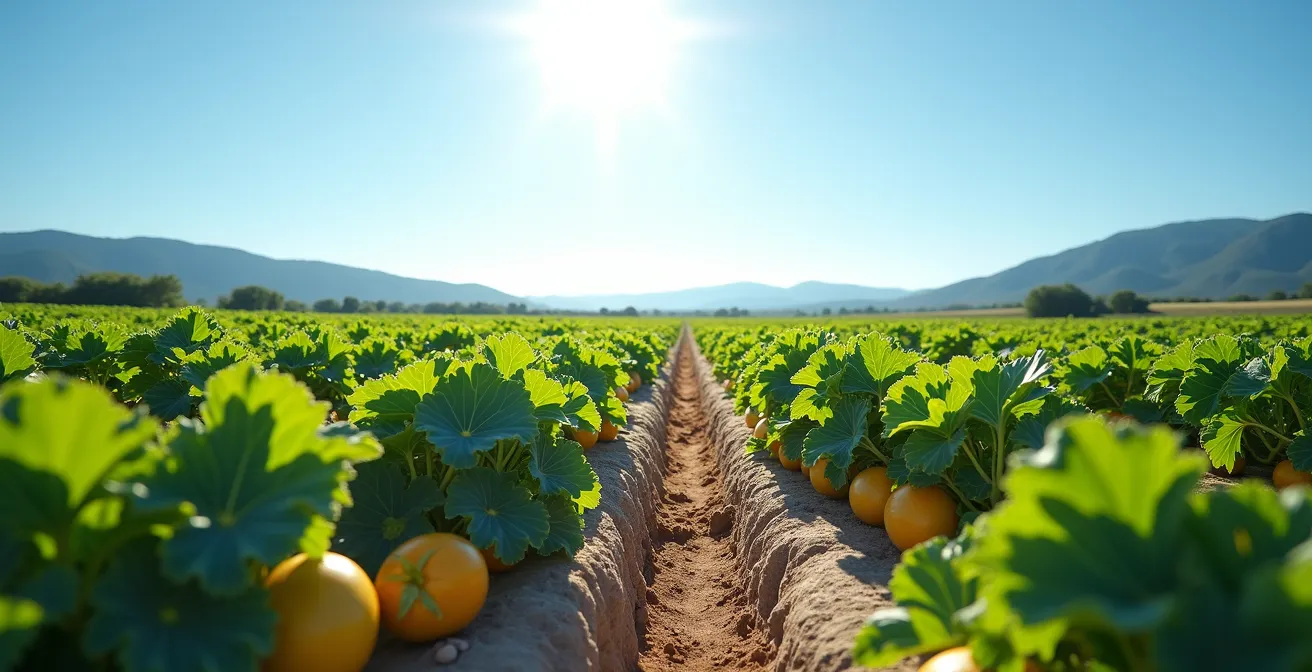
But it’s not just about sweetness. The heat also develops an intense, floral, and honeyed aroma with nuances of almond and apricot. A melon picked in cooler, cloudier June may still be good, but it will lack the aromatic complexity and profound sweetness of its July counterpart. To train your palate, buy melons from the same producer at the beginning, middle, and end of the season. The difference will be unmistakable. You are not just tasting a fruit; you are tasting the accumulated sunshine of a specific month.
Why Pastis Tastes Better at 6 PM in the South of France?
Perhaps the most subtle and often overlooked element of terroir is the human one: ritual. Consider Pastis, the anise-flavored spirit synonymous with Provence. Objectively, its flavor is the same whether consumed at noon in a Parisian cafe or at dusk on a dusty pétanque court near Marseille. Yet, anyone who has experienced the latter will swear it tastes infinitely better. This is not mere nostalgia; it’s a demonstration of how context and ritual complete the sensory experience.
The 6 PM “apéro” is a cultural institution. At this time, the heat of the day begins to fade, work is finished, and a sense of relaxation descends. Physiologically, our bodies are transitioning from a state of activity to one of rest. Our senses, overwhelmed during the day, become more attuned to subtle stimuli. Psychologically, we are primed for social connection and pleasure. This entire environment—the cooling air, the golden light, the clinking of glasses—becomes an integral part of the flavor profile. This is the essence of ritualistic tasting.
The flavor of Pastis, with its complex herbal notes of anise and licorice, is perfectly suited to this moment. Its refreshing quality cuts through the lingering heat, and the ritual of adding chilled water—watching the clear liquid turn a cloudy “louche”—is a meditative act that prepares the palate. Tasting Pastis in this specific context anchors the flavor to a powerful sense of place and time. The drink becomes a trigger for a whole-body sensory memory. To train your palate for this, create your own ritual. Try tasting a specific drink only at a certain time of day, in a specific setting, and notice how the context shapes your perception over time.
Why 11 AM Is the Biological Peak for Wine Tasting?
After exploring external factors like soil, climate, and ritual, we must turn our analytical lens inward. The state of the taster is a critical variable in the terroir equation. Professional wine tasters and sensory analysts universally agree that the optimal time for critical tasting is mid-morning, specifically around 11 AM. This is not a matter of tradition but of human biology; it is when our palate is at its most objective and receptive.
By 11 AM, our senses are fully awake, but our palate is still “clean.” We have not yet consumed a heavy lunch, which can coat the tongue and dull our perception of subtle flavors and textures. Any lingering tastes from breakfast (like coffee or toothpaste) have dissipated. Furthermore, our mental clarity is at its peak, and we are not yet suffering from the “decision fatigue” that sets in later in the day. This heightened state allows us to detect the delicate nuances—faint mineral notes, subtle fruit expressions, and complex acidity—that are the hallmarks of a wine’s terroir.
Tasting later in the day, especially after a meal or when tired, means our perception is colored by other flavors and general fatigue. We are more likely to notice only the most dominant characteristics (like oak or alcohol) and miss the intricate details. For travelers wanting to make the most of a vineyard visit, adopting the professional protocol is essential. It ensures you are giving the wine—and its terroir—your full, unbiased attention.
Your Morning Tasting Protocol: A Practical Checklist
- Cleanse the Palate: Have a light, neutral breakfast (like plain toast or oatmeal) and drink only water until the 11 AM tasting.
- Heighten the Senses: Take a brief morning walk or hike before the tasting to energize the body and awaken your senses without causing fatigue.
- Maximize Mental Clarity: Arrive at the tasting when you feel most alert, before the mental fog of a long day of travel and decision-making sets in.
- Focus on Subtlety: Use this peak sensory window to consciously search for the most delicate notes—minerals, earth, and secondary fruit flavors—that are easily missed later in the day.
By scheduling your most important tastings for this biological peak, you are controlling a key variable and giving yourself the best possible chance to truly understand the wine’s sense of place.
Right to Roam: Can You Walk Between the Vines in France?
To truly understand terroir, one must eventually leave the tasting room and experience the land itself. Walking the vineyard—feeling the soil underfoot, seeing the slope of the land, touching the gnarled old vines—cements the connection between place and palate. But in a country where vineyards are private property, what are the rules of access? The French concept is more nuanced than a simple “yes” or “no.”
Unlike countries with a formal “Right to Roam,” you cannot simply wander through any vineyard you please. These are active agricultural sites and the livelihood of the winemaker. However, France is crisscrossed by a network of public footpaths known as ‘chemins ruraux’. These ancient rights-of-way often pass directly through or alongside vineyards, offering legal and respectful access. Using these paths allows you to immerse yourself in the environment without trespassing. This physical connection is invaluable; it’s the difference between reading about slate soil and seeing its glistening fragments on the ground.
This deep connection between land and wine has historical roots. For centuries, monks, particularly the Cistercians in Burgundy, meticulously observed and delineated the vineyard parcels. They were the original terroir analysts, establishing boundaries for Crus that are still recognized today by walking the land. When you walk these paths, you are following in their footsteps. If you encounter a winemaker, etiquette is key. A friendly “Bonjour” and waiting for them to pause their work before asking a question is the respectful approach. This direct interaction, this producer dialogue, is the final piece of the puzzle, turning a simple walk into an insightful field study.
Key takeaways
- Deconstruct the Environment: Actively link specific flavors and textures to their origins in the soil, climate, and local flora.
- Mind the Context: Recognize that your own biological state and the cultural rituals surrounding consumption are integral parts of the flavor experience.
- Engage the Producer: The story behind the product is a key to its terroir. Direct dialogue at the farm or market unlocks the deepest understanding.
Why the Village Market Is More Expensive Than the Supermarket but Worth It?
After dissecting the individual components of terroir—soil, plants, animals, climate, and context—the village market is where it all comes together. Here, the price of a tomato or a wedge of cheese is not just a monetary value; it’s an honest reflection of its origin. While a supermarket may offer lower prices through industrial scale and logistics, the market offers something far more valuable: a direct, unmediated connection to a specific sense of place.
The higher price at a market often accounts for small-scale, non-industrial farming methods, the cost of hand-harvesting, and the economic reality of a producer selling directly. But what you are truly paying for is traceability and authenticity. That tomato wasn’t picked green and shipped thousands of miles; it was likely ripened on the vine a few kilometers away and picked that morning. Its flavor is the undiluted product of local soil and recent sunshine. The supermarket offers consistency; the market offers specificity.
This is the ultimate training ground for your palate. Here, you can engage in the crucial “producer dialogue.” By asking a few simple questions, you can complete the story of the food you are about to eat. Ask, “Is this yours?” to confirm you are buying from the farmer. Ask, “Where exactly is your farm?” to place the product on a map and connect it to a physical location. Finally, ask, “What was special about this week’s harvest?” to learn how recent weather or seasonal shifts have affected the flavor. The answers provide the final layer of context that turns a simple purchase into a rich, educational experience, making the extra cost an investment in sensory knowledge.
Now that you have the tools for sensory deconstruction, the next step is to put them into practice consciously and consistently. Start at your local market, engage with producers, and transform every meal into a deliberate exploration of place.
Frequently Asked Questions about Tasting Terroir
Can I walk through any vineyard in France?
No, but public footpaths (‘chemins ruraux’) often cross through vineyards and these are open for respectful walking.
How do I approach a winemaker working in the vines?
Wait for them to pause their work, greet with ‘Bonjour’, and ask ‘Puis-je vous poser une question?’ before engaging.
What should I observe while walking?
Look for vine age (gnarled trunks), farming methods (organic vs conventional), soil type, and pruning style.