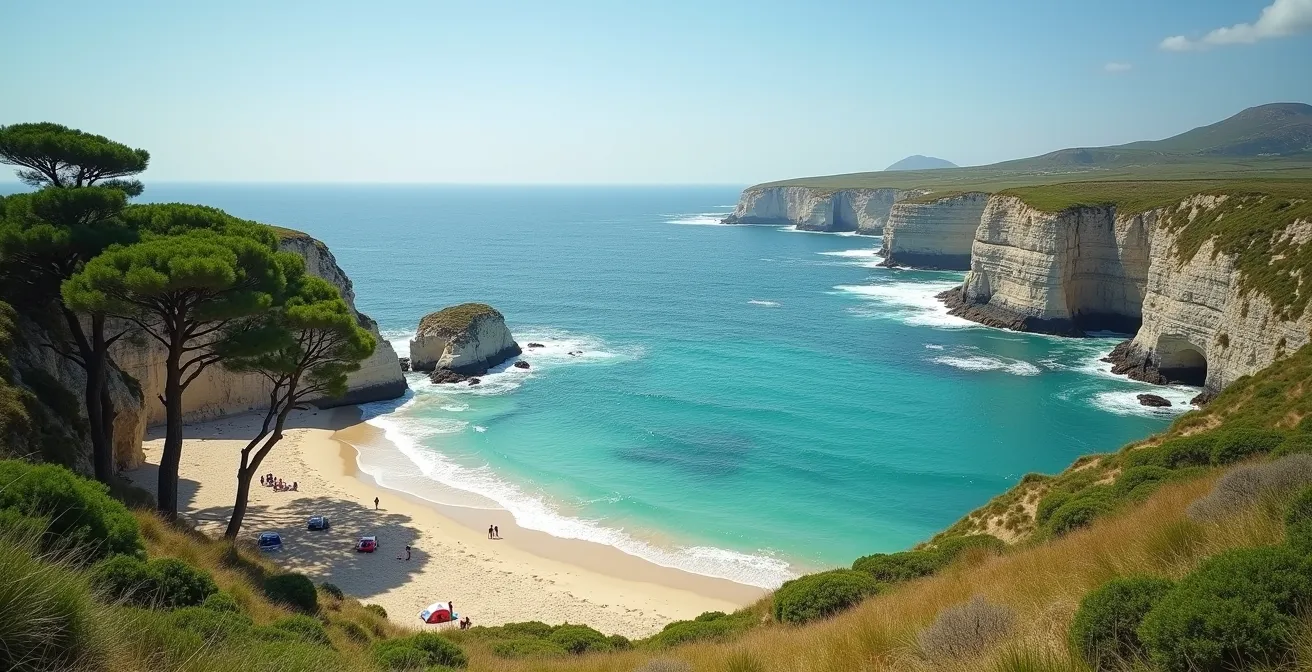
The best French coast for your family isn’t about choosing sun over rain; it’s about mastering your holiday’s unique “micro-climate” of weather reliability, crowd density, and budget.
- The Mediterranean offers guaranteed sun but requires strategic planning to manage heat, crowds, and costs by looking inland and booking early.
- The Atlantic provides more space and value but demands flexibility to embrace its changeable weather and a smart approach to finding warmer waters.
Recommendation: If a guaranteed sunny beach day is non-negotiable, choose the Mediterranean and use the strategies here. If you value space, nature, and a more relaxed pace over constant sun, the Atlantic is your winner.
For any Northern European family, the annual debate over the summer holiday destination often boils down to a single, crucial question: how can we guarantee sunshine? The allure of France is powerful, but it presents a classic dilemma. On one hand, the Mediterranean coast promises sun-drenched days, azure waters, and vibrant evening markets. On the other, the Atlantic coast beckons with its wild, dramatic landscapes, vast sandy beaches, and a more untamed spirit. The common wisdom paints a simple picture: the Med is for sun-worshippers who can tolerate crowds, while the Atlantic is for adventurers who don’t mind a rain shower.
This binary choice, however, is a simplification that often leads to holiday disappointment. Families fear the French Riviera will be overwhelmingly crowded and expensive, while they worry Brittany or the Vendée will be a washout, forcing them into costly indoor activities with restless children. But what if the key to the perfect French coastal holiday wasn’t about choosing a region, but about understanding and managing its specific “holiday micro-climate”? This involves looking beyond the weather forecast to strategically control for crowds, budget, and daily rhythms.
This guide moves beyond the clichés. We will deconstruct the real pros and cons of each coast from the perspective of a family that prioritizes sun but values peace and a manageable budget. We will explore how to find seclusion on the Riviera, why the Atlantic’s rain might not be the holiday-ruiner you think it is, and how to enjoy a taste of the “billionaire lifestyle” on a camper’s budget. By the end, you will be equipped to make a decision based not on stereotypes, but on a deep, practical understanding of which coast truly matches your family’s unique needs.
To help you navigate this detailed comparison, this article breaks down the key factors to consider when choosing between a Mediterranean or Atlantic camping holiday. The following summary outlines the path to your perfect coastal escape.
Summary: Mediterranean vs Atlantic Camping: A Complete Family Guide
- Why Is the Mediterranean Climate Essential for Sun-Deprived Northern Europeans?
- How to Find Secluded Spots on the Riviera During High Season Without Stress?
- Budgeting for the South: Is the Mediterranean Really 30% More Expensive?
- The Heatwave Mistake That Ruins Camping Trips for Families with Toddlers
- When to Book Your Mediterranean Stay: The Sweet Spot Between May and September
- Is June or September the Best Month to Dodge Atlantic Rain Showers?
- North Coast vs South Coast: Which Side of Brittany Has Warmer Water?
- Can You Experience the “Billionaire Lifestyle” of the Riviera While Camping?
Why Is the Mediterranean Climate Essential for Sun-Deprived Northern Europeans?
For a family escaping the often-unpredictable summers of the UK or Northern Europe, the primary draw of the Mediterranean is not just sun, but weather reliability. It’s the near-certainty that you can plan a beach day and not have it cancelled by a sudden downpour. This psychological comfort is a massive component of a relaxing holiday. Data confirms this, with a city like Marseille boasting an average of 262 hours of sunshine in October alone, a time when northern skies are typically grey. This guarantee removes a significant layer of holiday stress before you even leave home.
Beyond the simple joy of sunshine, the dry heat of the Mediterranean offers tangible, practical benefits for family camping. The climate creates an environment where the logistics of daily life become easier, contributing to a more seamless and enjoyable experience. Consider these advantages:
- Gear and towels dry almost instantly, preventing the damp, musty feeling common in more humid climates.
- There is less risk of dampness and mildew inside tents or mobile homes, improving comfort and air quality.
- Beach activities are a reliable daily option, minimizing the need for expensive and often crowded indoor backup plans.
- Laundry, a necessary chore on longer family trips, dries quickly outdoors, reducing clutter and reliance on campsite launderettes.
This climate fundamentally changes the rhythm of a camping holiday. It allows for a truly outdoor-focused experience, where meals are eaten al fresco, evenings are spent under the stars, and the fear of being “rained in” all but disappears. For families seeking to maximize their time in the sun, this reliability is the cornerstone of the Mediterranean’s appeal.
How to Find Secluded Spots on the Riviera During High Season Without Stress?
The biggest deterrent for families considering the French Riviera is the vision of shoulder-to-shoulder crowds on the beaches of St. Tropez or Nice in August. While the coastal hotspots are undeniably busy, the seasoned traveller knows the secret to enjoying the region’s beauty in peace: look inland. The strategy is to choose a campsite in the ‘arrière-pays’ or hinterland, typically a 15-to-20-minute drive from the coast. This simple shift in location transforms the holiday experience.
Campsites near towns like Grasse, Vence, or the villages of the Var offer a completely different atmosphere. They are often more spacious, quieter, and set in beautiful natural surroundings of pine forests and rolling hills. You trade immediate beach access for a tranquil base, larger pitches, and often, better facilities for a lower price. This approach allows you to engage with the coast on your own terms. You can make tactical strikes to the beaches early in the morning before the crowds descend, or later in the afternoon when they begin to thin, retreating to your peaceful haven for the peak hours of the day.
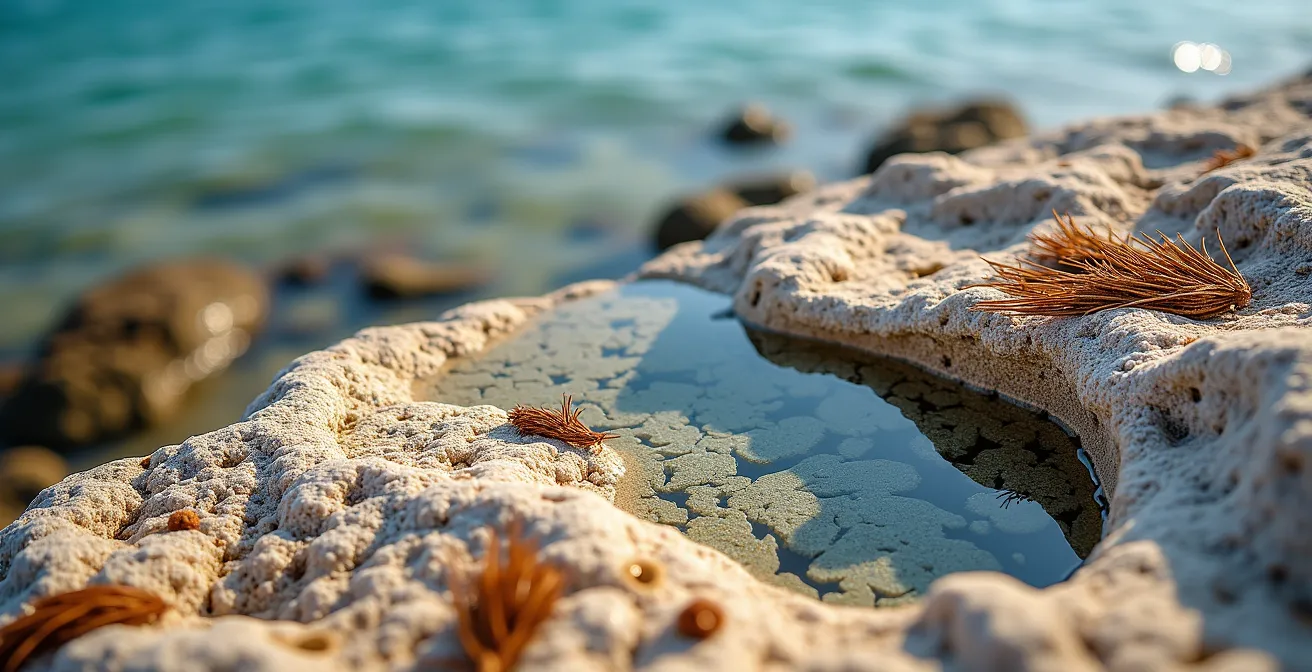
As this image of a serene, empty cove suggests, these moments of tranquility are entirely possible, even in high season. The key is planning. The ‘arrière-pays’ strategy not only helps you avoid the stress of the coastal crush but also opens up a richer travel experience. You can explore charming Provençal villages, browse local markets without the tourist markup, and discover hiking trails with breathtaking views, all while knowing the iconic turquoise waters of the Mediterranean are just a short drive away.
Budgeting for the South: Is the Mediterranean Really 30% More Expensive?
The reputation of the Mediterranean, particularly the Côte d’Azur, as a prohibitively expensive destination can be misleading. While it’s true that certain costs are higher, a blanket statement that it’s “30% more expensive” than the Atlantic coast doesn’t tell the whole story. The key is to look at the budget holistically and understand the concept of cost versus value. A detailed breakdown reveals a more nuanced picture.
This comparative analysis shows where the real cost differences lie. While eating out can be significantly more expensive in the South, pitch fees are only marginally higher, and supermarket costs are broadly similar across France. The most telling factor is the “Indoor activities” category. This is where the Mediterranean’s reliable climate provides hidden savings.
| Cost Category | Mediterranean Average | Atlantic Average | Difference |
|---|---|---|---|
| Campsite pitch (per night) | €41 | €37 | +11% |
| Supermarket groceries | Similar | Similar | 0% |
| Restaurant meals | €35-45 | €25-35 | +30% |
| Indoor activities (rainy day) | Rarely needed | €15-25/person | Atlantic higher overall |
A rainy day on the Atlantic coast can easily lead to an unplanned €80-€100 expense for a family trip to an aquarium or cinema. In a typical two-week holiday, just two or three such days can completely erase the initial savings on restaurant meals. As one family camping analysis in the Off-the-Path camping guide points out, the value proposition is fundamentally different:
The Mediterranean’s primary ‘free’ activity—the beach—is almost always available, whereas the Atlantic’s unpredictable weather can lead to costly unplanned activities like cinemas and aquariums.
– Family camping analysis, Off-the-Path camping guide
Therefore, budgeting for the South is less about raw costs and more about smart choices. By cooking more at the campsite, enjoying picnics on the beach, and leveraging the free, sun-filled days, a Mediterranean holiday can be surprisingly economical. The final cost depends more on lifestyle choices than on the region itself.
The Heatwave Mistake That Ruins Camping Trips for Families with Toddlers
While Northern Europeans crave the sun, there’s a critical difference between a pleasant 28°C and a draining 38°C heatwave, especially when camping with young children. The single biggest mistake families make is underestimating the intensity of the Mediterranean summer heat and failing to adapt their rhythm. Trying to maintain a “business as usual” schedule of all-day activities can lead to exhaustion, dehydration, and miserable children, completely undermining the holiday.
The solution is to embrace the local culture and adopt the Mediterranean rhythm. This means structuring your day around the sun’s peak intensity. Mornings are for energetic activities like swimming or exploring, followed by a long, quiet “siesta” period during the hottest part of the day (roughly 12 PM to 5 PM) in the shade of your pitch or a cool mobile home. The day resumes in the late afternoon for evening beach trips, market visits, and late dinners as the temperatures become pleasant again. This isn’t about “wasting” the day; it’s about aligning your family’s energy with the climate for a more sustainable and enjoyable experience.
Beyond rhythm, a proactive approach to heat management is essential. Having the right gear and a clear plan can turn a potentially stressful situation into a manageable one. Before you go, it’s wise to prepare a toolkit for tackling the heat effectively.
Action Plan: Your Mediterranean Heatwave Survival Toolkit
- Pitch Selection: Specifically request and book a pitch known for natural shade from mature pine trees (’emplacement bien ombragé’).
- Adopt the Rhythm: Plan main activities between 9 AM and 12 PM, rest from 12 PM to 5 PM, and resume activities after 5 PM.
- On-Pitch Cooling: Pack a small inflatable paddling pool. It’s an instant, safe cooling station for toddlers right by your tent or mobile home.
- Ventilation Tools: Bring battery-operated misting fans to circulate air and provide cooling relief inside your accommodation during nap times.
- Hydration and Cooling Aids: Stock up on cooling towels and purchase oral rehydration solutions from a local French pharmacy as a precaution.
- Campsite Choice: Prioritize campsites with well-shaded pool areas or, even better, direct access to a cool river or lake over exposed beach-front locations.
When to Book Your Mediterranean Stay: The Sweet Spot Between May and September
Securing the perfect Mediterranean campsite, especially one with a coveted shaded pitch or a prime location, is a competitive sport. The mistake many families make is underestimating how far in advance they need to act. Waiting until spring to book a high-season spot on the Riviera is a recipe for disappointment, leaving you with limited, often inferior, options. The demand for top-tier sites is immense, and a proactive booking strategy is non-negotiable.
According to Camperguru’s 2024 industry report, the booking window for the most desirable Mediterranean campsites opens as early as 11 months in advance, with a significant number of the best pitches for July and August being snapped up by the Christmas holidays. This means that to get the holiday you want, you need to be planning this summer’s trip before last winter’s decorations are even packed away. This level of foresight is essential for managing the “crowd” aspect of your holiday micro-climate at the booking stage.
However, if your schedule allows for flexibility, you can avoid the biggest crowds and highest prices by targeting the “shoulder months.” These periods offer a superior experience for many families. The choice between May, June, or September is a strategic one, with each month offering a distinct profile.
| Month | Profile | Pros | Cons |
|---|---|---|---|
| May | The Bloom | Fewer crowds, lush landscapes, wildflowers | Cooler water, some services may be closed |
| June | The Golden Month | Perfect weather/crowd balance, long daylight hours | Prices are beginning to rise |
| September | The Afterglow | Warmest sea temperatures, lower prices, relaxed vibe | Shorter days, some facilities may be closing down |
For many, June emerges as the “golden month”, offering the ideal balance of perfect weather, manageable crowds, and long, light-filled evenings. September is a close second, especially for those who prioritize warm sea temperatures, as the Mediterranean has been heated by the summer sun for months. It offers a more relaxed, “end-of-season” vibe that can be very appealing.
Is June or September the Best Month to Dodge Atlantic Rain Showers?
Now that we’ve deconstructed the Mediterranean experience, let’s apply the same “micro-climate” lens to the Atlantic coast. The region’s biggest perceived negative is the weather, but the reality of Atlantic rain is often misunderstood. Unlike the prolonged, heavy downpours that can sometimes occur in the Med during shoulder seasons, Atlantic rain typically arrives in fast-moving fronts. This creates a pattern of showers followed by sunshine, locally known as ‘une ondée’. These episodes are often brief and rarely write off an entire day, making them far less disruptive to holiday plans than many fear.
This weather pattern makes the Atlantic coast ideal for families who enjoy a mix of activities. The cooler temperatures and passing clouds are perfect for hiking, cycling, and exploring coastal towns without the oppressive heat of the south. When the sun comes out, the vast beaches offer more than enough space for everyone. The choice between June and September on the Atlantic coast, however, involves a strategic trade-off between daylight and sea temperature.
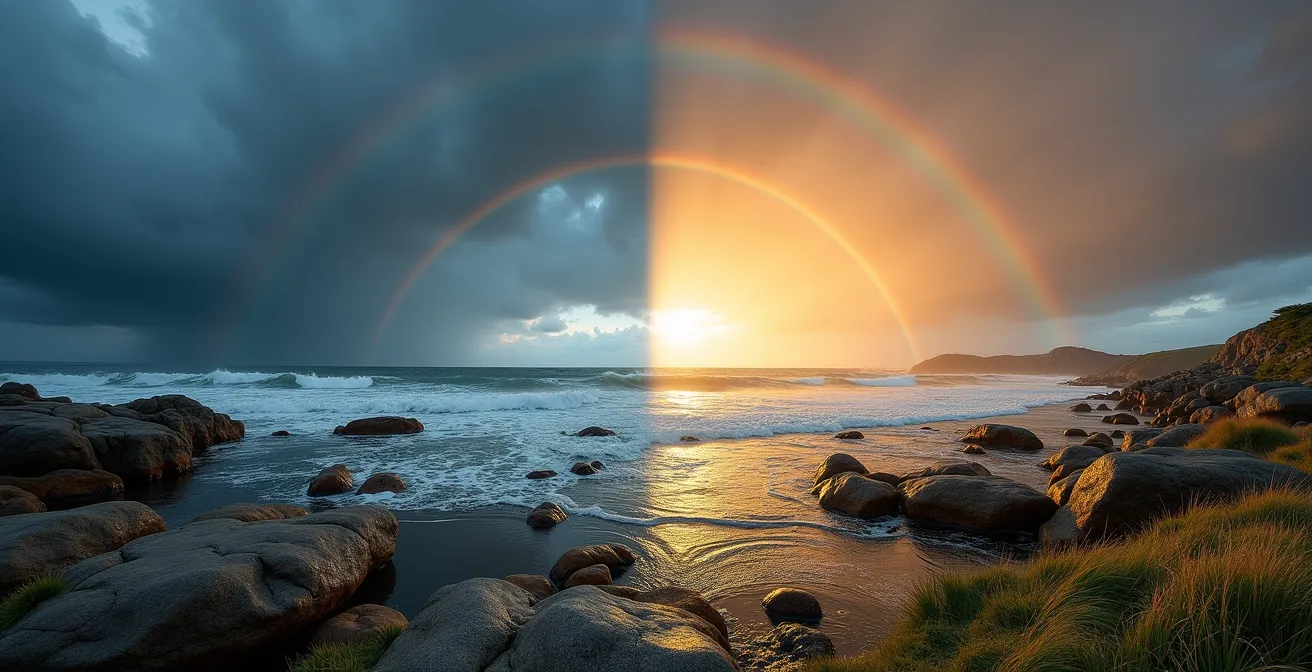
June offers the benefit of long daylight hours, perfect for maximizing land-based activities and enjoying late-evening barbecues at the campsite. The landscape is lush and green, and the summer season is just kicking into gear. September, on the other hand, boasts statistically fewer rainy days and, crucially, the peak sea temperatures of the year. The ocean has had all summer to warm up, making it the superior choice for families whose main priority is swimming and water sports. The trade-off is shorter days and a more autumnal feel in the evenings.
North Coast vs South Coast: Which Side of Brittany Has Warmer Water?
For families drawn to the rugged charm of Brittany, a common concern is the water temperature. The English Channel and the open Atlantic are not the Mediterranean, and the thought of icy water can be a significant deterrent. However, applying a “micro-climate” approach reveals that not all of Brittany’s coastline is created equal. There is a distinct and measurable difference between the north and south coasts, and knowing this can transform your beach experience.
The south coast of Brittany, particularly the Gulf of Morbihan, is the undisputed winner for warmer water. This vast, shallow, and enclosed bay acts as a natural solar collector. The sun heats the water much more effectively than it can in the deep, open waters of the north coast, which is more influenced by the cooler English Channel. As a result, you can expect water temperatures that are consistently 2-3°C warmer. This seemingly small difference is very noticeable, especially for young children, and can be the deciding factor between a quick, brave dip and a long, comfortable afternoon of splashing.
Beyond the north-south divide, there are several other strategies to find pockets of warmer water and enhance your swimming experience in Brittany. It’s about working with the landscape, not against it.
- Explore Inland Estuaries: The sheltered tidal rivers like the Aven, Odet, or Rance are significantly warmer and calmer than the open sea.
- Seek Southern Exposure: On the north coast, beaches that face south will have warmer sand and feel more pleasant for sunbathing.
- Time the Tides: On the vast sandy beaches of the south coast, visiting at low tide often reveals large, shallow pools of water that have been warmed by the sun to a bath-like temperature.
- Consider ‘Perceived Temperature’: A beach sheltered from the wind will always feel much warmer, even if the water temperature is the same as a more exposed spot.
A coastal analysis even describes the Gulf of Morbihan as a ‘solar-powered bathtub’, a perfect illustration of how this unique geography creates a more family-friendly water experience. Choosing a campsite near this area is the smartest move for families who want to combine Brittany’s culture with comfortable swimming.
Key Takeaways
- The core decision is managing a “holiday micro-climate”—balancing guaranteed sun against crowds, cost, and heat.
- The Med’s real value isn’t just sun, but weather reliability, which saves on unplanned “rainy day” activity costs.
- Beat Riviera crowds and costs by camping 15-20 minutes inland and making strategic trips to the coast.
Can You Experience the “Billionaire Lifestyle” of the Riviera While Camping?
The French Riviera’s image is synonymous with superyachts, exclusive beach clubs, and celebrity-filled villas—a world that seems utterly disconnected from a family camping holiday. However, the true luxury of the region is not something that can be bought. It lies in the quality of the light, the scent of pine trees, the colour of the water, and the breathtaking views. These are elements that are just as accessible to a camper as they are to a billionaire; you just have to know where to look.
Experiencing the “billionaire lifestyle” on a budget is about creative access and shifting your perspective. Instead of chartering a private boat to the Îles de Lérins, you can take the public ferry for a fraction of the price and enjoy the exact same island paradise. Instead of paying for a €50 sunbed at a private beach club, you can lay your towel on the public beach next door, buy a chilled bottle of rosé for €5 from a local shop, and watch the very same sunset. The experience is democratic.
Families successfully achieve this by making smart, simple choices. They walk the ‘sentier littoral’, the public coastal footpaths that often wind directly past the gardens of the most exclusive properties, offering identical sea views. They visit the public gardens of famous villas, like the Villa Ephrussi de Rothschild, to experience the opulence without needing an invitation. The philosophy is simple: the goal is not to own the yacht, but to enjoy the same magnificent view from a different vantage point. This approach proves that the most valuable and memorable aspects of the Riviera’s glamour are, in fact, free.
Now that you’re equipped with the strategies to manage the micro-climates of both coasts, the final step is to apply this framework to your own family’s priorities. Evaluate what truly matters for your perfect holiday to choose the French coast that will deliver the most memorable experience.