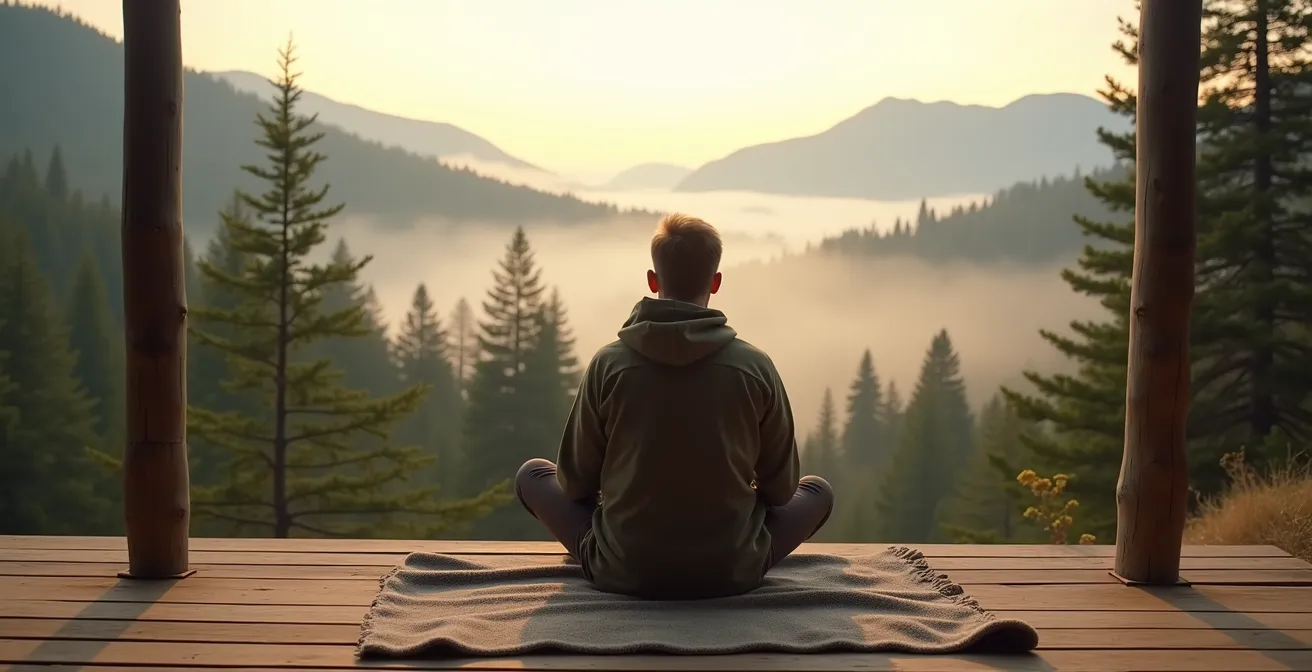
For the high-performing executive, 5-star camping is not an escape from work; it is a strategic protocol for performance recovery.
- It systematically resets core biological systems, like your circadian rhythm, through structured exposure to natural light and darkness.
- It leverages “environmental prescriptions” such as forest bathing and digital-free zones to down-regulate a chronically stressed nervous system.
Recommendation: Treat your next camping trip as a non-negotiable investment in your mental capital, with a measurable return on clarity, focus, and resilience.
In the relentless world of executive leadership, the pressure to be constantly connected, decisive, and performing at peak capacity is immense. The default solutions for burnout—a spa weekend or a luxury city break—often fail to address the root cause: a profound disconnection from our own biological and psychological rhythms. We return to our desks feeling momentarily rested, but not truly reset. The constant barrage of notifications, the blue light from screens, and the ambient stress of urban life have dysregulated the very systems that govern our focus, creativity, and emotional stability.
The common advice is to simply “get back to nature” or “unplug.” While well-intentioned, this advice lacks the structure and targeted approach that a high-performing individual requires. It’s like telling an athlete to “just run” without a training plan. But what if we approached this problem with the same strategic mindset we apply to business? What if we viewed nature not as a passive backdrop, but as a high-performance environment engineered for recovery?
This is the core premise of 5-star camping as a mental health retreat. It’s not about roughing it; it’s about leveraging a curated, comfortable environment to execute a powerful wellness protocol. This guide reframes luxury camping from a simple holiday into a series of targeted interventions designed to reset your mind and body for sustained peak performance. We will explore how to select the right environment, master the art of strategic disconnection, reset your internal clock, and integrate these benefits back into your demanding professional life.
This article provides a complete framework for transforming a luxury camping experience into a powerful tool for executive well-being. The following sections will guide you through the key protocols, from selecting the ideal wilderness setting to maintaining your newfound equilibrium upon returning home.
Summary: Your Strategic Guide to Executive Wellness Through 5-Star Camping
- Natura 2000 vs National Parks: Which Designation Guarantees True Wilderness?
- Circadian Rhythms: How Natural Light Resets Your Biological Clock?
- Digital Detox Zones: Where to Go in the Campsite to Escape Wi-Fi?
- Forest Bathing: How to Practice Shinrin-Yoku on Your Pitch?
- Board Games vs Screens: How to Rebuild Family Bonds in 7 Days?
- Pre-Dinner or Post-Hike: When Is the Best Time for Balneotherapy?
- 7 Days vs 14 Days: How Long Does It Take to Truly Decompress?
- The Post-Camping Comedown: How to Keep the Holiday Spirit Alive at Home?
Natura 2000 vs National Parks: Which Designation Guarantees True Wilderness?
For an executive, every decision is about optimizing for the best outcome. Choosing a location for a mental health retreat is no different. It’s not about finding the prettiest view; it’s about selecting an “environmental prescription” with the right properties to facilitate deep rest. The designation of a protected area is a key performance indicator of its suitability. While both National Parks and Natura 2000 sites offer natural beauty, they operate under different philosophies that directly impact their effectiveness for a true wellness retreat.
Natura 2000 sites, a network across the EU, are often the superior choice for a targeted mental reset. Their primary mandate is the long-term survival of species and habitats, which translates into a focus on sustainable, low-impact human activity. This typically means lower visitor density, stricter controls on noise, and superior protection against light pollution—three critical factors for nervous system regulation. National Parks, by contrast, often have a dual mandate that includes promoting tourism, which can lead to variable and sometimes high-density visitor zones, undermining the goal of solitude.
This table offers a clear comparison for executives looking to maximize their “well-being ROI” by choosing the optimal environment for recovery.
| Designation | Visitor Density | Light Pollution Control | Noise Regulations |
|---|---|---|---|
| Natura 2000 | Lower (sustainable focus) | Stricter limits | More stringent |
| National Parks | Variable (some high tourism) | Variable by park | Standard regulations |
Choosing a Natura 2000 site is a strategic decision to place yourself in an environment where true quiet and darkness are not a matter of luck, but of policy. This is the foundational step in creating the optimal conditions for the biological and psychological reset to follow.
Your Audit Plan: Selecting a Peak Performance Camping Retreat
- Define Your “Reset” Objective: Clearly identify your primary goal (e.g., sleep restoration, creative thinking, family bonding). This dictates all other choices.
- Scrutinize Environmental Designations: Review the site’s classification (Natura 2000, National Park) and its specific policies on visitor density and noise.
- Audit Connectivity Black Spots: Request a map of Wi-Fi coverage from the campsite. Identify and plan to use designated “dead zones.”
- Evaluate On-Site Wellness Protocols: Check for structured offerings like forest bathing guides, hydrotherapy access, or meditation spaces.
- Plan Your Integration Strategy: Before you go, outline three small habits (like a morning walk) you will implement upon your return.
Circadian Rhythms: How Natural Light Resets Your Biological Clock?
For the modern executive, the greatest unseen disruptor of performance is the chronic misalignment of our internal biological clock, or circadian rhythm. Governed by a master clock in the brain, this 24-hour cycle orchestrates everything from sleep-wake patterns and hormone release to metabolism and cognitive function. Constant exposure to artificial light at night and insufficient natural light during the day effectively puts our bodies in a state of perpetual jet lag, leading to poor sleep, decision fatigue, and a blunted stress response.

This is where camping becomes a powerful bio-hacking tool. By removing artificial light sources and synchronizing your light exposure with the natural solar cycle, you force a hard reset of your master clock. Waking with the sunrise and winding down as darkness falls provides the clear, powerful signals your body needs to recalibrate. The results are not subtle or slow. Research from the University of Colorado Boulder demonstrates that a single weekend of camping achieved a 69% shift in circadian timing towards a more natural, healthy rhythm. This isn’t just about feeling “rested”; it’s a fundamental physiological reset.
The thin canvas of a tent is uniquely effective, allowing the gentle, changing light of dawn to filter through, preparing your body for wakefulness long before your alarm would. This natural awakening process prevents the grogginess (sleep inertia) associated with being jolted awake in a dark room. For an executive, regaining this natural rhythm translates directly into sharper morning focus, more stable energy throughout the day, and improved sleep quality—the bedrock of high-level cognitive performance.
Digital Detox Zones: Where to Go in the Campsite to Escape Wi-Fi?
The concept of a “digital detox” has moved from a niche wellness trend to a mainstream necessity, so much so that the global digital detox tourism market reached $1.42 billion in 2024. For an executive, however, simply turning off your phone is often not enough. The mere knowledge that connectivity is available can create a “phantom limb” of digital anxiety, preventing the mind from truly disengaging. The key is not just willpower, but environmental design. A successful detox requires a strategic approach to creating genuine, inescapable disconnection.
The first step is to proactively choose a campsite with designated “white zones” or areas with intentionally poor or non-existent Wi-Fi and cell service. Before booking, contact the management and ask for a map of their connectivity. Treat it like scouting a business location. Identify the pitches or common areas that are true digital black spots. These zones are not a bug; they are a feature. They provide the external structure needed to break the cycle of reflexive checking and constant cognitive load. This isn’t about Luddism; it’s about creating a controlled environment for deep mental focus and restoration.

While it may feel daunting, research shows the relief is profound. A study on teens—a demographic even more tethered to devices—found that 93% experienced a sense of relief after being separated from their phones and social media. The lesson for adults is clear: the initial discomfort of disconnection is quickly replaced by a liberating sense of presence and reduced mental chatter. By strategically placing yourself in a digital-free zone, you are not depriving yourself; you are prescribing a necessary dose of uninterrupted reality, allowing your brain’s attentional systems to finally recover.
Forest Bathing: How to Practice Shinrin-Yoku on Your Pitch?
Once you’ve established the right environment—dark, quiet, and disconnected—the next step is to actively engage with it. Forest bathing, or Shinrin-yoku, is a Japanese practice that provides a structured protocol for this engagement. It’s not hiking or exercise; it is the conscious and contemplative practice of immersing yourself in the forest environment using all your senses. For the analytical mind of an executive, its evidence-based benefits are compelling. It’s a method to actively down-regulate the sympathetic nervous system (our “fight or flight” response) and activate the parasympathetic system (our “rest and digest” state).
The practice is simple yet profound, and it can be done right on your campsite pitch or in the immediate surroundings. It’s about slowing down to the speed of nature. Begin by finding a comfortable spot. Turn off any remaining devices and simply stand or sit for several minutes, focusing on your breath. Then, begin to engage your senses one by one. Notice the different shades of green, the texture of bark, the feeling of the breeze. Listen for the subtle sounds—the rustle of leaves, the call of a distant bird. Inhale deeply, taking in the scent of the earth and the phytoncides, antimicrobial organic compounds released by trees that have been linked to a stronger immune response.
This is not a mystical practice; it is a physiological intervention. As a 2024 study in Frontiers in Psychology concludes, the effects are measurable. The researchers stated:
Shinrin-yoku significantly improved stress management at a physiological level and could be a valuable intervention for individuals experiencing stress.
– Queirolo et al., Frontiers in Psychology, 2024
By dedicating just 20-30 minutes a day to this practice, you are not simply relaxing; you are actively training your nervous system to be more resilient and shifting your brain out of its default state of high alert. This is preventative mental maintenance, with a direct return on your ability to handle pressure back in the workplace.
Board Games vs Screens: How to Rebuild Family Bonds in 7 Days?
Executive burnout doesn’t just impact professional performance; it often strains the personal relationships that are supposed to be a source of strength. The same digital tethers that create chronic work stress also erect invisible walls within the family. Even when physically present, executives and their families are often mentally absent, each isolated in their own screen-based world. A 5-star camping trip offers a unique opportunity to dismantle these walls and rebuild connection, but it requires a more deliberate plan than simply “spending time together.”
Replacing screen time with analog activities like board games is a powerful strategy. The key is to introduce them progressively to avoid resistance and build momentum. A structured, 7-day approach can transform family dynamics from disconnected to collaborative.
- Days 1-2: The Icebreaker Phase. Start with simple, tactile games that require minimal rules, like Jenga or other dexterity-based challenges. The goal is easy laughter and breaking the habit of screen-based interaction.
- Days 3-4: The Strategic Thinking Phase. Introduce games with a bit more depth, like Settlers of Catan or Ticket to Ride. This encourages planning and friendly competition, engaging the analytical minds in the family in a shared, playful context.
- Days 5-6: The Cooperative Build Phase. Shift to fully cooperative games like Pandemic or The Forbidden Island. Here, the family must work as a single team against the game itself, fostering communication, joint problem-solving, and a powerful sense of shared accomplishment.
- Day 7: The Deep Communication Phase. Conclude with a game that relies on inferential thinking and non-verbal cues, like The Mind or Codenames. These games reward a deep understanding of how other family members think, cementing the new-found bonds.
The negative impact of excessive device use on social dynamics is well-documented. Replacing it with structured, positive interaction provides a powerful antidote. This isn’t just about having fun; it’s a team-building exercise for your most important team: your family. It rebuilds the communication pathways that a hyper-connected life erodes.
Pre-Dinner or Post-Hike: When Is the Best Time for Balneotherapy?
Many 5-star campsites offer spa-like amenities, including balneotherapy—the use of hot tubs, thermal baths, or mineral springs for therapeutic purposes. For the efficiency-minded executive, the question is not just *whether* to use these facilities, but *when* to use them for maximum physiological benefit. The timing of your immersion can either amplify or counteract the restorative effects of your day’s activities. The optimal moment is post-activity and pre-dinner, a window that leverages your body’s state to prime it for deep relaxation and digestion.
Engaging in balneotherapy after a hike or a session of forest bathing is ideal. The physical activity increases circulation and warms the muscles, making them more receptive to the soothing effects of the hot water. More importantly, scientific evidence shows that activities like forest bathing significantly enhance parasympathetic nervous system activity—the “rest and digest” state. A recent study analyzing Heart Rate Variability (HRV) found that dynamic forest bathing significantly increased lnHF, a key marker of parasympathetic tone. Immersing yourself in warm water during this heightened state of calm deepens the relaxation response, preparing your body perfectly for the evening meal and subsequent sleep.
To transform this from a simple dip into a therapeutic ritual, follow a structured 3-step protocol:
- Step 1: Immersion. For the first five minutes, focus entirely on the physical sensations. Notice the water temperature, the pressure on your skin, and the feeling of buoyancy. Resist the urge to let your mind wander to work or planning.
- Step 2: Breathwork. Once settled, practice box breathing. Inhale for a count of four, hold for four, exhale for four, and hold for four. This simple technique is a powerful tool for amplifying parasympathetic activation.
- Step 3: Mindful Observation. In the final minutes and immediately after exiting, turn your attention inward. Observe your body’s state—the feeling of heavy limbs, a slower heart rate, a quieter mind—without judgment. This reinforces the mind-body connection.
Timing your balneotherapy post-hike and pre-dinner is a strategic stacking of wellness protocols. It uses the momentum from your day in nature to create a cascade of physiological benefits, optimizing your body for digestion, rest, and deep, restorative sleep.
7 Days vs 14 Days: How Long Does It Take to Truly Decompress?
In a world where time is the ultimate luxury, determining the optimal “dosage” for a mental health retreat is a critical strategic calculation. Is a one-week trip enough to undo months of chronic stress, or is a longer duration required for a meaningful return on investment? While a 7-day trip provides significant benefits, research and expert opinion suggest that the most profound and lasting changes occur during the second week. The benefits are not linear; they are exponential.
The first week of a retreat is primarily about acclimatization and detoxification. This is when your body purges the physiological and psychological toxins of your work life. Your sleep schedule begins to normalize, your nervous system starts to down-regulate from its constant state of high alert, and the initial anxiety of disconnection subsides. You are shedding the armor of your executive persona and beginning to inhabit your own body again. This phase is crucial, but it is largely a process of unwinding.
The second week is where true recalibration and integration occur. With the initial stress shed, your mind and body are now receptive to deeper healing. This is when neuroplasticity—the brain’s ability to form new connections—can be harnessed for lasting change. As noted in Executive Wellness Research, “The mental and physiological benefits are not linear but exponential, with the second week yielding disproportionately higher long-term gains.” It’s in these later days that creative insights emerge, deep-seated stress patterns are released, and a new baseline of well-being is established. A 14-day retreat is not just twice as good as a 7-day one; it is an order of magnitude more transformative, solidifying benefits that are more likely to endure the return to a high-pressure environment.
Key Takeaways
- Effective mental health retreats for executives are not passive escapes but active, evidence-based protocols.
- The choice of environment (e.g., Natura 2000) is a strategic decision to control variables like noise and light pollution.
- Resetting your circadian rhythm through natural light is a powerful, science-backed “bio-hack” for improving sleep and cognitive function.
- Lasting benefits require not just a retreat, but a clear plan for integrating newfound habits back into daily life.
The Post-Camping Comedown: How to Keep the Holiday Spirit Alive at Home?
The greatest challenge of any restorative retreat is not achieving a state of bliss, but maintaining it upon re-entry into your demanding daily life. The “post-holiday comedown” is a common phenomenon where the benefits of a trip evaporate within days of returning to the office. To prevent this, the retreat must be seen not as a temporary escape, but as a training ground for building a more resilient, burnout-proof lifestyle. The final, and most critical, phase of your mental health retreat is the integration protocol.
The goal is to micro-dose the essential elements of the camping experience—natural light, disconnection, and mindfulness—into your daily urban routine. This requires a conscious, structured plan. As Kenneth Wright, a leading researcher in sleep and chronobiology, suggests, the future of wellness lies in re-engineering our daily environments. He notes, “Our findings highlight an opportunity for architectural design to bring more natural sunlight into the modern built environment.” While you may not be able to redesign your office, you can redesign your schedule.
Implement a “Burnout-Proof Integration Protocol” to preserve your gains:
- Morning Light Exposure: Before checking your email, take a 10-minute walk in a park or on a tree-lined street, leaving your phone behind. This anchors your circadian rhythm.
- Midday Nature Break: Whenever possible, eat your lunch outside. Even 15 minutes of midday sun exposure can significantly boost alertness and mood.
- Evening Wind-Down: Recreate the campfire effect by dimming all lights in your home at least two hours before bed. Eliminate all screens during this period to protect melatonin production.
- Weekend Consistency: Maintain the same wake-up and sleep times on weekends as you do during the week. This preserves the stability of your newly reset biological clock.
By treating your return home with the same strategic intentionality as the retreat itself, you transform a temporary vacation into a permanent upgrade to your mental and physical operating system. This is the ultimate ROI of your investment.
Stop viewing rest as a liability and start scheduling your performance recovery. Your next strategic move isn’t in the boardroom; it’s in the wilderness. Begin planning your executive mental health retreat today to secure your most valuable asset: your own well-being.