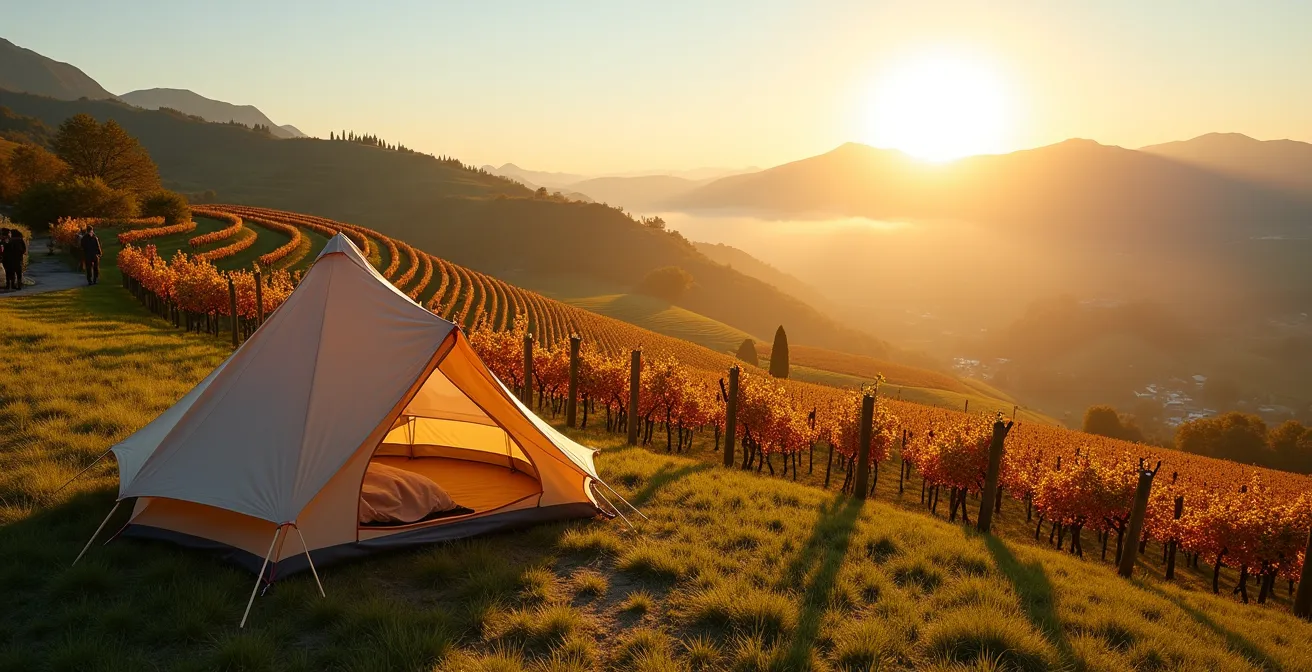
Camping in a UNESCO vineyard offers more than scenery; it’s a deep immersion into a living, working cultural heritage.
- It means experiencing the landscape as a historical record, not just a picturesque backdrop for wine tasting.
- It requires navigating the rhythms of a working farm, from the sounds of the harvest to the vibrant colours of the dormant season.
Recommendation: The key to this unique experience is to approach it not as a tourist, but as a respectful guest engaging with its history, natural cycles, and people.
The image of a holiday in French wine country often conjures scenes of elegant châteaux, refined tasting rooms, and leisurely lunches. For many, the goal is to sample the world’s finest wines. This approach, while enjoyable, often only scratches the surface of what these historic regions truly offer. It treats the vineyard as a beautiful but static backdrop for consumption, overlooking the centuries of human effort, history, and natural rhythm that define it.
But what if the true value of a visit lies not just in the glass, but in the very soil beneath your feet? What if the ultimate experience is one of immersion, of understanding the ‘cultural terroir’ that gives a wine its soul? This is the promise of camping within a UNESCO-listed vineyard. It’s an invitation to step away from the polished cellar door and into the heart of a living cultural landscape. It’s an opportunity to witness the daily life of the vines, to walk paths carved by monks and Romans, and to feel the pulse of the seasons, from the frantic energy of the harvest to the quiet slumber of winter.
This guide moves beyond the basics of oenotourism. It is designed for the heritage lover, the traveller who sees a landscape as a story waiting to be read. We will explore how to respectfully navigate these working lands, what to expect during key moments of the agricultural year, and how to uncover the deep historical layers that make these places so profoundly special. It is a roadmap for experiencing a UNESCO vineyard not as a destination, but as a dialogue with history itself.
This article provides a comprehensive overview for respectfully exploring these unique environments. The following sections detail everything from your rights of way among the vines to the unwritten rules of a traditional tasting.
Summary: A Guide to Camping in a Living Heritage Vineyard
- Right to Roam: Can You Walk Between the Vines in France?
- Noise and Tractors: What to Expect When Camping During the “Vendanges”?
- Golden Vines: When Is the Foliage at Its Peak Color?
- Monks and Romans: How to Spot Ancient History in the Vineyard?
- Saint-Vincent Tournante: Which Festivals Are Worth the Crowds?
- Natura 2000 vs National Parks: Which Designation Guarantees True Wilderness?
- Visiting in September: Can You Participate in the Grape Harvest?
- Spit or Swallow: What Is the Polite Protocol at a French Tasting?
Right to Roam: Can You Walk Between the Vines in France?
The romantic notion of wandering freely through sun-drenched vineyards is a powerful one, but the reality is grounded in the fact that these are private, working farms. Unlike the broad “Right to Roam” found in some countries, France operates on a system of private property and designated public paths. However, this does not mean the landscape is inaccessible. Many regions are crisscrossed by ancient footpaths, known as ‘chemins ruraux’ or ‘chemins viticoles’ (vineyard paths), which are public rights-of-way.
The key to a respectful exploration is observation and courtesy. These paths are often marked, but the most important rule is to stay on established tracks and never cut directly through the vine rows. This prevents damage to the plants and soil. A simple ‘Bonjour’ and a polite question, ‘Puis-je passer?’ (May I pass?), to a ‘vigneron’ (winemaker) you meet will almost always be met with a welcoming gesture. It acknowledges their ownership and your role as a guest in their workplace. This approach transforms a simple walk into a moment of positive human connection, embodying the spirit of respectful immersion.
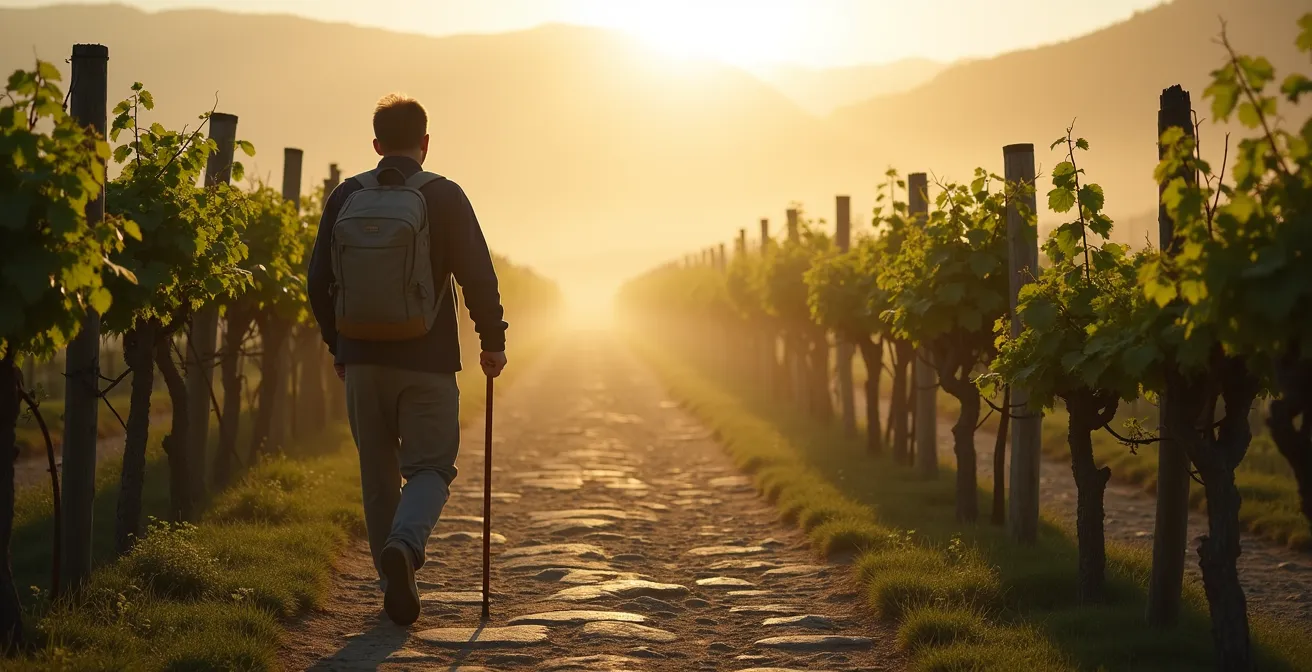
It’s also crucial to be aware of the agricultural calendar. Avoid entering vineyards during spraying periods, typically in the early morning, for your own safety. Similarly, netted rows are a clear signal of pre-harvest protection, and these areas should be avoided. By understanding and respecting these unwritten rules, you can freely and safely enjoy the profound beauty of these landscapes, following in the footsteps of generations who have walked these same paths.
Noise and Tractors: What to Expect When Camping During the “Vendanges”?
Camping during the grape harvest, or ‘les vendanges’, is an experience of incredible vitality and energy. It is also a period of intense agricultural activity. The serene quiet of the off-season is replaced by the sounds of a landscape hard at work. Expect the rumble of tractors from dawn until dusk, the cheerful chatter of picking crews moving through the rows, and the hum of machinery at the nearby winery. This is not a time for silent contemplation; it is a time of purposeful, productive noise.
For the heritage traveller, this is a unique opportunity to witness the economic and social climax of the vineyard’s year. Far from being a disturbance, the activity is the very pulse of the region’s lifeblood. With over 10 million wine tourists visiting France annually, many are drawn specifically to this vibrant period. Rather than seeking to escape the noise, the goal should be to understand its significance. The tractors are not just traffic; they are carrying the culmination of a year’s worth of labour. The voices in the vines are not just noise; they are the community coming together to bring in the precious fruit.
Camping during the vendanges requires a shift in expectation. Choose a campsite slightly removed from the main winery buildings if you desire quieter evenings. However, embracing the atmosphere offers a far richer reward. It provides a genuine insight into the winemaking process that few tourists ever see. It is a chance to feel part of the cyclical experience of the land, witnessing the moment when nature’s bounty is transformed by human hands into a celebrated cultural product. It is the vineyard at its most alive and authentic.
Golden Vines: When Is the Foliage at Its Peak Color?
While the harvest season buzzes with activity, the period immediately following it offers a different, more contemplative kind of magic. As autumn deepens, the vineyards undergo a spectacular transformation. The lush green leaves of summer give way to a breathtaking display of gold, crimson, and ochre. This is the ‘Indian summer’ of the vines, a period of quiet beauty that many photographers and nature lovers consider the most stunning time of year.
The timing and colour palette of this display are directly linked to the grape varietals. To witness this ‘golden hour’ of the vineyard year, planning is key. Generally, the peak foliage occurs from mid to late October. Pinot Noir vines are among the first to turn, blushing a deep, fiery crimson. A week or two later, Chardonnay vineyards will blaze in brilliant, almost translucent gold. Understanding this sequence allows you to target specific areas for the most dramatic colours. The best light for capturing this spectacle is during the ‘golden hours’ of photography: the first hour after sunrise and the last hour before sunset, when the low-angled sun makes the leaves glow as if lit from within.
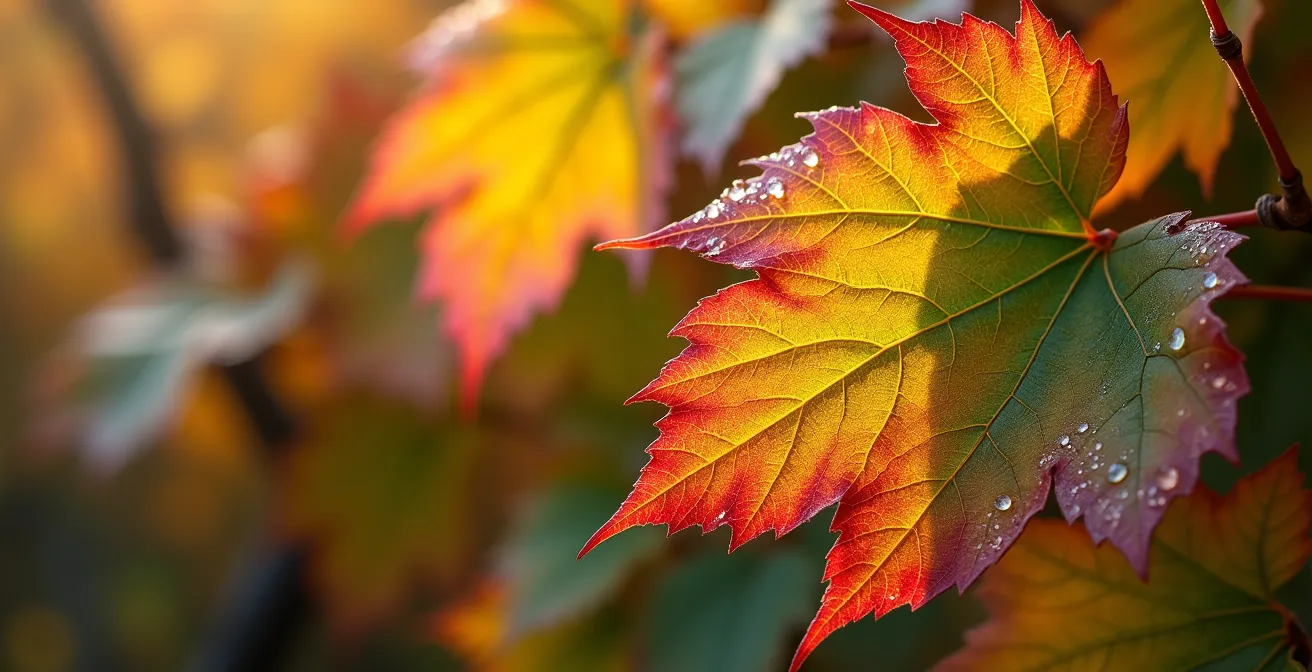
For the truly dedicated, arriving before sunrise can yield an even greater reward: morning mist settling in the valleys, with the vibrant colours of the vines emerging through the fog. This fleeting, ethereal beauty is a powerful reminder of the vineyard’s connection to the natural elements. It’s a quiet, visual feast that stands in stark contrast to the bustle of the harvest, offering a moment of profound peace and a different perspective on the beauty of the vine’s life cycle.
Monks and Romans: How to Spot Ancient History in the Vineyard?
A UNESCO-listed vineyard is more than just an agricultural site; it is an open-air museum, a landscape shaped by millennia of human history. The clues to this deep past are etched into the land itself, waiting to be discovered by the observant traveller. The very layout of many European vineyards can be traced back to Roman times, who were masters of identifying ideal slopes and soils for viticulture. Look for unusually straight access roads, remnant stone walls, or the ruins of a ‘villa rustica’ (Roman country estate) often located on prominent overlooks.
Following the Romans, medieval monastic orders, particularly the Cistercians and Benedictines, became the great custodians and developers of viticulture. They were meticulous record-keepers and the first to truly delineate the concept of ‘terroir’. The most visible legacy of the monks are the ‘clos’, or stone-walled vineyards. These walls were built not just for demarcation but to create unique microclimates, protecting the vines and retaining heat. A walk along the base of an ancient ‘clos’ is a walk alongside centuries of devotion and viticultural science.
Other historical markers include ancient stone huts, known as ‘cadoles’ or ‘bories’ in France, which served as shelters for vineyard workers. The presence of old, gnarled ‘sentinel’ trees at the edge of a plot often indicates a historic boundary marker. As comparative examples like the Douro Valley in Portugal show, where the entire landscape of ancient stone terraces is a UNESCO World Heritage site, these traditional settings represent a living cultural landscape shaped by man. This region was, in fact, established as the first officially protected wine region in 1756, setting a precedent for preserving this fusion of nature and human heritage.
Saint-Vincent Tournante: Which Festivals Are Worth the Crowds?
Wine regions are famous for their festivals, which celebrate everything from the patron saint of winemakers to the release of the new vintage. While large, famous events can be exciting, they can also be overwhelming. For the heritage-focused camper, the most rewarding experiences are often found at smaller, more traditional village festivals or ‘fêtes du vin’. These events offer a more authentic glimpse into the local culture and community.
A prime example in Burgundy is the Saint-Vincent Tournante, a festival celebrating the patron saint of vignerons, which moves to a different village each January. It begins with a solemn procession of winemaking brotherhoods in traditional robes, followed by a day of tastings and celebration. The key to navigating such events as a camper is to plan ahead. These festivals draw large crowds, making parking a campervan nearby nearly impossible after the early morning. The best strategy is to park on the outskirts and use a bicycle to move around, or simply enjoy the event on foot.
Upon arrival, the first order of business is typically to purchase a ‘verre de dégustation’ (tasting glass), often decorated for the specific event. This glass is your passport for the day, allowing you to sample wines at various cellars and stands. Attending these festivals is not just about tasting wine; it is about participating in a deeply ingrained cultural tradition. It’s a chance to see the community at its most convivial, sharing the fruits of its labour with pride and generosity. It is an act of cultural participation, not just observation.
Your Action Plan: Navigating a Wine Festival Like a Local
- Park campervans outside the designated festival zone before 8 am to secure a spot and avoid road closures.
- Rent bicycles for the day; it’s the easiest and most enjoyable way to navigate between different venues and villages.
- Purchase a ‘verre de dégustation’ upon arrival. This is your all-day pass for tastings and a great souvenir.
- Target smaller village ‘fête du vin’ events, which often provide more authentic and intimate experiences than large commercial festivals.
- Join the morning processions of the winemaking brotherhoods for the best and most colourful photo opportunities.
Natura 2000 vs National Parks: Which Designation Guarantees True Wilderness?
When seeking natural beauty, campers often look for designations like ‘National Park’. In Europe, however, another crucial designation exists that is particularly relevant to heritage landscapes: Natura 2000. It is essential to understand the difference. A National Park is primarily focused on preserving landscapes and ecosystems, often with strict rules limiting human activity. Its goal is often the preservation of ‘wilderness’.
Natura 2000, on the other hand, is a European Union-wide network of nature protection areas established to ensure the long-term survival of Europe’s most valuable and threatened species and habitats. Crucially, the network is not a system of strict nature reserves from which all human activities are excluded. The focus is on ensuring that human activities, including agriculture like viticulture, are managed in a sustainable way that is compatible with conservation goals. The network covers more than 18% of the EU’s land area, making it the largest coordinated network of protected areas in the world.
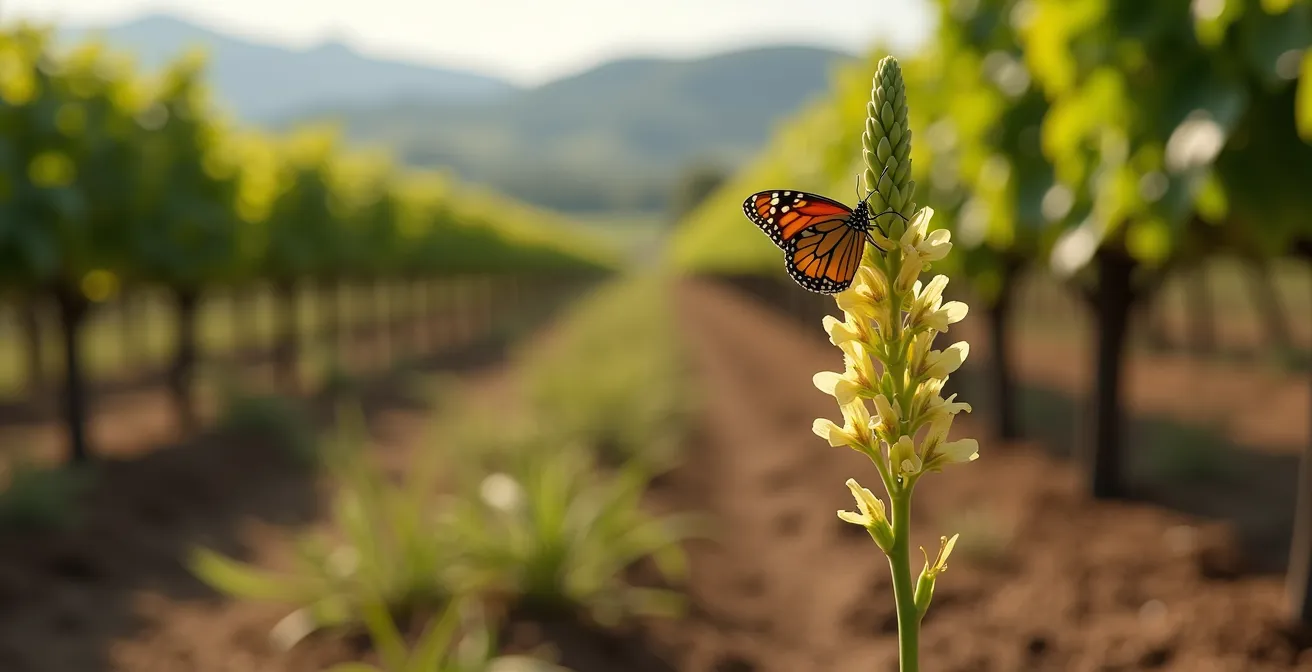
For a heritage lover camping in a wine region, a Natura 2000 designation is arguably a more meaningful indicator than a National Park label. It guarantees that you are in a place where nature and culture are not seen as separate, but as intertwined. It signifies a ‘managed wilderness’ where traditional farming practices that support biodiversity—such as maintaining stone walls, hedgerows, and patches of wildflowers—are encouraged. It is the official recognition of the vineyard as a balanced ecosystem, a place where rare orchids might bloom between the vine rows and protected bird species nest nearby. It is the ultimate seal of approval for a true living landscape.
Visiting in September: Can You Participate in the Grape Harvest?
The idea of participating in the grape harvest is a romantic one, but joining a professional picking crew is generally not feasible for a casual visitor due to labour laws, insurance, and the need for speed and efficiency. However, this doesn’t mean you cannot engage with the harvest in meaningful ways. The key is to shift from the idea of ‘working’ to the idea of ‘experiencing’.
Many smaller, family-run wineries are beginning to offer structured ‘harvest workshops’. These are typically short, educational experiences lasting a few hours, where you learn how to select and pick ripe bunches, see the pressing process, and taste the fresh grape juice (le moût). This is an excellent way to gain a hands-on appreciation for the work involved without the pressure of a real job. Booking these workshops in advance is essential as they are very popular.
For a more informal engagement, simply being a respectful and friendly presence can open doors. Visiting the local cooperative’s weighing station (‘la bascule’) is a fantastic way to see the day’s harvest from multiple growers arrive. Bringing a thermos of coffee to a picking team in the early morning is a gesture of goodwill that will be warmly received. Attending the ‘paulée’ or end-of-harvest celebration party, which usually takes place in late September or early October, is the ultimate way to share in the collective sigh of relief and joy. Building a genuine relationship with a small winery might even lead to an informal invitation to help for a row or two the following year, the most authentic harvest experience of all.
Key Takeaways
- True appreciation of a UNESCO vineyard comes from seeing it as a ‘living landscape’, not just a place to taste wine.
- Respectful immersion is key: follow designated paths, understand the agricultural calendar, and engage courteously with winemakers.
- The experience is cyclical, with each season—from the noisy harvest to the colourful autumn foliage—offering a unique perspective.
Spit or Swallow: What Is the Polite Protocol at a French Tasting?
The final, and for many, most intimidating, part of the vineyard experience is the tasting room. The central question is often: to spit or to swallow? In a professional context, spitting is not just polite; it is essential. Tasters who need to evaluate dozens of wines in a day must spit to maintain their sobriety and sensory acuity. The presence of a ‘crachoir’ (spittoon) is a clear invitation to do so, and no host will be offended.
However, for a camper or casual visitor tasting only a few wines, the etiquette is more nuanced. The protocol is to follow the lead of your host. At a large, commercial ‘cave’, spitting is standard practice and perfectly acceptable. In the cellar of a small, family-run domaine, where you might be tasting with the owner who has poured you a special glass, swallowing is often seen as a gesture of appreciation and a moment of shared connection. It signals that you are enjoying the wine for pleasure, not just for technical evaluation.
As a camper walking back to your tent, you have a unique advantage. You can employ a hybrid strategy: spit the first several wines to keep your palate sharp and your head clear, then choose to swallow the final, most special glass offered by the winemaker. This approach demonstrates both serious appreciation for the craft and genuine enjoyment of the final product. It is a respectful nod to the professional process while embracing the convivial spirit that lies at the heart of wine culture, a culture that is a significant part of a global wine tourism market that reached USD 46.47 billion in 2023.
Frequently Asked Questions on Camping in Wine Regions
When should campers swallow instead of spit?
Since you’re walking back to your tent, you can swallow the final special glass after spitting the first several wines to stay sharp. This allows you to appreciate the best wine fully without compromising your ability to taste the others.
Does etiquette differ between venues?
Yes – at small family domaines, swallowing with the owner can be a bonding moment and a sign of genuine appreciation. At large caves or formal tasting events, spitting is more standard and expected professional practice.