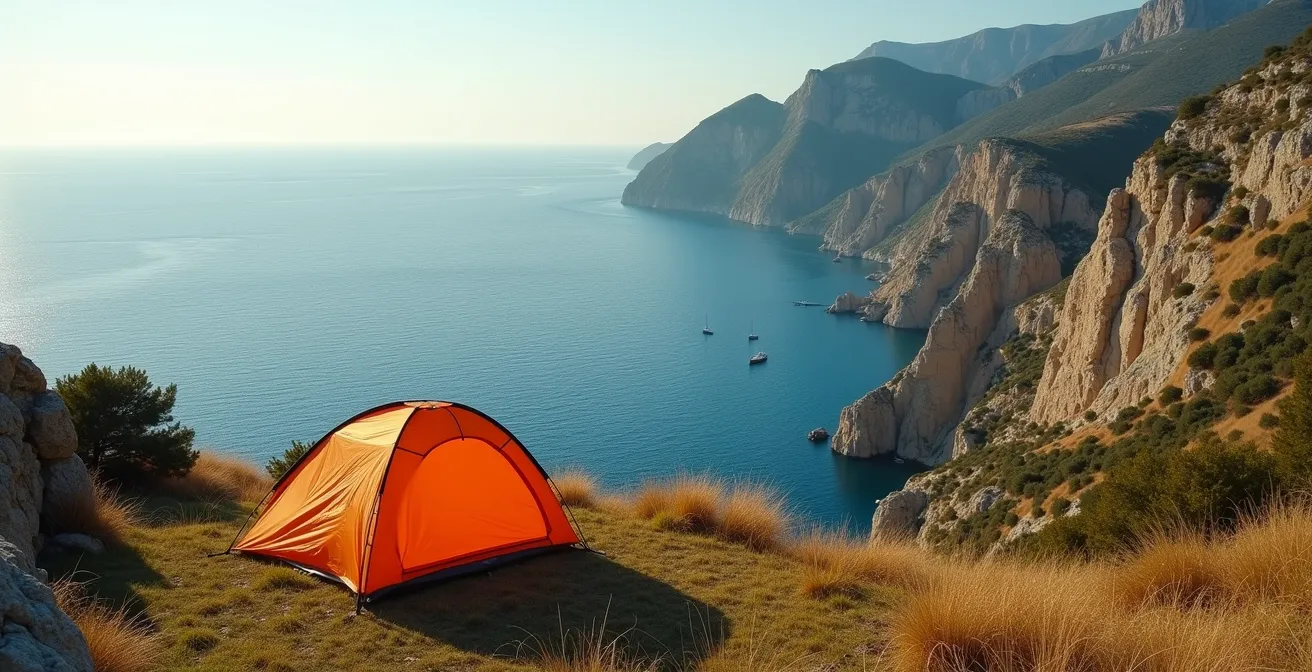
Camping in Corsica isn’t for everyone; its logistical challenges are a deliberate filter that preserves an unparalleled sense of wild freedom.
- The ferry crossing and narrow mountain roads demand careful planning and a shift in mindset, not just a travel booking.
- Wild camping is strictly forbidden to protect the fragile ecosystem, pushing you toward authentic farm stays and mountain refuges.
Recommendation: Embrace the difficulties as part of the adventure. The rewards—from deserted coves to the scent of the maquis—are directly proportional to the effort you invest.
The image of Corsica is etched in the mind of every adventurous traveler: jagged peaks plunging into turquoise waters, ancient villages clinging to hillsides, and a sense of untamed beauty. It’s the dream of a raw, authentic Mediterranean escape. Many assume that realizing this dream is as simple as booking a ferry and finding a spot to pitch a tent. The common advice is often a series of sterile warnings: “the roads are tricky,” “book your ferry in advance,” or “wild camping is illegal.” While true, these tips barely scratch the surface and completely miss the island’s essential truth.
But what if these challenges are not obstacles to be tolerated, but features to be embraced? What if the very difficulty of a Corsican camping trip is the logistical filter that protects its soul from the ravages of mass tourism? This guide reframes the entire debate. It argues that the “hassle” is the price of admission for an experience of profound beauty and solitude. The effort you expend—in planning the crossing, navigating the terrain, and respecting the rules—is directly converted into the value of your reward. The island gives back what you are willing to put in.
This article will deconstruct each major challenge of a Corsican camping holiday. We will explore how to make the best logistical choices not just to survive the journey, but to enhance it, transforming potential frustrations into the foundational elements of an unforgettable adventure.
Summary: The Real Guide to Camping in Corsica
- Night Ferry or Day Crossing: Which Is Better for Kids?
- Narrow Roads and Cliffs: Is It Safe to Tow a Caravan in Corsica?
- Bivouac Ban: Why You Cannot Just Camp Anywhere in Corsica?
- Chestnut Flour and Brocciu: What to Buy in Corsican Markets?
- May or October: When Is the Water Warm Enough in Corsica?
- Why Is the Mediterranean Climate Essential for Sun-Deprived Northern Europeans?
- Neoprene Suits: Why You Still Need One in August in Alpine Canyons?
- Night Ferry or Day Crossing: Which Is Better for Kids?
Night Ferry or Day Crossing: Which Is Better for Kids?
The first logistical hurdle for any camping trip to Corsica is the sea crossing. For families, the choice between a day or night ferry isn’t just about timing; it’s a strategic decision that sets the tone for the entire holiday. A day crossing can seem cheaper upfront, but it often translates to a full day spent containing bored children and arriving on the island exhausted, effectively losing your first evening to recovery. In contrast, the night ferry acts as both transport and accommodation, a concept that can be a thrilling adventure for children.
Opting for a cabin on a night ferry allows you to board in the evening, have dinner, and wake up fresh and ready for adventure as the Corsican coastline comes into view. You save a precious day of your holiday that would otherwise be lost to travel. While there is a supplement for the cabin, the value of arriving rested and maximizing your time on the island often outweighs the cost, as this comparison shows.
| Ferry Type | Basic Cabin Cost (Family of 4) | Additional Expenses | Total Trip Cost | Time Saved |
|---|---|---|---|---|
| Night Crossing (with cabin) | €200-€600 | €75 minimum supplement | €275-€675 | 1 full day of activities |
| Day Crossing | €200-€400 | Food & entertainment: €50-€80 | €250-€480 | Arrive tired, lose evening |
To turn the journey itself into part of the fun, a little planning goes a long way. Instead of relying on screens, engage the kids with the unique environment of the ship. This not only passes the time but builds anticipation for the destination.
- Create a ship scavenger hunt: Find the funnel, count lifeboats, spot the captain’s bridge.
- Use marine life bingo cards to mark sightings of dolphins, seabirds, or even flying fish.
- Start a Corsican mountain spotting challenge: The first child to see the island’s silhouette wins a prize.
- Schedule deck exploration time every couple of hours for fresh air and new views.
- Tell stories about Napoleon, Corsica’s most famous native, to connect the journey to the island’s history.
By framing the ferry as the start of the adventure rather than an obstacle, you arrive on the island with energy and excitement, ready to face the next challenge.
Narrow Roads and Cliffs: Is It Safe to Tow a Caravan in Corsica?
The rumors are true: Corsican roads are not for the faint of heart. They are narrow, winding, and often carved into dramatic cliff faces with breathtaking drops. This is perhaps the most significant logistical filter of the island. For travelers in camper vans or towing caravans, the question of safety is paramount. The answer is yes, it is safe, but only if you adapt your vehicle, your route, and most importantly, your mindset. You cannot conquer Corsica’s roads; you must learn to pace with the island.
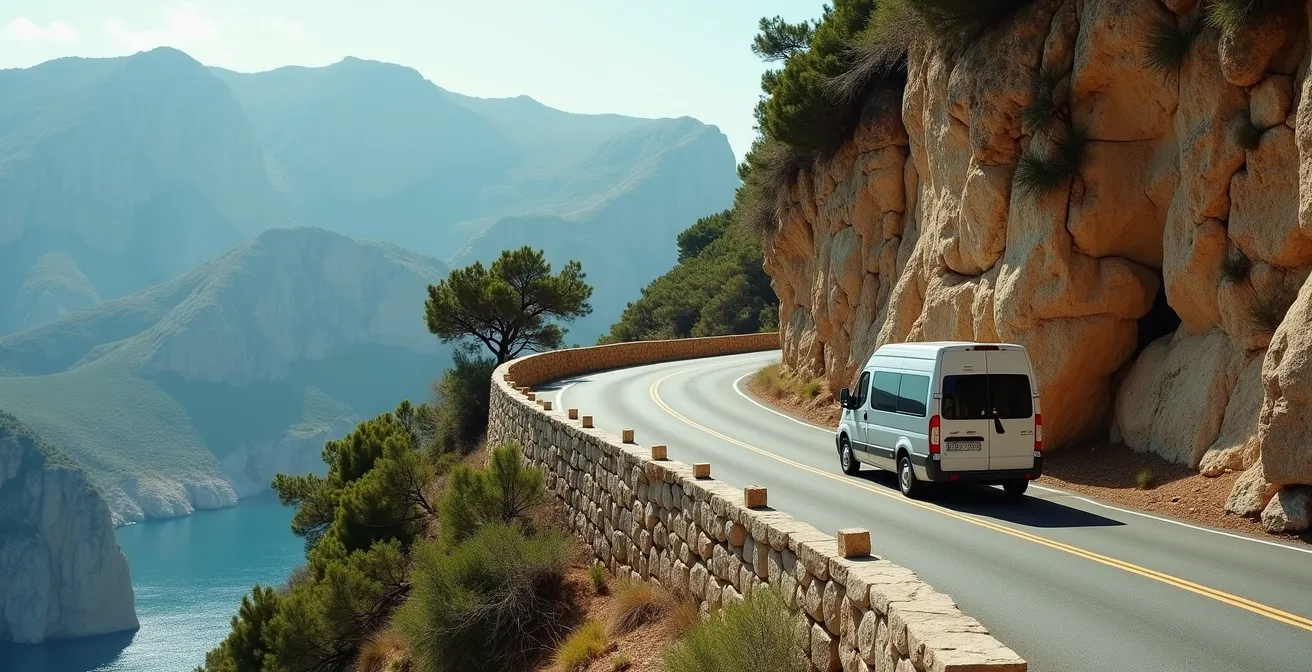
The key is understanding the island’s dual-road network. The east coast is a different world from the west. As the following comparison illustrates, your choice of route dictates the feasibility and enjoyment of your journey, especially with a larger vehicle.
Case Study: T10 East Coast vs. D81 West Coast Route Comparison
The experience of driving in Corsica depends entirely on your chosen path. The T10, running along the relatively flat East Coast, offers about 100km of straight, manageable road, making it perfectly suitable for caravans and larger motorhomes connecting Bastia to the southern beaches. In stark contrast, the iconic D81 on the West Coast, from Calvi through the Calanques de Piana, is a trial by fire. It features relentless hairpin turns, sheer cliff edges, and sections so narrow that passing an oncoming bus is impossible. For large vehicles, this route can easily add two or more hours to the journey and a significant amount of stress. As one guide notes, drivers should “drive slowly and take care on bends” everywhere on the island, but on the D81, it’s a rule for survival.
Towing a large caravan on the west coast is not recommended. A compact camper van (less than 6 meters) offers the perfect compromise, providing freedom while remaining nimble enough for most roads. The ultimate reward for this careful navigation is what can only be described as earned scenery. The views from the D81 or the mountain passes of the interior are magnificent precisely because they are not easily accessible.
Forget your GPS estimated times. A 50-kilometer journey can take two hours. Honk before blind corners. Be prepared to reverse for a hundred meters to find a passing spot. This isn’t a frustration; it’s the rhythm of Corsica.
Bivouac Ban: Why You Cannot Just Camp Anywhere in Corsica?
The dream of parking a van on a deserted beach and waking up to the sound of the waves is a powerful one, but in Corsica, it must remain a dream. “Camping sauvage” (wild camping or bivouacking) is strictly illegal across the entire island, and enforcement is taken seriously. This isn’t an arbitrary rule designed to funnel tourists into paid sites; it’s an essential measure to protect one of Europe’s most unique and fragile ecosystems. The primary reason is the extreme risk of fire. The Corsican maquis—the island’s signature dense scrubland of aromatic herbs, juniper, and oak—is tinder-dry for most of the year. A single spark from a campfire or stove can ignite a devastating wildfire.
Furthermore, the island’s ecosystems, from its protected coastline to its delicate riverbanks, cannot sustain the pressure of unregulated camping. The ban prevents soil erosion, water contamination, and habitat disruption. This protective barrier is another aspect of the island’s “authenticity barrier,” forcing visitors to engage with the island on its own terms. Far from being a limitation, this ban opens the door to a richer, more authentic network of accommodations that get you closer to the real Corsica. You just have to know where to look.
Action Plan: Finding Your Legal Corsican Haven
- Embrace “Camping à la Ferme”: Seek out farm campsites. These small, often family-run sites offer an authentic rural experience, with access to fresh local produce and a genuine connection with Corsican hosts.
- Explore Mountain Villages: Utilize remote municipal campsites in high-altitude villages like Asco. They are basic but offer unparalleled access to hiking trails and a respite from the coastal heat.
- Hike the GR20 (Partially): Even if you’re not doing the full trek, you can stay at mountain refuges along the trail. Pitching your own tent nearby typically costs around €6, giving you a taste of the high mountains legally.
- Use the Official Network: Choose from over 200 designated campsites. They range from large coastal resorts to small, peaceful sites nestled in nature, like Camping Le Sagone, offering a quiet and respectful environment.
- Seek Out Nature-Focused Sites: Look for campsites that pride themselves on their integration with nature rather than their swimming pools. These smaller sites offer a peaceful alternative that feels a world away from crowded resorts.
This approach transforms a limitation into an opportunity for discovery, leading you to places and people you would have otherwise missed.
Chestnut Flour and Brocciu: What to Buy in Corsican Markets?
One of the greatest rewards of a Corsican camping trip is the direct access to its gastronomy. The island’s culinary identity is fierce, proud, and deeply tied to the land. A visit to a local market in villages like Île-Rousse or Sartène is not just for stocking up your camper’s pantry; it’s a sensory immersion into the heart of Corsican culture. Forget generic hypermarkets; the real flavors are found on rustic wooden stalls, presented by artisans whose families have perfected their craft over generations. This is where the effort of your journey pays off in taste.
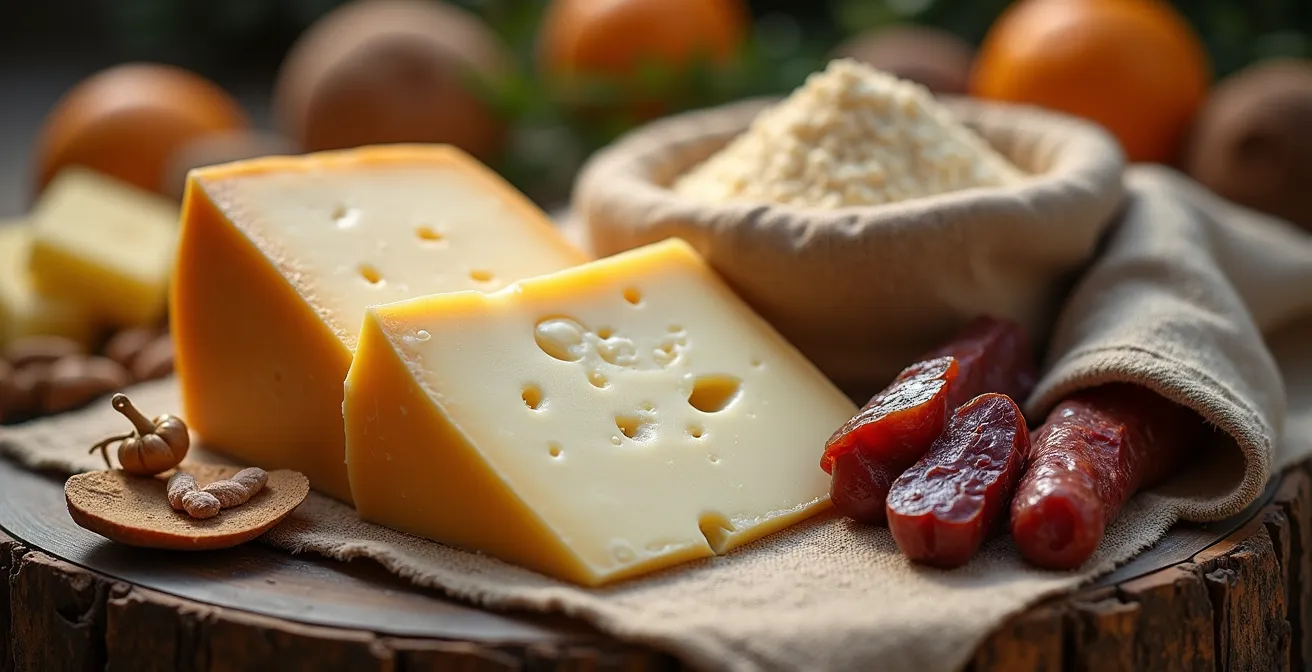
The stars of the show are products born from the mountains and the maquis. Look for chestnut flour, the “tree of bread” that sustained Corsicans for centuries. You’ll also find an incredible array of charcuterie, like lonzu and coppa, cured with traditional methods. But the undisputed king is Brocciu, a fresh whey cheese similar to ricotta but with a unique flavor. It’s a protected AOP product that must be eaten within days of being made—the ultimate fresh, local food. For a camper, the market is a treasure trove of no-cook or minimal-cook meal solutions that are both delicious and authentically Corsican.
Here is a simple shopping list for a perfect camper’s aperitif or a simple, satisfying meal after a long day of hiking:
- Brocciu cheese: Must be fresh (eat within 48 hours). Simply drizzle with local honey or sprinkle with sugar for a classic dessert.
- Lonzu and coppa: Thinly sliced cured meats that provide a protein-rich snack for the trail or the centerpiece of a lunch platter.
- Canistrelli biscuits: Hard, dry biscuits, often flavored with anise, lemon, or almonds. They are the perfect energy snack that lasts forever.
- Local bread: Look for rustic loaves that stay fresh for 2-3 days, perfect for serving with cheese and charcuterie.
- Figatellu sausage: A robust liver sausage that can be grilled in minutes on a camp stove for a powerful burst of flavor.
Engaging with these products connects you to the island’s history and self-sufficiency, turning every meal into an act of discovery.
May or October: When Is the Water Warm Enough in Corsica?
Choosing when to visit Corsica involves a classic trade-off, especially for campers. The peak months of July and August offer guaranteed heat and buzzing coastal towns, but also bring crowds and premium prices. For the adventurous traveler, the shoulder seasons of late spring and early autumn are far more rewarding. But the crucial question remains: will the sea be warm enough to swim? The choice between May and October comes down to a balance of water temperature, air temperature, and the state of the landscape.
May is a spectacular time to witness the island’s flora. The maquis is in full, fragrant bloom, and the landscape is a vibrant green after the winter rains. It’s the ideal month for hiking, with comfortable air temperatures perfect for exploring the mountains. However, the sea is still brisk, having had no time to warm up. Only the hardiest of swimmers will find the 18°C water truly comfortable.
October, on the other hand, presents the opposite scenario. The landscape is drier, cloaked in the beautiful colors of autumn, but the sea has retained the summer’s heat. The water temperature is often warmer than the air, creating a delightful swimming experience, especially for families with children who are less tolerant of the cold. The beaches are quieter, and you can often have a cove all to yourself.
This table breaks down the key differences to help you decide:
| Month | Sea Temperature | Air Temperature | Landscape | Best For |
|---|---|---|---|---|
| May | 18°C | 20-22°C | Green, blooming maquis | Hiking, hardy swimmers |
| October | 20-22°C | 18-20°C | Autumn colors, drier | Families with kids, beach lovers |
Ultimately, there is no “wrong” choice. October offers a gentler, warmer welcome for beach-focused campers, while May is a paradise for those who come to walk the island’s wild paths and are willing to brave a refreshing dip.
Why Is the Mediterranean Climate Essential for Sun-Deprived Northern Europeans?
For travelers from Northern Europe, accustomed to long, grey winters, the allure of the Mediterranean is almost primal. It’s a search for light, warmth, and color. Corsica delivers on this promise more intensely than almost anywhere else. Its climate is not just a feature; it’s a tonic for the soul. The island offers one of the longest camping seasons in Europe, stretching comfortably from April to late October. As the Freeontour Travel Guide notes, “The Mediterranean climate on Corsica from spring to late autumn makes it an ideal destination for camping holidays.” This extended season is a significant draw, offering flexibility far beyond the narrow summer window of other destinations.
The resilience of this climate is remarkable. Even as autumn sets in across the continent, Corsica clings to warmth. A travel guide confirms that even in November, the average coastal temperature is still 18°C, a figure that sounds like a pleasant summer day to someone from London or Berlin. This allows for late-season trips that feel like a stolen piece of summer. But the reward of the Corsican climate goes beyond mere temperature. It’s a full sensory experience.
The Maquis Aromatherapy Effect
The true magic of the Corsican climate reveals itself in spring. Between March and May, the maquis explodes in a riot of color and fragrance. The rising heat releases the potent essential oils of juniper, myrtle, rock rose, and rosemary. This creates a natural, island-wide aromatherapy session. For many Northern Europeans, this powerful, herby scent becomes inextricably linked with their vacation memories—a sensory anchor that instantly transports them back to the island’s sunny slopes long after they’ve returned home.
This combination of a long season of warmth and a unique, fragrant landscape provides a profound sense of escape and rejuvenation. It’s not just about getting a tan; it’s about immersing yourself in an environment that feels vibrantly, unapologetically alive. It’s a powerful antidote to months of northern gloom.
The sun on your skin and the scent of the maquis in the air are not just pleasantries; they are the very essence of why the trip is so deeply rewarding.
Neoprene Suits: Why You Still Need One in August in Alpine Canyons?
Imagine a perfect August day in Corsica. The sun is blazing, the cicadas are singing, and the coast is basking in 30°C heat. It seems absurd to even think about packing a wetsuit. Yet, venturing away from the coast and into the island’s mountainous heart reveals a startling paradox: the water in its magnificent river pools and canyons is shockingly cold. While the Mediterranean Sea is a warm bath, the island’s rivers are fed by mountain springs, some of which are remnants of winter snowmelt. This creates a dual climate that catches many unprepared campers by surprise.
Even at the height of summer, these glacier-fed river pools can maintain temperatures around 14°C. A quick, brave plunge might be exhilarating, but spending any significant time exploring these natural wonders without thermal protection can be uncomfortable at best and dangerous at worst, risking hypothermia. This is especially true for activities like canyoning, which involves prolonged immersion in the water. The wetsuit is not just for comfort; it’s an essential piece of safety equipment that allows you to fully and safely enjoy one of Corsica’s most unique attractions.
Not all wetsuits are created equal, and your choice depends on your planned activities. Bringing or renting the right one is a key part of preparing for the island’s geographical diversity.
- Dedicated Canyoning: If you plan a full canyoning excursion, rent a full 5mm suit locally. Tour operators provide them, and they offer maximum protection.
- Versatile Exploration: For general river swimming and coastal fun on windy days, buying your own 3mm “shorty” wetsuit is a great investment.
- The Compromise: A 3/2mm “spring suit” (long arms, short legs) is often the perfect balance, providing core warmth for rivers without being too cumbersome for other water sports.
- Don’t Forget Your Feet: Neoprene socks or water shoes are a must for navigating the rocky and often slippery river entries.
- The Golden Rule: Even if you’re visiting in August, pack a wetsuit. The mountain water remains cold year-round, and it’s better to have it and not need it than to miss out on an incredible experience.
Being able to comfortably spend hours in the crystal-clear pools of the Restonica or Fango valleys is a reward reserved for the well-prepared traveler.
Key Takeaways
- Corsica’s logistical challenges, like the ferry and narrow roads, are not flaws but filters that preserve its authentic character.
- Embracing the rules, such as the wild camping ban, leads to richer experiences like staying on local farms.
- The reward is directly proportional to the effort; careful planning unlocks access to “earned scenery,” unique flavors, and hidden natural wonders.
Night Ferry or Day Crossing: Which Is Better for Kids?
We return to the first decision point of the journey, but this time, let’s look at it through the lens of the entire adventure. The question is not just about managing children’s sleep schedules; it’s about which choice aligns with the spirit of a Corsican expedition. The island demands a slower, more deliberate pace. Rushing is not only futile; it’s counterproductive. Choosing a day ferry, in an attempt to “get there quickly,” often initiates the trip with stress and exhaustion—a mindset that is at odds with the island’s rhythm.
The night ferry, by contrast, forces you to surrender to the journey. It is an enforced pause, a transition period between the mainland’s frantic pace and the island’s deliberate tempo. By choosing to sleep on the water, you are making a conscious decision to slow down and arrive in sync with your destination. It is the first and most important step in learning how to pace with the island. This choice communicates a powerful message to the entire family: the adventure has already begun. We are not just enduring the travel to get to the fun; the travel is part of the fun.
This mindset is the key to unlocking Corsica’s deepest rewards. The traveler who arrives rested and in a patient frame of mind is the one who will not be frustrated by a slow-moving truck on a mountain pass but will instead pull over to admire the view. They are the one who will take the time to talk to the cheesemaker at the market, and who will have the energy to discover that hidden river pool. The journey’s logistical challenges are, in reality, a series of choices that shape your capacity to enjoy its rewards.
Stop wondering if the effort is worth it. The effort is the experience. Start planning the adventure that proves it, and your authentic Corsican journey will await the prepared, patient, and passionate traveler.