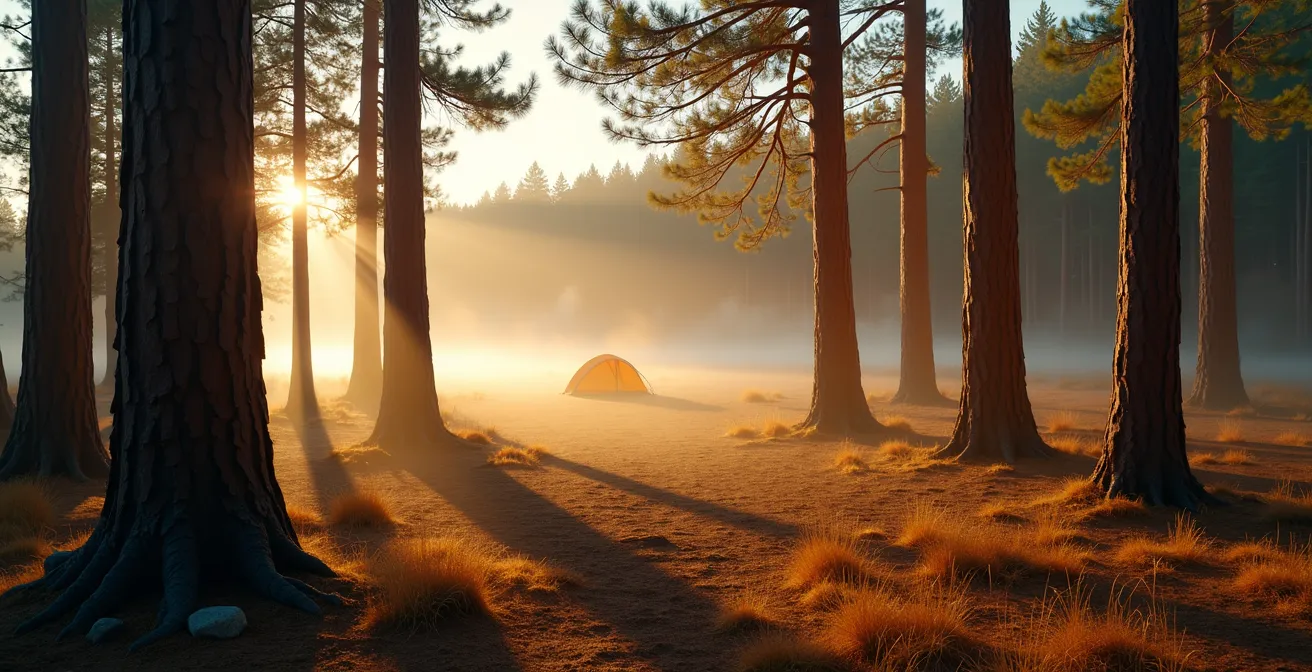
The air in a pine forest is more than just fresh; it’s a natural, inhalable treatment rich in therapeutic compounds that actively combat respiratory inflammation.
- Volatile organic compounds (VOCs), particularly terpenes like α-pinene, act as natural bronchodilators, easing breathing for those with asthma and pollution-induced irritation.
- These same compounds have been shown to boost the activity of the immune system’s Natural Killer (NK) cells, which are crucial for fighting infections.
- Maximizing these benefits is a holistic process that requires practical knowledge, from managing pollen exposure and respecting fire safety to choosing the right gear.
Recommendation: Plan your forest trip not just as a vacation, but as a prescribed wellness retreat, considering both the biological benefits and the practical logistics to achieve a truly therapeutic outcome.
For city dwellers, the constant battle against air pollution can feel relentless. The fatigue, the persistent cough, and the exacerbation of conditions like asthma are daily reminders of an environment saturated with harmful particulates. The common advice is to “get some fresh air,” a well-meaning but vague suggestion. We seek refuge in parks, but the benefits often feel fleeting. This pursuit of clean air is not just about escaping smog; it’s a deep-seated need to heal and restore our most vital function: breathing.
Conventional wisdom points to the general benefits of nature—reduced stress, lower blood pressure—all valid, but they don’t capture the full story. What if a specific environment could offer more than just a psychological break? What if it could provide a targeted, therapeutic intervention for the respiratory system itself? The answer lies not in just any green space, but in the unique biome of a pine forest. This is where the concept of a simple camping trip transforms from a recreational activity into a powerful form of natural, aerosolized therapy.
This article moves beyond the pleasantries of a “nice pine scent” to explore the scientific mechanisms at play. We will delve into how the volatile organic compounds released by pine trees—the phytoncides and terpenes—interact directly with your lungs and immune system. This isn’t about magic; it’s about biochemistry. We’ll show you how to embrace this natural pharmacy, not just by breathing, but by holistically engaging with the environment. From navigating practical challenges like resin and pollen to choosing the right activities, you will learn how to turn your next camping trip into a scientifically-backed prescription for better respiratory health.
This guide provides a complete framework for your wellness journey. We will cover the practical challenges you might face and how to turn them into opportunities for a deeper, more beneficial connection with the forest environment.
Summary: Why Sleeping in a Pine Forest Improves Your Respiratory Health?
- Tree Resin on Your Car: How to Remove It Safely After a Week Under Pines?
- The BBQ Ban: Why You Should Never Ignore Fire Rules in the Landes Forest
- Cicadas Noise: How to embrace the Sound of the South Without Losing Sleep?
- Sand vs Paved: Which Bike Tires Do You Need for Forest Trails?
- Pine Pollen Season: When Should Allergy Sufferers Avoid the Forest?
- Natura 2000 vs National Parks: Which Designation Guarantees True Wilderness?
- Yellow, Red, or Blue: Decoding French Hiking Markers for Foreigners
- Which Water Sport Should You Try Based on Your Fitness Level?
Tree Resin on Your Car: How to Remove It Safely After a Week Under Pines?
One of the first signs you’ve truly immersed yourself in a pine forest is the discovery of small, sticky amber spots on your car. Pine resin, or oleoresin, is a defense mechanism for the tree, rich in the very terpenes that benefit your health. While its presence is a sign of a healthy forest, it can be an annoyance on your vehicle’s paintwork. However, addressing this minor issue without harsh chemicals is the first step in aligning your actions with the natural, wellness-focused mindset of your trip. The goal is to solve the problem efficiently to minimize stress and maintain the tranquil state you came to achieve.
The key is a scientific principle: “like dissolves like.” Pine resin is oil-based, so oil-based removers are the most effective and gentle solution. Aggressive scrubbing or using alcohol-based solvents can damage your car’s clear coat. Instead, a simple, non-toxic approach using common household items can lift the resin without harming the paint. This mindful approach to a practical problem reinforces the holistic nature of your forest therapy experience.
To prevent this issue, understanding when and where resin drips are most common is crucial. Resin flow is highest on hot, sunny days when the tree’s internal pressure is greatest. Parking in the shade of a pine on a cool morning is far less risky than doing so at midday in peak summer.
This table outlines a simple strategy for avoiding the stickiest situations, allowing you to park with peace of mind and focus on your well-being.
| Time of Day | Temperature | Wind Direction | Parking Strategy | Risk Level |
|---|---|---|---|---|
| Early Morning (6-9am) | Cool (15-20°C) | Any | Safe to park under pines | Low |
| Midday (11am-3pm) | Hot (25-35°C) | Downwind | Avoid parking directly under | High |
| Late Afternoon (4-7pm) | Warm (20-25°C) | Upwind | Park 5+ meters from trunk | Medium |
| Night (8pm-6am) | Cool (<15°C) | Any | Safe under outer canopy | Very Low |
The BBQ Ban: Why You Should Never Ignore Fire Rules in the Landes Forest
The inviting aroma of a barbecue is a classic camping staple, but in a pine forest, it represents a significant threat. The very elements that make the forest a therapeutic haven—dry, resinous pine needles, flammable bark, and sandy soil—also create a tinderbox environment. Fire rules, especially total BBQ bans during dry seasons, are not suggestions; they are critical measures to protect the ecosystem that is providing you with clean, healing air. Ignoring them puts the entire forest, its wildlife, and other visitors at risk.
The scale of forest fire devastation in Europe is staggering, with data from the European Forest Fire Information System (EFFIS) showing hundreds of thousands of hectares burning across the continent annually. A single stray ember from a barbecue can escalate into an uncontrollable wildfire in minutes, destroying the very environment you came to enjoy. Respecting the fire ban is therefore the ultimate act of symbiosis: by protecting the forest, you preserve your source of natural therapy.

This doesn’t mean your meals have to be boring. In fact, embracing a no-cook approach can enhance your sensory experience. Without the overpowering smell of smoke, your olfactory system is free to fully absorb the subtle, complex bouquet of pine phytoncides. This shift in mindset from a hot meal to a fresh, gourmet cold platter can become a mindful practice in itself, deepening your connection to the environment.
Case Study: No-Cook Gourmet Camping Menu
Inspired by Finnish forest therapy programs, campers have found that preparing cold meals enhances the forest bathing experience. By focusing on fresh, local ingredients like smoked fish, artisanal cheeses, crisp breads, and seasonal berries, the meal becomes a mindful, sensory activity. Participants report that the absence of smoke allows for a full appreciation of the pine-scented air. This is crucial, as studies show that inhaled terpenes, a key component of this scent, enhance the activity of killer cells in our immune system, making the air itself part of the healthy experience.
Cicadas Noise: How to embrace the Sound of the South Without Losing Sleep?
As dusk settles in a southern pine forest, a new element emerges: the incessant, high-frequency hum of cicadas. For the uninitiated, this wall of sound can seem like a major obstacle to a peaceful night’s sleep, potentially inducing stress that counteracts the forest’s calming effects. The sound can reach levels of 80-100 decibels, equivalent to a lawnmower. However, from a wellness perspective, this sound is not an antagonist but an opportunity for mental reframing. It is the authentic soundtrack of a healthy, vibrant ecosystem.
Rather than fighting the sound, the key is to embrace it. The consistency and rhythmic nature of the cicada’s drone can be viewed as a form of natural pink noise. Pink noise has a consistent power across all frequencies and is often used in sound therapy to mask jarring, irregular noises (like a snapping twig or a distant car) and improve sleep quality. By consciously reframing the cicada chorus from an irritant to a protective sonic blanket, you can transform your auditory experience.
Mindfulness techniques are particularly effective here. Instead of trying to block out the sound, you actively listen to it. Focus on its waves, its rhythm, and its texture. This practice, borrowed from meditation, helps the brain categorize the sound as a non-threatening part of the ambient environment, allowing you to relax and drift off to sleep. This mental shift is a powerful tool in your holistic wellness toolkit.
- Find a comfortable position lying in your tent or sitting against a tree.
- Close your eyes and take five deep breaths, focusing on the pine-scented air entering your lungs.
- Shift your attention to the cicada drone—notice its rhythm, its peaks and valleys.
- Visualize the sound as waves of energy washing over you, cleansing the air and masking other disruptive sounds.
- Alternate your focus: count ten cicada pulses, then ten of your own breaths, continuing for several minutes.
- End by setting an intention to welcome the sound as the forest’s natural, protective lullaby.
Sand vs Paved: Which Bike Tires Do You Need for Forest Trails?
Exploring the pine forest by bike is an excellent way to cover more ground and increase your exposure to the therapeutic air. However, the terrain can be deceptively varied, shifting from hard-packed dirt to loose sand and carpets of slippery pine needles in meters. Using the wrong tires can turn a revitalizing ride into a frustrating, and potentially dangerous, struggle. Choosing the right equipment is not just about performance; it’s about ensuring your physical activity remains a positive, stress-reducing component of your health retreat.
The two most important factors in tire choice for this environment are width and tread pattern. A wider tire (2.3″ or more) provides a larger contact patch, allowing the bike to “float” over soft sand rather than digging in. A tread with deep, widely spaced knobs is essential for gripping loose surfaces and shedding pine needles, which can be as slippery as ice. Conversely, using narrow, slick tires designed for pavement will lead to a loss of control and greatly increase your effort, diminishing the enjoyment and health benefits.
Tire pressure is another critical, yet often overlooked, adjustment. Lowering your tire pressure (e.g., to 20-28 PSI) increases the tire’s footprint, further improving flotation and grip on soft ground. This simple change can make a world of difference in your ability to navigate sandy trails with confidence and ease.

Case Study: Tubeless Setup Success in Coniferous Forests
Mountain biking clubs in Scandinavian pine forests report a 73% reduction in ride-ending punctures after switching to tubeless tire systems. These systems use a liquid sealant inside the tire that instantly plugs small holes, such as those caused by sharp pinecones or thorns. The practical benefit is clear: cyclists spend significantly more time actively riding and less time repairing flats. This directly maximizes their exposure to beneficial pine compounds, as studies have shown that breathing in phytoncides during physical activity has a profound positive effect on the human immune system’s Natural Killer (NK) blood cells.
This matrix can help you match your tire setup to the terrain you plan to ride most, ensuring a safe and enjoyable exploration of the forest.
| Terrain Type | Tire Width | Tread Pattern | Pressure (PSI) | Pine Needle Risk |
|---|---|---|---|---|
| Hard-packed dirt | 1.9-2.1″ | Semi-slick | 35-45 | Low |
| Loose sand | 2.3-2.5″ | Deep knobs | 18-25 | Very Low |
| Pine needle carpet | 2.2-2.4″ | Medium knobs | 25-30 | High |
| Mixed forest trails | 2.1-2.3″ | All-terrain | 28-35 | Medium |
| Paved access roads | 1.75-2.0″ | Smooth/minimal | 40-50 | None |
Pine Pollen Season: When Should Allergy Sufferers Avoid the Forest?
For anyone with respiratory sensitivities, the word “pollen” can be a major red flag. The sight of a yellow haze descending from pine trees in spring might seem like a definitive reason to stay away. However, this is a prime example of where scientific understanding can separate myth from reality, allowing you to strategically plan your visit for maximum benefit. The truth is, a true pine pollen allergy is exceptionally rare.
Pine pollen grains are large, waxy, and relatively heavy. They are designed to be carried by wind but are far less allergenic than the smaller, spikier pollens of grasses or ragweed. In fact, research indicates that only about 1.5% of atopic patients (those with a genetic tendency to develop allergic diseases) show a genuine skin test sensitivity to pine pollen. More often, the symptoms experienced during pine pollen season are actually caused by the concurrent release of more potent allergens from other trees like birch and oak, or from grasses that thrive in forest clearings. The visible pine pollen becomes a scapegoat for an invisible culprit.
This knowledge is empowering. It means that for most people, even those with asthma or other allergies, the pine forest is not off-limits during pollen season. The key is to be aware of what *else* is pollinating at the same time. A strategic approach involves consulting a regional pollen calendar to identify the true peak seasons for your specific triggers, such as birch or ragweed. Often, the late spring and summer months, after the pine and birch pollen has subsided, are ideal, even if grass pollen is present. The anti-inflammatory effects of pine terpenes can even help mitigate mild reactions to other environmental allergens.
This simplified calendar provides a general guide for planning a trip to a temperate pine forest region, helping you distinguish between the visible but harmless pine pollen and other, more potent allergens.
| Month | Pine Pollen | Birch | Grass | Ragweed | Best for Camping |
|---|---|---|---|---|---|
| February | Starting | None | None | None | Good |
| March-April | Peak | High | Starting | None | Poor |
| May | Ending | Moderate | Peak | None | Fair |
| June-July | None | None | High | Starting | Good (early morning) |
| August-Sept | None | None | Low | Peak | Avoid if ragweed sensitive |
| October-January | None | None | None | None | Excellent |
Natura 2000 vs National Parks: Which Designation Guarantees True Wilderness?
Not all green spaces on a map are created equal, especially when your goal is respiratory therapy. The designation of a protected area—such as a National Park or a Natura 2000 site—provides crucial clues about the quality of the environment and the experience you can expect. Understanding this difference is key to selecting a location that offers the highest concentration of therapeutic air and the least amount of human disturbance.
National Parks are typically established to protect areas of significant natural beauty and to provide public access and recreation. This often means more infrastructure: visitor centers, paved roads, and designated, often crowded, campgrounds. While beautiful and well-maintained, the emphasis on visitor access can sometimes dilute the “wilderness” feel and the purity of the air.
Natura 2000 sites, on the other hand, are part of a European Union-wide network of nature protection areas established under the Habitats Directive and the Birds Directive. Their primary goal is not recreation, but the long-term survival of Europe’s most valuable and threatened species and habitats. This focus on ecological integrity often results in a more pristine, less-developed environment. As the European Environment Agency notes, this has a direct impact on air quality.
Natura 2000 sites ensure the protection of the very trees and habitats that produce the beneficial phytoncides, guaranteeing a higher quality of air to breathe.
– European Environment Agency, Forest Information System for Europe
For the visitor seeking therapeutic benefits, this means a Natura 2000 pine forest is more likely to offer a potent dose of clean air, rich in terpenes, with fewer people and less pollution from vehicles. However, it also means you must be more self-sufficient, as facilities are often minimal. Choosing a Natura 2000 site is a commitment to a deeper, more authentic immersion.
Action Plan: Choosing Your Ideal Protected Area
- Check Databases First: Before you go, consult official online resources like the Natura 2000 viewer or specific National Park websites to understand site-specific regulations.
- Assess Your Gear (Natura 2000): Expect fewer facilities but more pristine ecosystems. You must bring comprehensive camping gear and be fully self-sufficient.
- Manage Expectations (National Parks): Look for designated camping areas which offer amenities like water and restrooms, but be prepared for more visitors and potentially less solitude.
- Research Seasonal Access: Be aware that some parts of Natura 2000 sites may be closed to the public during sensitive periods, like bird breeding seasons, to minimize disturbance.
- Plan for Disconnection: Download offline maps for navigation, as mobile coverage in the more remote Natura 2000 areas is often limited or non-existent.
Yellow, Red, or Blue: Decoding French Hiking Markers for Foreigners
Once you are in the forest, confident navigation is essential for a stress-free experience. Worrying about being lost elevates cortisol levels, which can counteract the anti-inflammatory benefits of the forest air. In many European forests, particularly in France, trails are marked with a system of colored paint blazes on trees and rocks. Understanding this simple “grammar” turns the trail map into a confirmation rather than a primary tool, allowing you to stay present and immersed in your surroundings.
The system is logical and consistent. The color and shape of the marker tell you what kind of trail you are on and what action to take. While variations exist, the core principles are widely used, making them a reliable guide for any visitor. The three main types of trail you will encounter are:
- GR (Grande Randonnée): These are long-distance national or international trails, often spanning hundreds of kilometers. They are always marked with white and red horizontal bars.
- GRP (Grande Randonnée de Pays): These are regional loop trails that explore a specific area, taking several days to complete. They are marked with yellow and red horizontal bars.
- PR (Promenade et Randonnée): These are local, shorter trails, perfect for half-day or full-day hikes. They are consistently marked with a single color, most often yellow, but sometimes blue or green depending on the region.
Beyond the trail type, the shape of the marker is a directional command. A simple horizontal bar means “continue straight.” A bar with an arrow to the right or left indicates a turn. Most importantly, an “X” in the trail’s color is a universal sign for “wrong way.” Seeing this marker is a clear signal to turn back and find the last correct blaze. Learning this visual language allows your brain to relax, secure in the knowledge that you are on the right path, freeing your mind to focus on the sights, sounds, and smells of the forest.
Key Takeaways
- Pine forests release volatile organic compounds (terpenes) that have proven anti-inflammatory and immune-boosting effects on the respiratory system.
- The benefits are not automatic; they are maximized by understanding the ecosystem, from pollen seasons to fire risks, and preparing accordingly.
- A holistic approach, combining “forest bathing” with physical activity and mindful practices, turns a simple camping trip into a powerful therapeutic experience.
Which Water Sport Should You Try Based on Your Fitness Level?
The therapeutic benefits of a pine forest are often amplified when combined with proximity to water. This synergy, sometimes called “blue-green therapy,” combines the respiratory benefits of forest air with the proven stress-reducing effects of being near lakes or coastlines. Engaging in a water sport is a perfect way to add another layer of wellness to your trip, offering both physical activity and a unique perspective on the landscape.
The key is to choose an activity that aligns with your fitness level and desired outcome. Pushing yourself too hard can introduce stress and physical strain, diminishing the restorative effect. Conversely, choosing an activity that is too placid might not provide the cardiovascular benefits you seek. From meditative SUP yoga to high-intensity coastal rowing, there is an option for every body and every goal. As Japanese forest medicine research shows, combining forest immersion with other wellness activities is a cornerstone of their programs.
This decision matrix can help you select a water sport that complements your forest therapy goals, creating a well-rounded and deeply restorative experience. The “Forest Pairing” suggestion offers a way to sequence your activities for maximum benefit, such as a high-intensity workout followed by a calming recovery walk among the pines.
| Desired Outcome | Sport | Fitness Level | Core Engagement | Forest Pairing |
|---|---|---|---|---|
| Meditation & Balance | SUP Yoga | Beginner-Intermediate | Very High | Sunset forest walk |
| Low-Impact Cardio | Kayaking | All levels | Back/Shoulders | Morning pine trail |
| High-Intensity | Coastal Rowing | Advanced | Full body | Recovery forest bath |
| Family Activity | Canoeing | Beginner | Moderate | Picnic in pine grove |
| Solo Exploration | Stand-Up Paddleboard | Intermediate | Full core | Solitary forest meditation |
To translate this knowledge into tangible health benefits, the next logical step is to plan your forest immersion with the same care as a health treatment. Start by choosing a designated protected area and preparing for the unique environmental conditions to ensure a truly restorative experience.
Frequently Asked Questions About Camping in a Pine Forest
Which earplug material best blocks cicada frequencies (2.4-5 kHz)?
Foam earplugs with a high Noise Reduction Rating (NRR of 32 or more) are most effective. They compress to fill the ear canal completely, providing a superior seal that blocks high-frequency sounds like cicadas much better than pre-molded or silicone options.
Should I use wax or silicone earplugs for sleeping outdoors?
For outdoor sleeping, silicone earplugs (NRR 22-27) often represent the best compromise. They are reusable, waterproof, and don’t expand uncomfortably with heat and humidity like foam can. They effectively muffle the intensity of cicada sounds while still allowing you to hear important ambient noises from the forest.
What does a white and red horizontal bar on a trail mean?
This marker signifies that you are on a GR (Grande Randonnée) trail, which is a major long-distance hiking route. A simple bar means you should continue straight ahead on the current path.
I see a yellow “X” painted on a tree. What does this indicate?
A painted “X” of any color is the universal trail marker for “Wrong Way.” It means you have strayed from the correct path. You should immediately stop, turn around, and backtrack until you find the last correct trail marker, then look for the proper turn you missed.