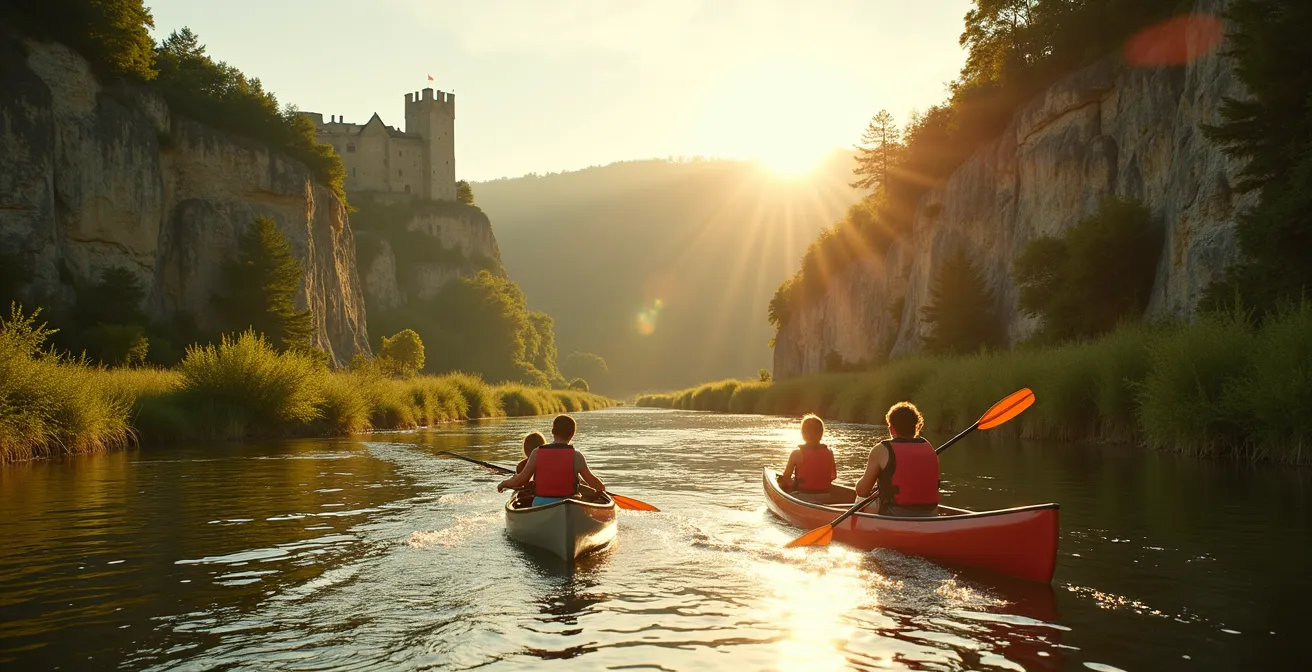
The perfect Dordogne family holiday isn’t about seeing everything, but about making the right strategic choices for your crew.
- Your choice of canoe over kayak directly impacts safety and comfort for young children on the river.
- Campsite location—valley versus hilltop—determines everything from mosquito exposure to morning mist and evening comfort.
Recommendation: Approach your planning not as a checklist, but as a series of small, informed adventures—each decision shaping a more personal and memorable historical expedition.
The dream of a French family holiday often conjures images of meandering rivers, towering castles, and the taste of a perfect croissant. The Dordogne Valley, with its staggering density of history and natural beauty, seems to tick every box. For the history-loving family that also craves outdoor adventure, it presents itself as the perfect destination. Yet, the sheer volume of options can be overwhelming. Standard travel advice offers a checklist: see this castle, paddle that river, visit this cave. This approach often leads to a rushed tour rather than a genuine adventure.
Many guides will list the famous sites but fail to address the critical questions families face on the ground. How do you actually enjoy a rich, hearty local meal with kids on a hot July day? Is a faster river in June better than a warmer one in August for swimming? These are the practical, strategic trade-offs that define the quality of a trip. The secret to an unforgettable Dordogne experience isn’t about doing more, but about choosing smarter.
But what if the key to unlocking the ultimate Dordogne adventure was not in the *what*, but in the *how* and *why*? This guide moves beyond the tourist trail. We will dissect the crucial decisions that transform a simple vacation into an experiential learning expedition. We will explore the nuanced choices—from the safest vessel for your family on the river to the micro-climate of your campsite—that make all the difference. This is your playbook for crafting a trip that is not just seen, but deeply felt and remembered.
This article delves into the essential strategic decisions that will shape your family’s Dordogne journey. The following summary outlines the key choices we will explore, helping you navigate everything from river logistics to prehistoric wonders with the confidence of a seasoned explorer.
Summary: Why the Dordogne Is the Ultimate Playground for History-Loving Families?
- Canoe or Kayak: Which Vessel Is Safer for a Family of 4 on the Dordogne River?
- Valley Floor or Hilltop: Which Campsite Location Offers the Best Micro-Climate?
- Lascaux IV: How to secure Tickets During Peak Season Without Waiting for Hours?
- Duck Confit in July: How to Enjoy Perigord Food Without Overheating?
- June vs August: When Is the River Flow Best for Easy Paddling?
- Alsace or Burgundy: Which Wine Route Has the Best Cycle-Friendly Campsites?
- Why Your 7-Year-Old Cannot Join the Full Day Canyoning Trip?
- Why the Pink Granite Coast Is the Most Underrated Luxury Destination?
Canoe or Kayak: Which Vessel Is Safer for a Family of 4 on the Dordogne River?
The image of a family gliding down the Dordogne, with castles perched on cliffs above, is iconic. But the first strategic choice you’ll make is in the vessel itself. While kayaks offer agility for solo paddlers, the traditional open canoe is almost always the superior and safer choice for a family with young children. The decision isn’t about sport; it’s about stability, capacity, and accessibility.
A canoe’s wider beam provides significantly more primary stability, reducing the unnerving wobble that can make children (and parents) anxious. This stability is crucial when little ones shift their weight unexpectedly. Furthermore, the open-top design is a game-changer. It allows for easy entry and exit, even on a pebbly riverbank, and eliminates the feeling of being confined that some children dislike in a kayak cockpit. It also means you can easily pack a cooler, dry bags, and all the essentials for a day-long river expedition.
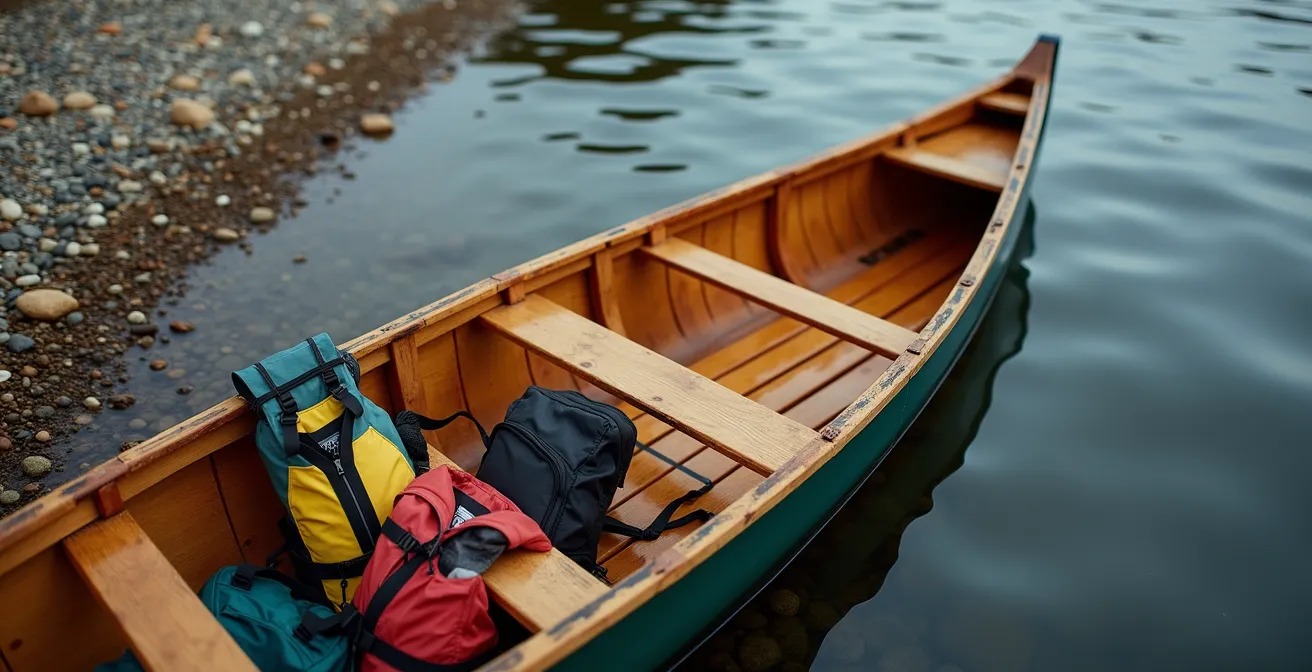
As the image above illustrates, the canoe’s design prioritizes a stable, shared experience. It fosters a sense of teamwork, with parents paddling and kids acting as lookouts for castles and wildlife. This turns the journey from a simple paddle into a shared family quest, a piece of experiential learning on the water.
Action Plan: Selecting Your Family River Vessel
- Assess Cargo Needs: List everything you’ll take on the river (cooler, towels, change of clothes, water). Canoes have superior cargo capacity and are easier to load with bulky items like dry bags.
- Evaluate Stability: Consider the age and temperament of your children. Canoes are generally wider and more stable, reducing the risk of capsizing and the need for constant balance adjustments.
- Plan Your Entry/Exit: The canoe’s open design allows for easy entry and exit, a key factor for younger children or less mobile family members compared to a kayak’s cockpit.
- Consider Group Dynamics: For family outings, a single large canoe keeps everyone together in one vessel, enhancing the shared experience and making supervision easier.
- Check Age Flexibility: Canoes can comfortably and safely accommodate a wider range of ages, from toddlers to grandparents, all in the same boat, making them ideal for multi-generational trips.
Valley Floor or Hilltop: Which Campsite Location Offers the Best Micro-Climate?
Your choice of campsite is more than just a place to pitch your tent; it’s a decision that dictates your daily rhythm and comfort. In the Dordogne, the primary choice is between a site on the valley floor, right by the river, and one perched on a hilltop with panoramic views. This is a classic strategic trade-off between direct access and environmental comfort.
A valley floor campsite offers the undeniable magic of waking up to misty mornings and the convenience of a pre-breakfast swim. However, this proximity to water comes with higher humidity, which can mean damper evenings and more active mosquitoes. In fact, research on mosquito microclimate preferences indicates that cooler, damper ground-level sites are more favorable habitats. Hilltop campsites, conversely, benefit from better air circulation. Evening breezes help dry out towels and swimwear, and the lower humidity makes for more comfortable sleeping and fewer insect encounters. The trade-off, of course, is the effort required to get to and from the river.
This comparative table breaks down the key differences to help you make the best choice for your family’s priorities.
| Factor | Valley Floor | Hilltop |
|---|---|---|
| Morning Conditions | Enchanting misty mornings, higher humidity | Clear mornings, lower humidity |
| Evening Comfort | Dampness retention, still air | Drying evening breezes, better air circulation |
| Temperature Range | More stable temperatures, warmer nights | Greater temperature variation, cooler nights |
| Mosquito Activity | Higher humidity promotes mosquito conditions; stagnant water pools provide breeding grounds | Less mosquito activity due to wind and lower humidity |
| Acoustic Environment | River sounds amplified, more evening entertainment noise | Quieter, more peaceful atmosphere |
| Access | Direct river access for morning swims | Panoramic views, requires effort to reach water |
Lascaux IV: How to secure Tickets During Peak Season Without Waiting for Hours?
A visit to Lascaux IV, the stunningly precise replica of the world’s most famous prehistoric cave, is a pilgrimage for any history lover. However, during peak season, securing tickets can feel like a quest in itself, with long lines and sold-out tours. The key to a stress-free visit is not luck, but logistical intelligence and advance planning. Waiting until the day of your visit is a recipe for disappointment.
The single most important strategy is to book your tickets online, well in advance. This guarantees your spot, allows you to select an English-language tour, and saves you precious holiday time. Consider booking the very first tour of the day (around 9 AM) or one of the last (after 5 PM) to experience the site with fewer people. For a small extra fee, the “Flex” option provides peace of mind, allowing you to change your time slot if your plans shift. Following these simple steps ensures your first glimpse of the cave’s magnificent architecture is one of peaceful anticipation, not frantic stress.
Here are the essential strategies for a successful booking:
- Advance Online Booking is Essential: According to the official Lascaux IV ticket office, booking ahead online guarantees you’ll get tickets for an English tour and avoid last-minute stress.
- Book Early Morning or Late Slots: While many English tours are mid-day, the first and last slots of the day are typically less crowded.
- Use the Flex Option: For an additional €2 per person, your tickets become changeable (subject to availability), adding a layer of flexibility to your itinerary.
- Check for Daily Release Tickets: If you are unable to book in advance, a limited number of tickets are released for sale at the ticket office each morning for same-day visits. Arrive early.
- Consider Combined Passes: The prehistory pass, which includes Lascaux IV, Parc du Thot, and Laugerie-Basse, can be a good value and ensures guaranteed entry.
Alternative Strategy: Font-de-Gaume as Plan B
When Lascaux IV is fully booked, all is not lost for the aspiring prehistorian. Font-de-Gaume, near Les Eyzies, offers an incredibly authentic experience as one of the last caves with original polychrome paintings still open to the public. Access is extremely limited to preserve the art, so booking well in advance by phone or email is mandatory. For a more kid-friendly alternative, the Rouffignac Cave, explored by electric train, showcases hundreds of engravings, most famously of mammoths.
Duck Confit in July: How to Enjoy Perigord Food Without Overheating?
The gastronomy of the Périgord is legendary. Rich, savory dishes like duck confit, pommes sarladaises, and foie gras are central to its identity. But for a family visiting in the heat of July or August, the thought of a heavy, hot meal can be less than appealing. The secret to enjoying the region’s flavors in summer is to adapt, embracing lighter preparations and alternative dining experiences that are perfectly suited to the climate.
Instead of a formal, multi-course lunch, think like a local. The star of the summer menu is the Salade Périgourdine. This composed salad is a masterpiece of regional flavor, featuring smoked duck breast, savory gizzards (gésiers), and walnuts over a bed of fresh greens. It delivers all the iconic tastes in a refreshing, weather-appropriate format. Another fantastic strategy is to focus your main meal on the evening, taking advantage of the wonderful markets.
Here are some summer-friendly dining strategies for your family:
- Embrace the Salade Périgourdine: Swap the hot confit for this substantial yet refreshing salad to enjoy the classic duck and walnut flavors.
- Visit Night Markets (Marchés Nocturnes): These atmospheric evening markets are a highlight of summer. Skip formal restaurants and let everyone choose from various food stalls in a relaxed, festive setting.
- Focus on River Fish: Look for local trout (truite) on menus, often served with a light sorrel sauce, as a delicious alternative to heavy meat dishes.
- Assemble Morning Market Picnics: Visit a morning market to gather regional cheeses, fresh fruits, bread, and charcuterie for a perfect picnic to be enjoyed by the river during the cooler part of the day.
- Explore a Walnut Oil Mill: A visit to a historic mill like Moulin de la Tour offers an educational and tasty insight into a key local product beyond the usual rich fare.
The night markets were perfect for our family in July. The kids could choose their own food from different stalls – crepes, local sausages, fresh strawberries – while we enjoyed regional specialties. The atmosphere was festive but relaxed, with live music and cooler evening temperatures making dining enjoyable even in summer.
– Family traveller, Travelynn Family
June vs August: When Is the River Flow Best for Easy Paddling?
Timing your Dordogne trip involves another crucial trade-off, particularly concerning the river: do you go in June or August? This decision pits a faster, greener river against a warmer, more leisurely one. The best choice depends entirely on your family’s priorities, weighing the desire for easy paddling against the allure of constant swimming.
In June, the river is fed by spring rains, resulting in a slightly faster current. This can make paddling downstream feel almost effortless, a significant plus for parents with young children who may not be contributing much paddle power. The landscape is also at its most lush, with vibrant green foliage creating a “green tunnel” effect that feels like exploring a lost world. The trade-off is the water temperature, which is still quite brisk and may require wetsuits for kids who want to swim for long periods.
By August, the scene has transformed. The current is slower, requiring more consistent paddling, but the water has warmed up to be blissfully comfortable for swimming. The river becomes a social playground, dotted with families stopping on the now more numerous and expansive pebble beaches for picnics and dips. For children who see the river primarily as a giant swimming pool, August is unbeatable.
This table summarizes the seasonal dynamics to help you decide which month aligns best with your family’s adventure style.
| Factor | June | August |
|---|---|---|
| Flow Rate | Slightly faster current, easier paddling | Slower current, more effort needed |
| Water Temperature | Cool (requires wetsuits for kids) | Warm – ideal for constant swimming |
| River Aesthetics | ‘Green Tunnel’ – lush vegetation, exploring lost world feeling | Sun-drenched beaches, exposed pebble areas for picnics |
| Crowds | Fewer people, more solitude | Busy ‘river playground’ atmosphere, social experience |
| Algae Presence | Minimal aquatic plants | Late August may have increased aquatic vegetation |
| Beach Access | Fewer exposed beaches | More pebble beaches for swimming/picnicking |
For families with kids who want to swim constantly, the warmer water of August is the single most important variable, trumping the slightly easier paddling of June.
– Dordogne Valley Tourism Expert, Dordogne Valley Paddling Guide
Alsace or Burgundy: Which Wine Route Has the Best Cycle-Friendly Campsites?
Mastering the art of family travel planning in the Dordogne often inspires future adventures in other French regions. If a trip along a famous wine route is on your horizon, applying the same strategic, family-first lens is crucial. When comparing Alsace and Burgundy, the two premier wine regions, Alsace emerges as the clear winner for families with children who want to cycle, thanks to its superior infrastructure and family-oriented attractions.
The primary difference lies in the terrain and the cycling paths themselves. Alsace’s Véloroute du Vignoble is largely flat and runs on dedicated, car-free paths that wind through picturesque villages. This makes it accessible and safe even for younger children. Burgundy’s routes, while beautiful, often involve more rolling hills and sections on roads shared with traffic, better suited to experienced teens and adults. This accessibility extends to the campsites, which in Alsace are often a short, safe 5-10 minute cycle from a village center, perfect for an evening ice cream run.
Alsace’s Véloroute du Vignoble Family Success
Alsace’s wine route excels for families due to its largely flat terrain on dedicated cycling paths. Campsites along the Véloroute du Vignoble are typically situated within a 5-10 minute safe cycle of village centers, allowing for car-free evening trips for dinner or treats. The route also benefits from its close proximity to a high density of kid-friendly attractions like Monkey Mountain (Montagne des Singes), Eagle Park (Volerie des Aigles), and the magnificent Château du Haut-Kœnigsbourg, providing plenty of non-cycling entertainment.
This breakdown highlights why Alsace’s cycling infrastructure is more conducive to a relaxed family holiday.
| Feature | Alsace | Burgundy |
|---|---|---|
| Terrain | Largely flat, dedicated cycle paths | Rolling hills, more challenging |
| Campsite-Village Distance | 5-10 min safe cycle | Often 15-20 min with road sections |
| Bike Storage | Most sites offer secure storage | Variable, often basic |
| Kids Bike Rental | Widely available on-site | Usually requires off-site rental |
| Non-cycling Activities | Abundant (theme parks, castles) | More limited, adult-focused |
| Family Trail Rating | Excellent – suitable age 6+ | Moderate – better for 12+ |
Why Your 7-Year-Old Cannot Join the Full Day Canyoning Trip?
The adventurous spirit of the Dordogne, with its deep canyons and rushing rivers, can inspire families to push their boundaries. Activities like canyoning seem like the ultimate adventure. However, you’ll find that most providers have strict age limits, often excluding children under 12 from full-day trips. This isn’t an arbitrary rule; it’s based on a fundamental principle of outdoor safety: thermoregulation and endurance.
The core reason is a child’s physiology. Safety research shows that children’s smaller bodies lose heat much faster than adults’ in cold water, making the risk of hypothermia unacceptably high on a trip that can last for several hours. A child who is cold quickly becomes tired, and a tired child in a dynamic environment like a canyon is a safety risk. The decision to set an age limit is not about a child’s bravery or swimming ability, but about their physical resilience over an extended period.
This doesn’t mean your young adventurer has to miss out. The key is to choose an appropriate alternative that offers a taste of the experience without the risks. Framing the full canyoning trip as an exciting “future goal” for when they’re older can also turn a restriction into a positive aspiration.
Here are some fantastic, age-appropriate alternatives to full-day canyoning for younger children:
- Aqua Rando (Aquatic Hiking): A gentle introduction to river canyons, this activity involves walking, scrambling, and swimming in shallow water, offering the thrill of exploration over a much shorter duration.
- Via Ferrata at the Gardens of Marqueyssac: This cliffside adventure course is perfect for younger ones to let off steam with incredible panoramic views across the valley. The surrounding gardens, with their peacocks and mazes, add to the fun.
- Shorter ‘Discovery’ Canyoning: Look for providers offering 2-hour “discovery” or “family” canyoning sessions specifically designed with younger participants in mind.
- Supervised River Swimming: Sometimes the simplest fun is the best. Stick to designated swimming areas along the Dordogne, many of which have lifeguards during peak season.
Key Takeaways
- For family river trips, the stability and capacity of a canoe make it a safer, more practical choice than a kayak.
- Hilltop campsites offer better comfort from humidity and insects, while valley sites provide unbeatable river access—a key lifestyle trade-off.
- Booking Lascaux IV tickets far in advance for early or late slots is non-negotiable to avoid disappointment during peak season.
- Enjoy Périgord cuisine in summer by embracing lighter options like the Salade Périgourdine and the vibrant atmosphere of night markets.
- Choose your travel month based on your priority: June for easier paddling on a faster river, or August for warmer water ideal for swimming.
Why the Pink Granite Coast Is the Most Underrated Luxury Destination?
The quest for authentic, meaningful experiences, so central to a Dordogne adventure, finds a stunning coastal parallel in Brittany’s Côte de Granit Rose. While it may lack the conventional glitz of the French Riviera, this protected coastline redefines luxury for the modern family. Here, luxury isn’t about brand names or VIP service; it’s about access to rarity, space, and pristine nature.
The region’s protected status has prevented the overdevelopment that plagues many beautiful coastlines. The result is a profound sense of space and tranquility, even in summer. The true luxury is the feeling of having a world-class natural spectacle—the giant, pink-hued granite boulders sculpted by time—almost to yourself during a sunrise walk or a sunset picnic. This experience of uncrowded natural beauty is a rare commodity in the 21st century.
This new form of luxury is also about hyper-local, authentic experiences that are impossible to replicate in a city. It’s about the simple, profound pleasure of doing something real, connected directly to the place you are visiting.
The Hyper-Local Gourmet Experience
A perfect example of this new luxury can be found in the small harbors like Ploumanac’h. Families can buy lobster or oysters directly from the fishermen as they return with their catch. Minutes later, they can be cooking this incredibly fresh seafood at their campsite or gîte, looking out over the very water it came from. This direct “sea-to-table” experience, combined with the unique visual spectacle of the pink granite formations, creates a multi-sensory memory that is far more valuable and exclusive than any five-star restaurant meal.
Modern luxury isn’t about glitz, but about what’s rare. The coast’s protected status prevents overdevelopment, making the true luxury the feeling of space, pristine nature, and escaping mass tourism.
– Brittany Tourism Development Board, Redefining Luxury in Natural Spaces Report 2024
By applying this strategic mindset—weighing trade-offs and prioritizing authentic experiences over checklists—you can craft a family expedition to the Dordogne, or any destination, that is profoundly personal and endlessly rewarding. Start planning your adventure today by choosing the experiences that matter most to your family.