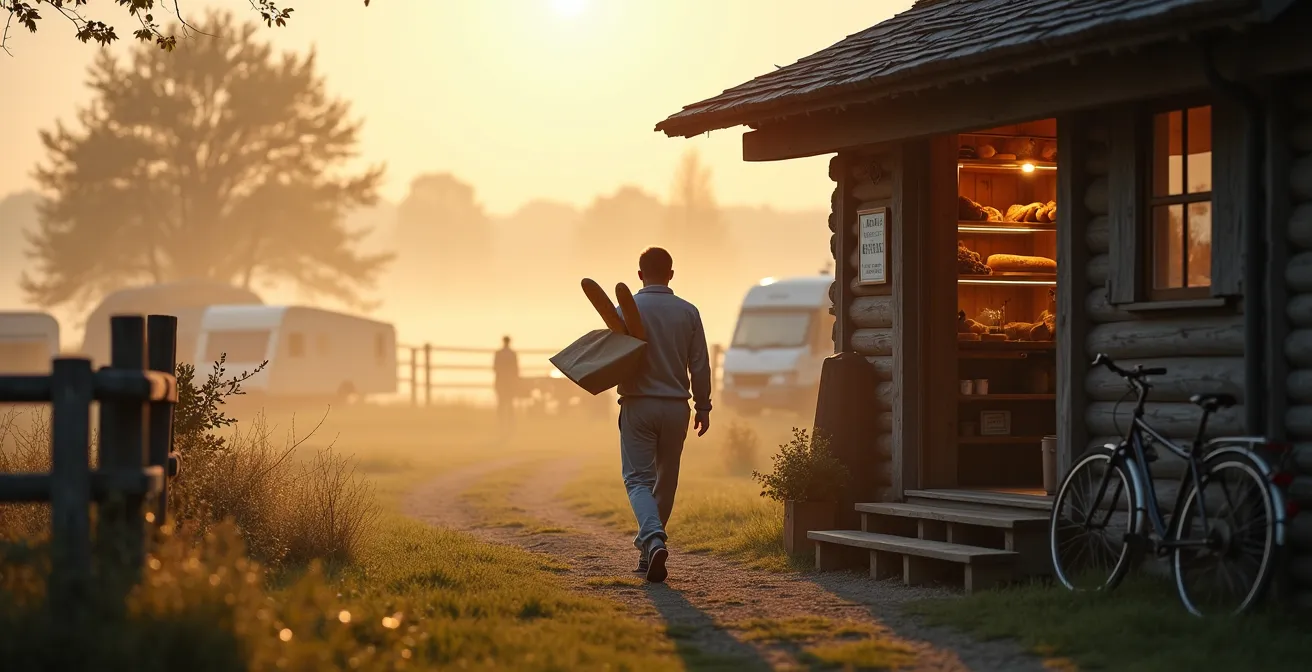
Most campers see the morning bread service as a simple convenience. The truth is far more profound. This daily act is a cultural performance, allowing you to participate in the core tenets of French identity: a reverence for craft, the importance of social codes, and the pursuit of simple, sensory pleasure. The baguette run isn’t just about getting breakfast; it’s about briefly, and deliciously, becoming French.
The scene is as iconic to French camping as tent pegs and tan lines: a quiet procession of campers, still blinking in the morning sun, making their way towards the on-site “dépôt de pain”. For many, this is a simple transaction, a convenient way to secure a fresh baguette and a few croissants. But to view it merely as a service is to miss the point entirely. This daily pilgrimage is not a chore; it is a ritual. It is perhaps the single most important cultural performance of a French camping holiday.
As a cultural anthropologist observing the microcosm of the campsite, one sees that this ritual is layered with unwritten rules, social cues, and sensory tests. It’s an opportunity for the visitor not just to consume a product, but to engage with the very essence of French “savoir-vivre”. It’s about understanding the difference between an industrial loaf and an artisan’s creation, respecting the unspoken contract of the pre-order sheet, and knowing the secret language of pastries. This isn’t just about buying bread; it’s about earning it, culturally speaking.
This guide decodes the morning baguette run. We will explore how to discern a true baker from a mere bake-off point, the social mechanics of ordering, the complex decision between convenience and authenticity, and the specific regional treasures to uncover. By the end, you’ll understand that this simple morning walk is your daily entry ticket into the heart of French culture.
To navigate this delicious daily ritual, it’s essential to understand its different facets. This article breaks down the key stages and cultural codes you’ll encounter, from spotting an authentic baker to mastering market etiquette.
Summary: The Anthropology of the French Campsite Bakery
- Frozen or Fresh: How to Tell if the Campsite Bakery Is Real or Industrial?
- The Order Sheet: Why You Must Decide Your Breakfast the Night Before?
- Campsite Bakery vs Village Boulangerie: Is the Convenience Worth the Markup?
- Croissant or Kouign-Amann: Which Pastry Should You Try in Brittany?
- 8 AM or 10 AM: When Is the Best Time to Pick Up Your Bread?
- Don’t Touch the Fruit: The #1 Rule to Respect in French Markets
- The 5 Kitchen Utensils You Must Pack Because Campsites Never Provide Them
- Pizza Hut or Wood-Fired: How to Judge the Quality of Campsite Takeaway?
Frozen or Fresh: How to Tell if the Campsite Bakery Is Real or Industrial?
Not all campsite bakeries are created equal. Many are simply “points chauds,” terminals that bake frozen, industrially produced dough. Others, however, are genuine outposts of a local artisan. The ability to tell them apart is the first step in your cultural immersion. This distinction matters because it touches upon a fierce battle being waged across France for the soul of its most famous product. As detailed in a movement to revive traditional breads, artisans using ancient grains are fighting against the tide of standardized, supermarket-style baguettes.
Your campsite is a frontline in this battle. Is it a purveyor of genuine “micro-terroir,” or a cog in the industrial machine? Answering this requires you to become a sensory detective. You must look beyond the “freshly baked” sign and use your senses to uncover the truth. A real bakery leaves clues: the faint dusting of flour on the floor, the yeasty aroma of fermentation, and a diverse range of bread shapes that go beyond the uniform baguette. An industrial outlet, by contrast, often smells of little more than hot air and offers a limited, standardized selection.
To truly empower your investigation, you need a systematic approach. The following checklist turns you into a bakery expert, able to spot an authentic “boulanger” from fifty paces.
Your Action Plan: The Sensory Detective’s Checklist
- Scan for the Seal: Look for an official ‘Artisan Boulanger’ sign. This government-recognized seal guarantees that the bread is made entirely from scratch on-site.
- Perform the Flour Test: Glance at the floor near the entrance and counter. Real bakeries, with their daily production cycles, will always have a faint, unavoidable dusting of flour.
- Analyze the Aroma: Take a deep breath. An authentic bakery has a complex, earthy smell of yeast and fermentation. An industrial bake-off point smells one-dimensionally of hot, sterile air.
- Observe the Variety: An artisan takes pride in diversity, offering rustic ‘pain de campagne’, thin ‘ficelles’, and other regional shapes. Industrial outlets typically stick to a few basic, identical forms.
- Ask the Insider Question: Inquire about “la deuxième fournée” (the second bake). Real bakeries often have another bake around 4-5 PM for the evening meal, a concept unheard of in industrial shops.
The Order Sheet: Why You Must Decide Your Breakfast the Night Before?
At smaller French campsites, you will quickly encounter a sacred text: the bread order sheet. This humble clipboard, usually appearing at the reception desk in the late afternoon, is not a bureaucratic formality; it is a cornerstone of the campsite’s social contract. For the uninitiated, having to decide on tomorrow’s breakfast the night before can seem restrictive. But from an anthropological perspective, it’s a beautifully efficient system born from a culture that takes its bread very, very seriously. To understand its necessity, one must grasp the sheer scale of the national obsession. With an estimated 320 baguettes consumed every second in France, demand is constant and colossal.
The order sheet is the campsite’s elegant solution to this demand. It allows the management to order the precise number of baguettes, croissants, and pains au chocolat from the local baker. This accomplishes two culturally significant goals. First, it ensures peak freshness for everyone; your breakfast hasn’t been sitting on a shelf for hours. Second, it eliminates waste, a principle deeply respected in a food culture that values produce and craftsmanship. By participating in this evening ritual, you are not just placing an order; you are entering into a communal agreement that balances individual desire with collective efficiency.
This nightly ritual is a quiet, contemplative moment. It’s a small act of planning that builds anticipation for the morning’s simple pleasure. The act of putting pencil to paper connects you to every other camper engaged in the same thoughtful process.
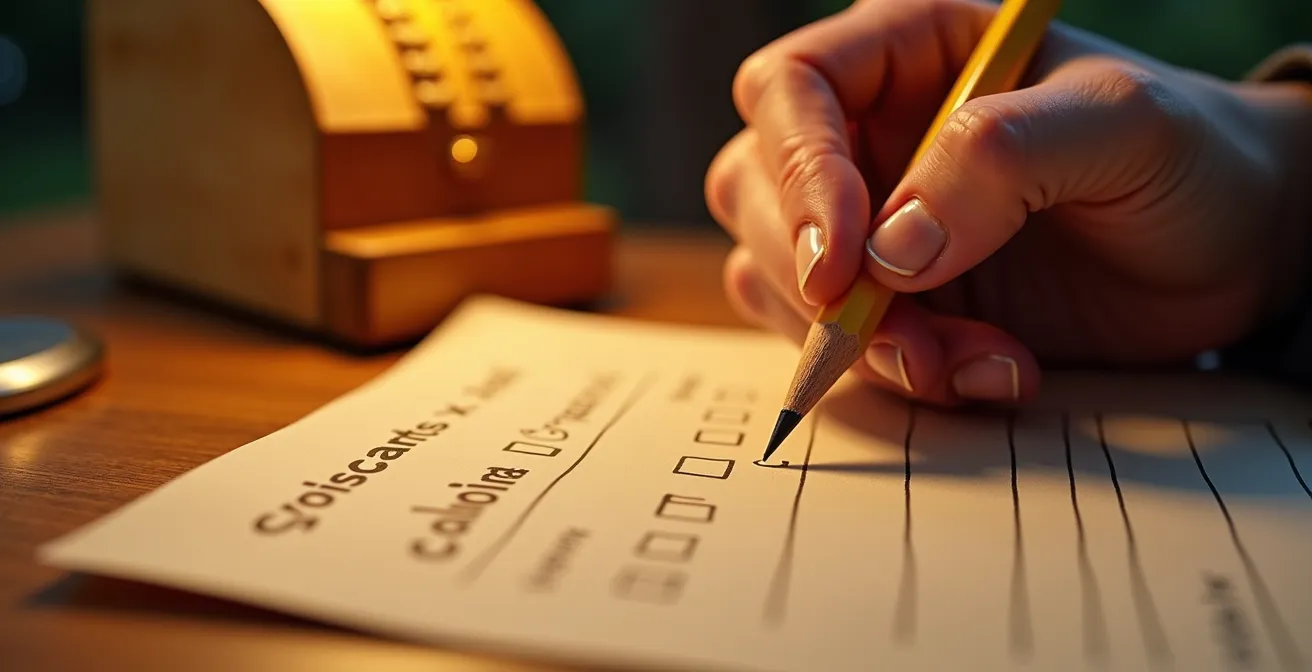
To navigate this system like a seasoned camper, a few strategies are key. It’s about more than just ticking boxes; it’s about unlocking the full potential of the campsite’s offerings.
- Check at reception immediately upon arrival to understand their specific bread ordering system.
- Always order your breads the night before at smaller, more traditional campsites where it’s often mandatory.
- Look closely at the order sheet for the ‘secret menu’—it often lists specialties like pain aux raisins or chaussons aux pommes that you might not see on display.
- Think ahead: order an extra baguette for your lunchtime sandwich when you collect your morning pastries to save a second trip.
This system, far from being a constraint, is a gateway to a more authentic and efficient camping experience.
Campsite Bakery vs Village Boulangerie: Is the Convenience Worth the Markup?
The camper in France faces a daily dilemma: the effortless two-minute walk to the campsite’s “dépôt de pain” versus the more involved expedition to the “vraie boulangerie” in the nearest village. This isn’t just a choice of logistics, but a choice of values. Are you prioritizing convenience and community, or are you seeking authenticity and cultural immersion? The campsite offers the undeniable luxury of fetching breakfast in your pajamas, a relaxed social hub where you can exchange pleasantries with fellow campers. The village bakery, however, offers the full sensory and social experience of France—the queue of locals, the banter with the baker, and the dizzying array of regional specialties.
Of course, there is a cost to both. The campsite will almost always have a 15-30% markup, the price of convenience. The village trip, while cheaper at the till, has hidden costs: fuel for the car, the potential stress of finding parking, and the time commitment of a 20-30 minute round trip. The decision is a personal one, weighing the tangible against the intangible.
To make an informed choice, it helps to see the trade-offs laid out clearly. The following comparison breaks down the key factors in this daily decision.
| Factor | Campsite Bakery | Village Boulangerie |
|---|---|---|
| Price | 15-30% markup | Standard local prices |
| Convenience | Walk in pajamas, 2-minute walk | Requires car/bike, proper clothes |
| Social Experience | Relaxed, camping community | Cultural immersion, local interaction |
| Selection | Basic range | Full artisan selection |
| Hidden Costs | Only the markup | Fuel, parking stress, time (20-30 min round trip) |
However, this binary choice overlooks a third, magical option that exists in the heart of rural France: the “tournée du boulanger.” In many areas, the baker becomes mobile. As a charming phenomenon of rural life, the baker’s van tours the surrounding hamlets, announcing its arrival with a distinct honk of the horn. This delivery service brings the full selection of the village bakery directly to remote areas, and sometimes even to the campsite gate. It represents the perfect synthesis: the convenience of delivery combined with the authenticity of artisan products. If you hear that morning honk, don’t curse the noise—run towards it.
Croissant or Kouign-Amann: Which Pastry Should You Try in Brittany?
While the baguette is a national symbol, French “viennoiserie” is fiercely regional. Camping in a specific region like Brittany is a passport to a unique landscape of pastries. Here, the standard croissant, while excellent, competes with local legends born from a deep love of butter and sugar. The star of the show is the Kouign-Amann, a formidable creation of layered, buttery, caramelized dough that is both incredibly indulgent and gloriously sticky. Then there is the Far Breton, a dense, flan-like cake often studded with prunes, perfect for sharing. Not to be outdone, the Gâteau Breton is a dense, buttery shortbread-like cake that travels well, making it an ideal souvenir.
Even the familiar croissant holds a local secret. A savvy traveler must know the difference between a “croissant ordinaire” and a “croissant au beurre.” As one local Brittany baker explains, this distinction is vital:
The crucial difference between a ‘croissant ordinaire’ and a ‘croissant au beurre’ is that the latter is made with real butter. This is vital local knowledge that distinguishes a tourist from a savvy traveler.
– Local Brittany Baker, The Ultimate French Bakery Guide
Choosing the right pastry depends on your objective for the day. Are you seeking a moment of pure, sticky indulgence, a shareable treat for the family, or a classic to start the day? This matrix will guide your decision.
| Pastry | Description | Best For | Messiness Level |
|---|---|---|---|
| Kouign-Amann | Buttery, caramelized layers | Ultimate indulgence | Very sticky – eat from paper bag |
| Far Breton | Dense flan-like cake with prunes | Sharing at campsite | Clean – easy to slice |
| Gâteau Breton | Buttery shortbread cake | Traveling/keeping | Minimal – crumbly but manageable |
| Croissant au beurre | Real butter croissant | Classic breakfast | Moderate – flaky layers |
8 AM or 10 AM: When Is the Best Time to Pick Up Your Bread?
The timing of your morning baguette run is more than a matter of schedule; it’s a strategic choice that defines your experience. There is a “golden hour” for bread, but what that means depends on your personality and priorities. This ritual is deeply ingrained in French daily life, partly due to a fascinating piece of history. A French law dating back to the 1920s prevented bakers from starting work before 4 a.m., making the fast-baking baguette the only bread they could reliably produce in time for breakfast. This historical constraint cemented the baguette’s role as the quintessential morning bread.
Today, the pickup ritual has its own archetypes. Are you “The Purist,” who joins the 7:30 AM queue to get the absolute hottest, crustiest loaf straight from the oven? Or are you “The Socializer,” who arrives around 9:00 AM when the rush has subsided, allowing for a leisurely chat with fellow campers over a still-warm-but-not-scalding baguette? Perhaps you are “The Gambler,” rolling up at 10:30 AM with no queue, but risking a limited selection where your favorite pastries may already be gone. Weather also plays a role; on humid days, an early pickup is crucial, as the perfect crust can soften quickly.
The most rewarding part of the ritual, however, is the walk back to your tent. It’s here that an almost universal act of “ritual performance” takes place: tearing off the crusty end of the baguette, known as le quignon, and eating it on the spot. It’s an irresistible, immediate reward—a shared secret among bread lovers.
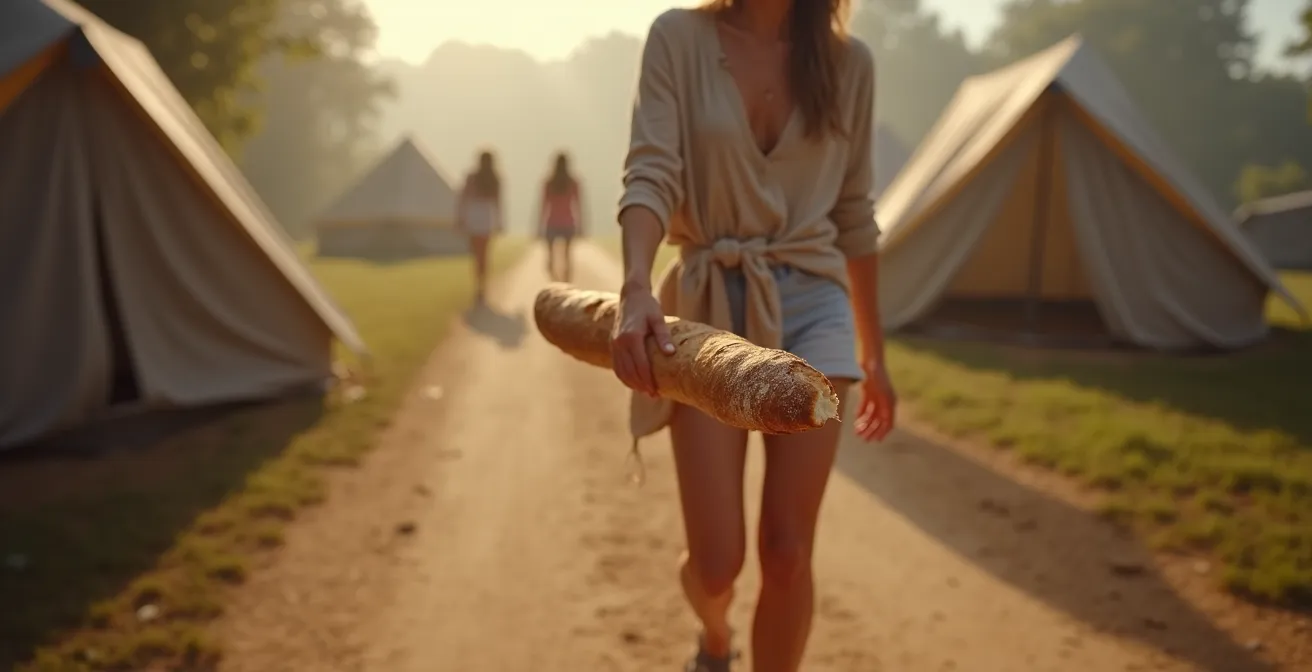
To optimize your morning, consider this timetable:
- 7:30 AM – The Purist: Hottest bread, longest queues, maximum freshness.
- 9:00 AM – The Socializer: Less rush, time for a chat, still warm bread.
- 10:30 AM – The Gambler: No queue, but a risky, limited selection.
- 4:00-5:00 PM – The Insider: Ask about “La Deuxième Fournée” (second bake) for fresh afternoon bread.
This simple timetable transforms a routine into a strategic and deeply satisfying part of the day.
Don’t Touch the Fruit: The #1 Rule to Respect in French Markets
The cultural lessons of the campsite bakery extend naturally to another temple of French gastronomy: the local market. Here, the unwritten rules are even more stringent, and respecting them is paramount to a successful interaction. The number one rule, the one that immediately separates the savvy traveler from the clumsy tourist, is this: you do not touch the fruit or vegetables. To do so is seen as questioning the vendor’s expertise and disrespecting their carefully curated produce. The vendor is the master of their domain; you are there to benefit from their knowledge.
The entire market transaction is a ritual performance built on verbal cues and mutual respect. It begins the moment you approach the stall. As one cultural expert notes, the greeting is non-negotiable:
Not greeting someone with ‘bonjour’ is considered VERY rude in France. It will put the entire shopping experience off the wrong foot.
– French Cultural Expert, The Ultimate French Bakery Guide
Once “Bonjour, Monsieur/Madame” has been exchanged, you point, you describe, and you trust. You use phrases like “pour aujourd’hui” (for today) or “un peu moins mûr” (a little less ripe) to indicate your needs. The vendor will then select the perfect items for you. This is a collaboration, not a self-service transaction. When you leave, a cheerful “Merci, bonne journée!” is essential, even if you bought nothing. This etiquette transforms a simple purchase into a respectful and pleasant human exchange, enriching your cultural experience far beyond the food itself.
To master this, follow these steps:
- Always greet the vendor with “Bonjour Monsieur/Madame” before you even look at the produce.
- Point to what you want and let the vendor select and handle everything.
- Use descriptive phrases to guide their choice, showing you trust their judgment.
- Always say “Merci, bonne journée!” when you leave.
The 5 Kitchen Utensils You Must Pack Because Campsites Never Provide Them
The French camping experience is not just about acquiring good food; it’s about having the right tools to perform the culinary rituals that define it. While campsite accommodations provide the basics, they rarely include the specialized implements needed for an authentic French gastronomic experience. Packing a few key items elevates your stay from simple camping to “glamping” in the truest French style. These tools are the enablers of iconic moments, from slicing a fresh baguette for breakfast to hosting an impromptu “apéro” as the sun sets.
The “apéro,” or aperitif, is a cherished French tradition of a pre-dinner drink accompanied by snacks. At a campsite, this can be a beautifully simple yet elegant affair. A fresh, crusty baguette, some local cheese, and a piece of “saucisson” (cured sausage) laid out on a wooden board is a meal in itself. But to achieve this rustic perfection, you need the right gear. A flimsy multi-tool corkscrew will mangle a French wine cork, and a small paring knife will crush a baguette’s delicate crust.
To fully embrace the campsite’s culinary potential, your packing list must include these five essentials:
- A long serrated bread knife (30cm+): This is non-negotiable for the daily baguette. A small knife will only crush the airy interior and shatter the crust.
- A proper corkscrew: A lever-style “Sommelier” corkscrew is essential for dealing with French wine bottles without breaking the cork.
- An oyster knife: If camping anywhere near the coasts of Brittany or Normandy, this simple tool unlocks an entire world of fresh, briny culinary experiences.
- A small wooden cutting board: This is your multi-purpose tool for slicing cheese and saucisson, and it doubles as an elegant serving platter for your “apéro”.
- A salad spinner: The only way to properly wash the sand and earth from fresh market lettuce, a key component of an authentic French salad.
These items take up little space but make a world of difference, allowing you to fully engage with the local food culture.
Key Takeaways
- The campsite bakery is more than a convenience; it’s a daily ritual where you can practice and observe French cultural codes.
- Authenticity is a performance: use your senses and ask the right questions to distinguish artisan products from industrial ones.
- Social rules, from pre-ordering bread to market etiquette, are based on a deep cultural respect for the producer and the product.
Pizza Hut or Wood-Fired: How to Judge the Quality of Campsite Takeaway?
The quest for quality and authenticity doesn’t end with the morning baguette. It extends to all food experiences at the campsite, including the ubiquitous takeaway pizza van or snack bar. Just as with the bakery, there’s a spectrum from mass-produced, frozen fare to surprisingly high-quality, locally-sourced meals. The ability to judge the quality of these vendors is the final test for the culturally attuned camper. This discernment is rooted in a fundamental aspect of French identity: an unwavering commitment to the quality of what is eaten. It’s no surprise that a recent study found that the French spend 2 hours and 13 minutes per day eating and drinking, the most of any country in the world. Food is not just fuel; it’s a central pillar of life.
So, how do you apply this cultural lens to the campsite’s pizza offering? You become a “takeaway detective.” First, examine the menu. A short, specialized menu of 5-7 pizzas is a sign of focus and fresh ingredients. A sprawling menu with pizza, burgers, paella, and couscous is a massive red flag for a kitchen reliant on a freezer and a microwave. Second, look for regional touches. A pizza with “chèvre” (goat cheese) in the Loire Valley or “reblochon” in the Alps shows a connection to the local “terroir.”
The most reliable method, however, is to follow the locals. Observe where the campsite staff and, most importantly, the long-stay French campers are placing their orders. Their palates are finely tuned to spot quality. Finally, scout the operation itself. A long queue of locals, a visible wood-fired oven, and pots of fresh basil are all excellent signs that you’re in for a treat, not a disappointment. Avoid any vendor that feels more like a generic fast-food chain and less like a passionate food producer.
By applying this anthropological lens to every meal, from the morning croissant to the evening pizza, you transform your camping trip from a simple holiday into a deep, delicious, and unforgettable cultural immersion. Your next trip to France won’t just be about seeing the sights; it will be about participating in the culture, one perfect bite at a time.