The constant pressure to cook “perfect” family meals on vacation is a primary source of parental burnout, but the on-site restaurant can be a strategic tool for reclaiming your holiday.
- Instead of a last resort, view campsite dining as a way to strategically outsource meals, conserving your energy for family activities.
- Quality can be found by looking beyond kids’ menus, hacking adult menus for children, and vetting takeaway options for signs of care.
Recommendation: Shift your mindset from “all-or-nothing” cooking to a flexible hybrid approach, planning a few restaurant meals to guarantee yourself a real break.
You’ve planned for months. You packed the car with military precision, endured the long drive, and finally set up your little home-away-from-home. The kids are thrilled, the sun is shining, and the promise of a perfect family vacation is in the air. Then, the familiar question echoes: “What’s for dinner?” Suddenly, the tiny, unfamiliar kitchen of your mobile home feels less like a charming novelty and more like a sentence to repeat the daily grind you wanted to escape. The pressure to be the perfect holiday parent—the one who whips up delicious, healthy meals from scratch after a long day of swimming and exploring—is immense.
Many articles on family camping focus exclusively on intricate meal-prepping schedules or one-pot recipes. They operate on the assumption that the only “good” way to eat is to do it all yourself. This approach often ignores the reality of parental exhaustion and the very reason you’re on holiday: to rest and reconnect, not to perform domestic labor in a smaller, less-equipped space. The on-site restaurant is frequently dismissed as an expensive, low-quality fallback for the unprepared.
But what if that’s the wrong way to look at it? What if the campsite restaurant isn’t a sign of failure, but a key strategic asset? The real secret to a restful family holiday isn’t about better meal planning; it’s about intentional energy conservation. It’s about understanding how to use the available amenities not as a crutch, but as a tool to actively reduce your mental load and eliminate decision fatigue. It’s time to stop seeing the on-site restaurant as a compromise and start seeing it as your secret weapon.
This guide will walk you through a new philosophy for campsite dining. We will explore how to judge food quality, navigate dietary needs, assess meal plans, find genuinely good food for your children, and even use timing to your advantage, all through the lens of maximizing your own rest and enjoyment.
Summary: A Parent’s Guide to Strategic Campsite Dining
- Pizza Hut or Wood-Fired: How to Judge the Quality of Campsite Takeaway?
- Gluten-Free in France: Will the Campsite Chef Understand Your Allergy?
- Half-Board Options: Are Meal Plans Worth It in Campsites?
- Nuggets Again: How to Find Campsites That Serve Real Food to Kids?
- Eating Before the Show: Why 7 PM Is the Strategic Slot for Families?
- How to Cook a 3-Course Meal in 4 Square Meters Without Chaos?
- The Order Sheet: Why You Must Decide Your Breakfast the Night Before?
- Speedos vs Board Shorts: Why French Pools Ban Loose Swimwear?
Pizza Hut or Wood-Fired: How to Judge the Quality of Campsite Takeaway?
After a full day of sun and fun, the thought of returning to your pitch for a full cooking session can be draining. Takeaway is the perfect middle ground, offering a hot meal without the hassle of a full sit-down dinner. Yet, the fear of soggy fries and generic pizza is real. The key isn’t to avoid takeaway, but to become a savvy judge of its quality. A well-run takeaway service is often a strong indicator of a well-run restaurant and a commitment to quality across the board. In fact, it’s a popular choice for good reason, with recent consumer dining data revealing that 65% of consumers prefer to pick up orders themselves rather than use delivery, valuing the control and speed.
Instead of just looking at the menu, perform a quick “operational audit” before you commit. A few minutes of observation can tell you everything you need to know. Look at the process: is it an organized system with buzzers or SMS alerts, or a chaotic crowd shouting orders? A smooth operation suggests a kitchen that can handle pressure without cutting corners. This isn’t just about food; it’s about respecting your time and reducing your stress. A good takeaway experience should feel seamless, adding to your holiday relaxation, not creating another point of friction.
Your Action Plan: The Campsite Takeaway Quality Audit
- Queue and System Test: Observe the ordering process. Are there organized systems like buzzers or SMS alerts, or just chaotic queues? An organized system indicates a well-run operation.
- Packaging Audit: Glance at what other people are carrying away. Does the food come in sturdy, insulated containers that keep it hot, or flimsy paper plates that spell disaster? Quality packaging protects your meal.
- Local Signature Hunt: Scan the menu for regional specialties beyond the standard pizza and burgers. The presence of a local dish often indicates a chef with pride and a commitment to real cooking.
- Total Meal Solution Check: Verify if you can get a complete meal in one stop. Can you add sides, drinks, and desserts easily? This avoids frustrating multiple stops and saves precious time.
- Strategic Integration: Based on your audit, decide which nights are “takeaway nights.” Planning this consciously turns it from a desperate fallback into a scheduled, guilt-free break from cooking.
By applying these quick checks, you transform a game of chance into a calculated decision, ensuring your “night off” from cooking is genuinely rewarding.
Gluten-Free in France: Will the Campsite Chef Understand Your Allergy?
Managing a food allergy or intolerance is stressful enough at home. On holiday, especially in a foreign country, it can feel like a monumental challenge. The language barrier, combined with a different food culture, can turn every meal into a source of anxiety. As a parent, your primary concern is your child’s safety, and the fear of not being understood is a heavy weight. You wonder if your careful explanation of “gluten-free” will be lost in translation, resulting in a disastrous mistake. The good news is that awareness is growing, and many professional kitchens are well-equipped to handle these requests if you approach it correctly.
The most effective strategy is to remove ambiguity. While verbal explanations are good, they can be misinterpreted. The solution is simple yet powerful: a written allergy card. This isn’t just about translation; it’s about demonstrating the seriousness of the request. As one study on restaurant communication found, restaurants report that clear, written allergy cards are significantly more effective because they command attention and serve as a physical reference point for the kitchen staff. Before you even speak to a server, having a card ready in the local language shows you are prepared and helps the staff take your request with the gravity it deserves.
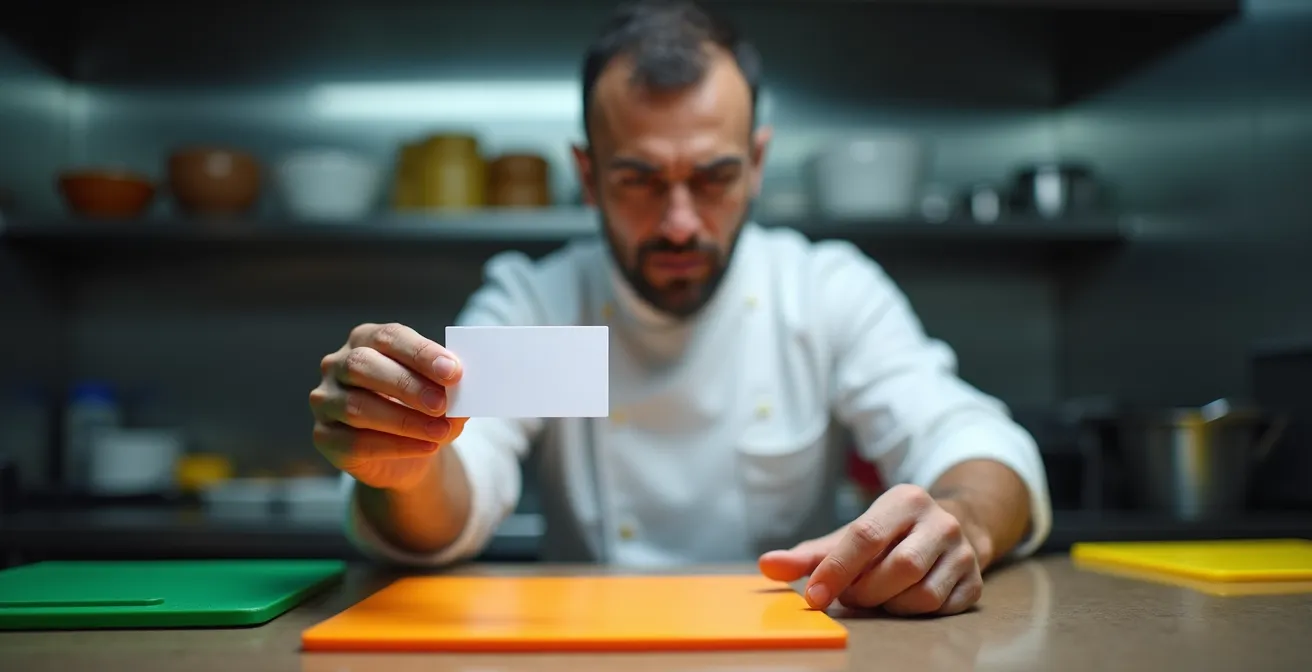
When you present the card, observe the chef’s or manager’s reaction. A confident professional will not be flustered. They will likely name safe dishes immediately, mention dedicated preparation areas, or ask clarifying questions. This confident response is your best indicator of a safe dining experience. Also, proactively scan the menu for naturally safe fallbacks like steamed vegetables, jacket potatoes, or plain rice. Having these in mind gives you a backup plan and reduces the pressure of the conversation.
Ultimately, by being prepared with the right tools and knowing what signs to look for, you can transform a moment of potential anxiety into an experience of trust and reassurance.
Half-Board Options: Are Meal Plans Worth It in Campsites?
The half-board option often glimmers like a beacon of hope to exhausted parents: two meals a day, sorted. No cooking, no cleaning, no “what’s for dinner?” debates. On the surface, it seems like the ultimate solution for conserving parental energy. However, the decision is more nuanced than a simple trade-off between convenience and cost. The real question is not “Is it worth the money?” but rather “Does its structure align with my family’s holiday style and my own need for a break?” The value of a meal plan is measured in reduced mental load, but it comes at the cost of flexibility.
The primary benefit of a half-board plan is the elimination of decision fatigue. For two meals a day, the choice is made for you. This frees up significant mental bandwidth that would otherwise be spent planning, shopping, and negotiating with picky eaters. You gain a predictable daily structure and a fixed upfront cost, which can be great for budgeting. However, this convenience comes with constraints. You are tied to the restaurant’s schedule and menu. What happens if the kids are exhausted and need an early night? What if you want to explore a local village and have dinner there? The risk of menu repetition is also real; what seems varied on day one might feel monotonous by day five.
The following table breaks down the core trade-offs, helping you weigh the value of reduced stress against the loss of freedom. There is no right answer; it’s about what you value most for this specific holiday.
| Aspect | Half-Board Plan | Pay-As-You-Go |
|---|---|---|
| Decision Fatigue | Eliminated – no daily meal planning | High – constant ‘what’s for dinner’ debates |
| Flexibility | Limited (check blackout dates, swap options) | Complete freedom |
| Cost Predictability | Fixed upfront cost | Variable, potentially higher |
| Menu Variety | Risk of repetition | Unlimited options |
Consider a hybrid approach: don’t book half-board in advance, but decide to eat at the restaurant for the first two days. This gives you a much-needed break upon arrival and allows you to assess the food quality and variety before deciding how you want to handle meals for the rest of your stay.
Nuggets Again: How to Find Campsites That Serve Real Food to Kids?
We’ve all seen it. The “Menu Enfant,” a sad, beige landscape of chicken nuggets, floppy fries, and maybe a single-patty burger. It’s a frustrating sight for parents who want their children to eat well, even on holiday. It feels like a choice between a stressful cooking session or surrendering to processed food. But this is often a false dilemma. The problem isn’t always a lack of good food, but a failure of imagination—both from the restaurant and from us as parents. Finding “real” food for kids requires a bit of detective work and a willingness to hack the menu.
First, give yourself grace. A few nights of holiday nuggets will not ruin your child’s health. The goal is balance, not perfection. Your first clue to a better kids’ menu is looking for “mini-me” options: smaller portions of actual adult meals. A campsite that offers a half-portion of the grilled fish or the pasta of the day shows a genuine commitment to family dining, not just to placating children. When 68% of restaurant guests choose based on food quality, including taste and presentation, smart restaurants know that happy kids (and parents who approve of their food) lead to happy, returning customers.
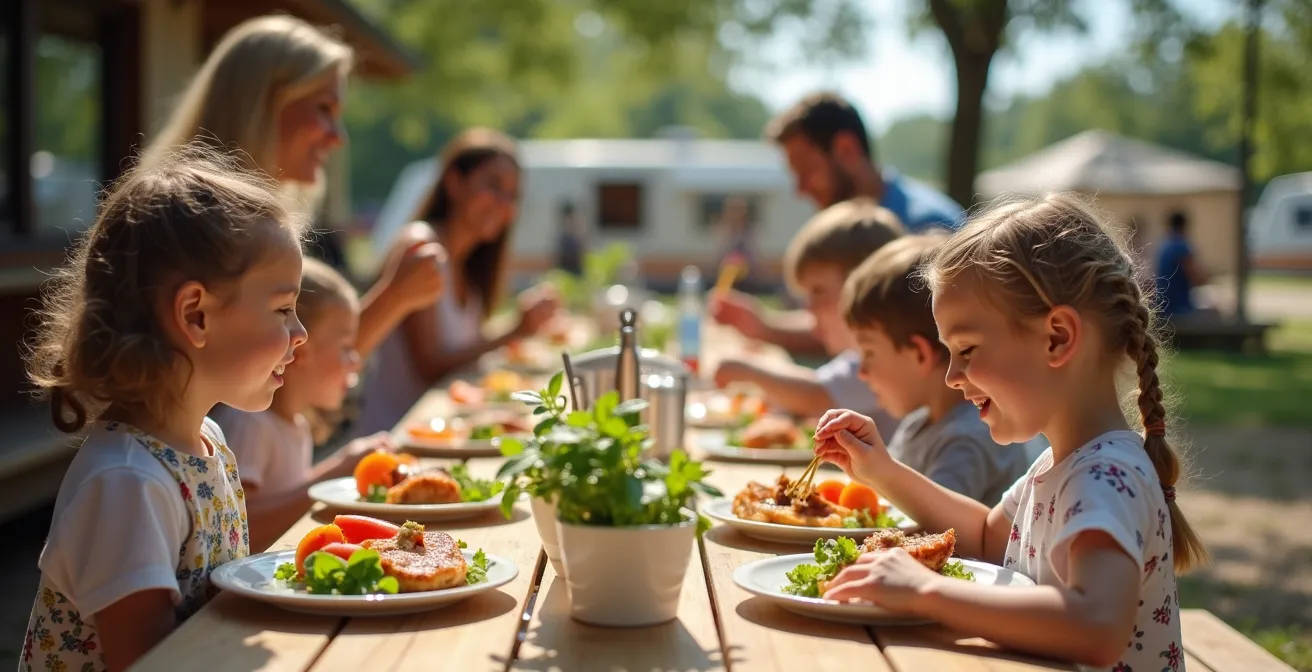
If the kids’ menu is a lost cause, it’s time to get creative with the main menu. This is your secret weapon. Most adult menus contain all the components for a fantastic, balanced kid’s meal. You just have to assemble it yourself.
- The ‘Mini-Me’ Menu Detective: Actively scan the kids’ menu for smaller portions of adult meals. This is the clearest sign of a restaurant that cares about quality for all ages.
- The Adult Menu Hack: Ignore the kids’ menu entirely. Combine a starter (like a tomato salad or vegetable soup) with a side dish (like roasted potatoes or rice) to create a simple, fresh, and balanced meal.
- The Experience Integration Check: Look for interactive food experiences. Campsites that offer “Make Your Own Pizza” nights or kids’ cooking workshops are invested in making food fun and engaging, which often correlates with higher quality ingredients.
- The Guilt-Free Reframe: Accept occasional nuggets as a vacation treat. Frame it as part of the holiday fun, and focus on seeking balance with fresh fruits and other meals throughout the day, removing the parental guilt.
By shifting your perspective from a passive consumer to an active “menu hacker,” you can almost always find a satisfying and wholesome meal for your children, turning dinner from a battleground into a pleasant family experience.
Eating Before the Show: Why 7 PM Is the Strategic Slot for Families?
On a campsite, dinner isn’t just about refueling; it’s a critical transition period. It’s the bridge between the chaotic, sun-drenched energy of the daytime activities and the shared family experience of the evening entertainment. Getting the timing of this meal right can be the difference between a relaxed, enjoyable evening and a frantic, stressful rush. While it might seem arbitrary, aiming for a 7 PM dinner slot is a powerful strategic move for families. This “golden hour” allows you to neatly sidestep the two most chaotic periods in a campsite restaurant: the 6 PM toddler rush and the 8 PM adult dinner crowd.
At 6 PM, restaurants are often swamped with families with very young children, leading to noise, high chairs everywhere, and stressed staff. By 8 PM, the atmosphere shifts to a more adult-centric pace, which can feel less welcoming for kids who are starting to get tired. The 7 PM slot is the quiet eye of the storm. The first wave has departed, and the second has yet to arrive. This means faster service, a more relaxed atmosphere, and a staff that has more bandwidth to attend to your needs. This timing perfectly aligns with the ultimate goal of dining out on vacation; as research on dining motivations shows, 90% of consumers cite spending quality time with family and friends as their top reason. A less stressful environment directly serves this core purpose.
To truly master this strategic timing, you can employ a few “power plays” to guarantee a smooth experience:
- The Golden Hour Timing: Make your reservation specifically for 7:00 or 7:15 PM to consciously avoid the peak rushes and secure a more peaceful dining environment.
- The Pre-Order Power Play: For ultimate efficiency, visit the restaurant earlier in the day (around 5 PM) to book your table. While you’re there, ask if you can pre-order your food. Arriving to a table where your order is already in the system is a game-changer for hungry, impatient kids.
- The Transition Hub Usage: Frame dinner in your family’s mind as the official start of the evening’s fun. It’s not a chore to get through; it’s the gateway to the magic show, the mini-disco, or the live music.
- The Reverse Schedule Alternative: If your kids are young and fade fast, consider flipping the script. Have a large, late lunch around 2-3 PM when restaurants are quiet, and then opt for light snacks from your own kitchen right before the evening show.
By treating your dinner reservation with the same strategic importance as your daytime activities, you transform the meal from a logistical hurdle into a cornerstone of a perfect family evening.
How to Cook a 3-Course Meal in 4 Square Meters Without Chaos?
The simple answer? You don’t. And more importantly, you shouldn’t have to. There’s a romantic ideal of the gourmet camp chef, effortlessly creating culinary masterpieces on a two-burner stove. The reality, for most parents, is a cramped, hot space, a lack of proper tools, and the constant threat of chaos. The pressure to replicate home-cooked complexity in a tiny mobile home kitchen is a fast track to burnout. It’s a classic case of a good intention leading to a stressful outcome. True camping veterans know that the secret to successful camp cooking is radical simplification.
The most important mindset shift is to deconstruct the very idea of a “proper” three-course meal. This concept belongs in a house with a full-sized kitchen and a dishwasher, not a compact holiday space. Trying to juggle multiple pots, pans, and complex timings is a recipe for frustration. It’s far wiser to focus your energy on one thing and do it exceptionally well.
The Reality of Compact Camping Cooking
This wisdom is echoed by countless seasoned families. In fact, experienced campers strongly advise against attempting complex new recipes while camping. The stress of an unfamiliar process compounded by limited space and resources can quickly sour the experience for everyone. Instead, they champion the power of simple, tested, one-pot meals that are guaranteed to be a hit with the family. The goal is a satisfying, stress-free meal, not a culinary award.
This is where the on-site restaurant becomes your co-chef. By embracing a strategy of “smart outsourcing,” you can still enjoy the feeling of a multi-course experience without the work. Here’s how to do it:
- Deconstruct the 3-Course Myth: First, give yourself permission to let go of this unrealistic expectation. A happy, relaxed parent is more important than a fancy meal.
- Embrace One-Pot Excellence: Focus your cooking efforts on what works best in a small space: delicious, satisfying one-pot meals like chili, a hearty pasta dish, or flavorful curries.
- Master Smart Outsourcing: Let the campsite restaurant handle the complicated parts. Buy a sophisticated starter or a delicious dessert from their takeaway menu to complement your simple main course. You get the variety without the effort.
- Plan Your Restaurant Rewards: Intentionally schedule a few nights to eat out at the on-site restaurant. Frame these as well-earned breaks from cooking, not as giving up. This hybrid model gives you the best of both worlds.
By strategically delegating parts of your meal, you save your precious time and energy for what truly matters: enjoying the holiday with your family.
The Order Sheet: Why You Must Decide Your Breakfast the Night Before?
Morning on a campsite should be a time of peaceful bliss. The gentle sound of nature, the fresh air, the promise of a new day of adventure. But for many families, it’s a frantic scramble fueled by low blood sugar and indecision. “Who wants what for breakfast?” “Are we out of milk?” “Did anyone remember to buy bread?” This morning chaos can set a stressful tone for the entire day. The humble breakfast order sheet, offered by many campsites for fresh bread and pastries, is more than just a convenience; it’s a powerful tool for eliminating morning decision fatigue and starting your day with calm control.
The act of filling out that form the night before is a contract with your future self. It’s a five-minute investment that pays huge dividends in morning sanity. You are making the decisions when you are calm and unhurried, not in the heat of the moment with hungry children. This simple act outsources the “hunting and gathering” for breakfast, ensuring that fresh, delicious items are delivered right to your doorstep (or are waiting for you at reception) without a single moment of stress. It prevents the deep disappointment of discovering the *pains au chocolat* are sold out by the time you get to the shop.

To maximize the power of the pre-order, think beyond just a croissant. Treat the order form as your morning pantry delivery service. Here’s how to make it a cornerstone of your stress-free morning strategy:
- Make It an Arrival Ritual: As soon as you’ve unpacked, make filling out the breakfast order form for the next morning your number one priority. Turn it into a non-negotiable part of your arrival routine.
- View It as a Morning Sanity Contract: Reframe the task. You’re not just ordering bread; you are pre-emptively eliminating an entire category of morning stress, negotiation, and potential arguments.
- Adopt a Full Pantry Approach: Don’t just order the star items. Check if you can add essentials like milk, juice, yogurt, and butter to your order. A single, consolidated pickup is the goal.
- Prevent ‘Sold-Out’ FOMO: Popular items go fast. By pre-ordering, you guarantee your family gets their top choices, avoiding the morning letdown that can derail a happy mood.
By making this tiny bit of planning a habit, you reclaim your mornings, transforming them from a chaotic rush into the peaceful, relaxed experience they are meant to be.
Key Takeaways
- Shift your mindset: The on-site restaurant is a strategic tool for energy conservation, not a parental failure.
- Become a “menu hacker”: Find quality kids’ food by looking beyond the children’s menu and combining starters and sides.
- Embrace strategic outsourcing: Use takeaway and pre-order services to reduce your cooking load and eliminate decision fatigue.
Speedos vs Board Shorts: Why French Pools Ban Loose Swimwear?
It’s a classic holiday culture shock for many families: arriving at a sparkling campsite pool only to be told that board shorts are forbidden. For men and boys, only tight-fitting swimwear (“Speedo-style” trunks or swim briefs) is allowed. It can feel like a strange, arbitrary rule, and even a bit embarrassing. But this rule isn’t about fashion; it’s rooted in a strict, nationwide public health standard for hygiene. The logic is that loose-fitting shorts can be worn as regular clothing outside the pool area, potentially tracking in dirt, dust, and other contaminants. Tighter swimwear is seen as being exclusively for swimming, and therefore cleaner.
What does a swimwear rule have to do with dining? Everything. It serves as a perfect metaphor for the entire holiday experience: success and relaxation come from understanding and adapting to local customs, not resisting them. The families who arrive frustrated and unprepared at the pool are often the same ones who end up stressed and disappointed at the restaurant. They haven’t done the small amount of “know before you go” research that makes a trip seamless. The parent who knew to pack the right swimwear is demonstrating a proactive mindset that extends to all aspects of the holiday.
This proactive approach, recognizing that different places have different rules and rhythms, is the thread that connects a smooth poolside experience to a successful dining strategy. The underlying principle is the same.
- Cultural Rule Recognition: Just as pools have hygiene-based swimwear rules that might seem odd, restaurants have unwritten customs and peak times that are crucial to understand.
- The Proactive Research Principle: The “know before you go” philosophy applies equally to packing the right clothes and to researching restaurant menus or booking a table at a strategic time.
- The Smart Traveler Profile: The parent who thinks ahead to pack the correct swimwear is also the one who intuits the value of booking that 7 PM dinner slot or pre-ordering breakfast. It’s a holistic approach to reducing friction.
- Understanding the ‘Why’: Recognizing the reason behind a rule (hygiene for pools, efficiency for restaurant peak times) helps manage expectations and turns a potential frustration into a simple box-ticking exercise.
By embracing this mindset of proactive adaptation, you move from being a reactive tourist, constantly surprised and frustrated, to a savvy traveler who navigates the local culture with ease, ensuring a more relaxed and enjoyable vacation for the entire family.